Chris Stuckmann’s Shelby Oaks arrives packing some major clout. Stuckmann’s popularity on YouTube led to one of the biggest crowd-funding successes for a film project in Kickstarter history, and with Mike Flanagan serving as executive producer and Neon distributing it, Shelby Oaks has the air of a film already feted by the horror establishment and blogosphere. Unfortunately, all that premature goodwill feels wasted on a product that looks manifestly unremarkable in the spotlight of all the to-do surrounding it.
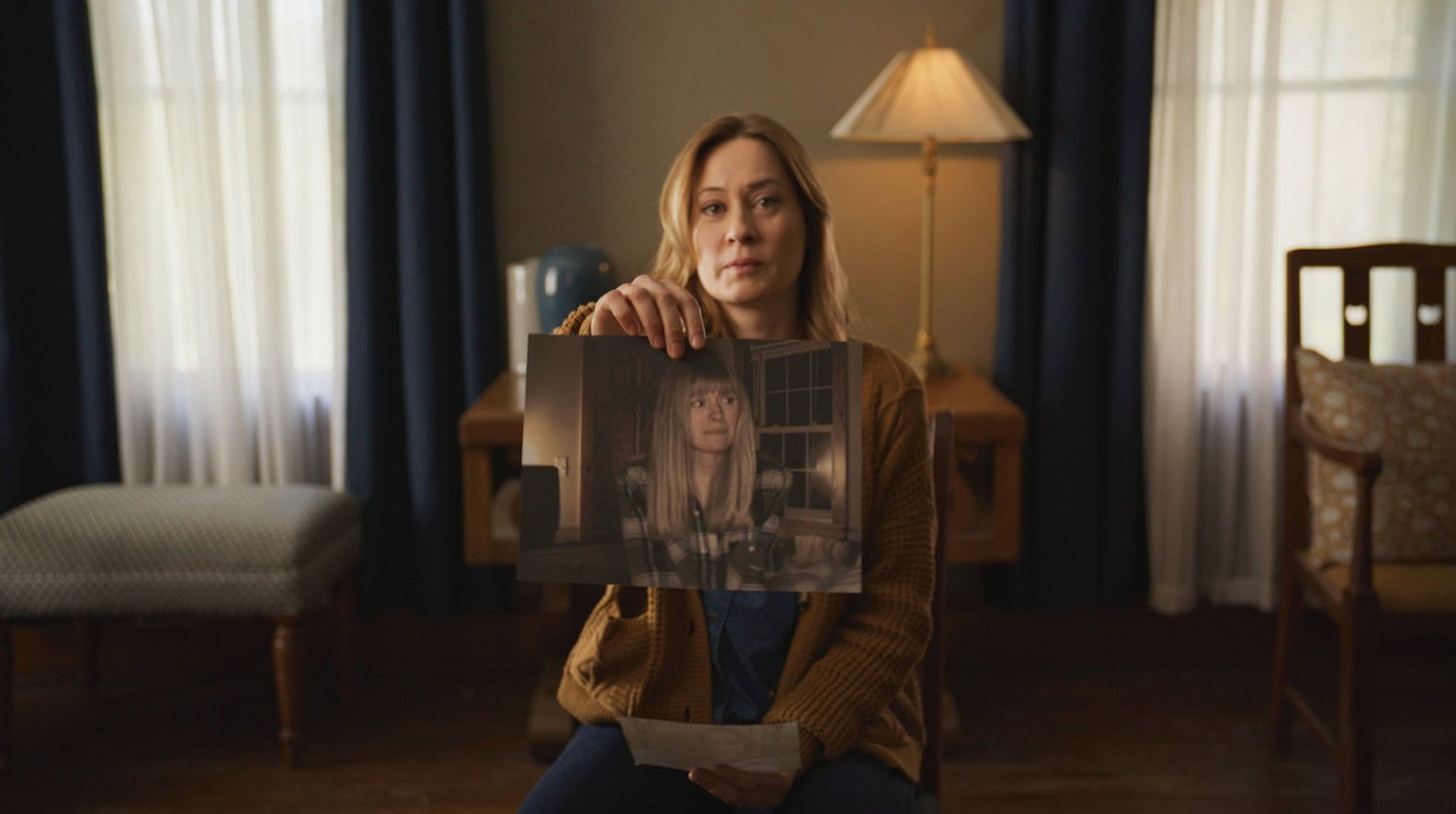
Stuckmann’s feature directorial debut concerns Riley Brennan (Sarah Durn), the central figure in the disappearance of a group of investigative YouTubers known as the Paranormal Paranoids, who made their names by exploring abandoned, haunted places for scores of curious followers. Riley and the case become a phenomenon, prompting the widespread use of the phrase “Who Took Riley Brennan?” nationwide. When Mia (Camille Sullivan), Riley’s older sister, comes into possession of a mysterious video cassette that appears to show the final moments before the Paranormal Paranoids vanished without a trace, she sets out to find her sister and if the abandoned town of Shelby Oaks has anything to do with the disappearances.
Though the film is billed as a found-footage freak-out, the bulk of Stuckmann’s investment in that cinematic form is up top: catching viewers up to speed with the case through a faux true-crime documentary recreation. This section is arguably the film’s strongest—climaxing in a surprising title sequence that interrupts the mock-doc style in bloody fashion—but Stuckmann’s use of found footage is almost purely expository. As a millennial filmmaker, he’s obviously indebted to that ur-text of the modern found-footage film, The Blair Witch Project, but the projects in this subgenre of horror are most powerful when they lean into innuendo and the limitations of the format, which filmmakers like Robbie Banfitch (The Outwaters) and Dutch Marich (the Horror in the High Desert series) have harnessed to great and vital effect.
Stuckmann’s utilitarian approach is doubly frustrating considering that Shelby Oaks does, at least in the early going, point toward potentially having something to say about the vlogger space, internet infamy, and the way tragedy takes on a cultural virality—all topics, one imagines, this particular writer-director might have plenty to expound upon. But Stuckmann undercuts the admittedly interesting found-footage segments with a more traditionally shot folk-horror narrative sunk by an overwhelming sense of been there, done that.
Aesthetically, Shelby Oaks is quite pleasing, making atmospheric use of various hollowed-out and disused Ohio locales like Chippewa Lake Park and the Ohio State Reformatory, all photographed by Andrew Scott Baird in a wash of pallid, bronzy hues redolent of the old newspapers and yellowing photographs that Mia pores over. As a lead, Sullivan doesn’t quite nail the stilted naturalism required by the documentary segments but is capable and compelling when asked to play Nancy Drew as the film enters its more traditional investigative mode.
As for Riley Brennan, it’s hard to shake the impression that Stuckmann wanted to create a Laura Palmer to call his own but wasn’t able to breathe much life into her. Worse, there’s something ever so slightly galling about the narrative’s reflexive centering on the over-worn trope of demonic rape. In an era where women’s stories in the horror genre are increasingly complex and nuanced, Shelby Oaks isn’t just insipid and uninventive but also naggingly retrograde.
Since 2001, we've brought you uncompromising, candid takes on the world of film, music, television, video games, theater, and more. Independently owned and operated publications like Slant have been hit hard in recent years, but we’re committed to keeping our content free and accessible—meaning no paywalls or fees.
If you like what we do, please consider subscribing to our Patreon or making a donation.