
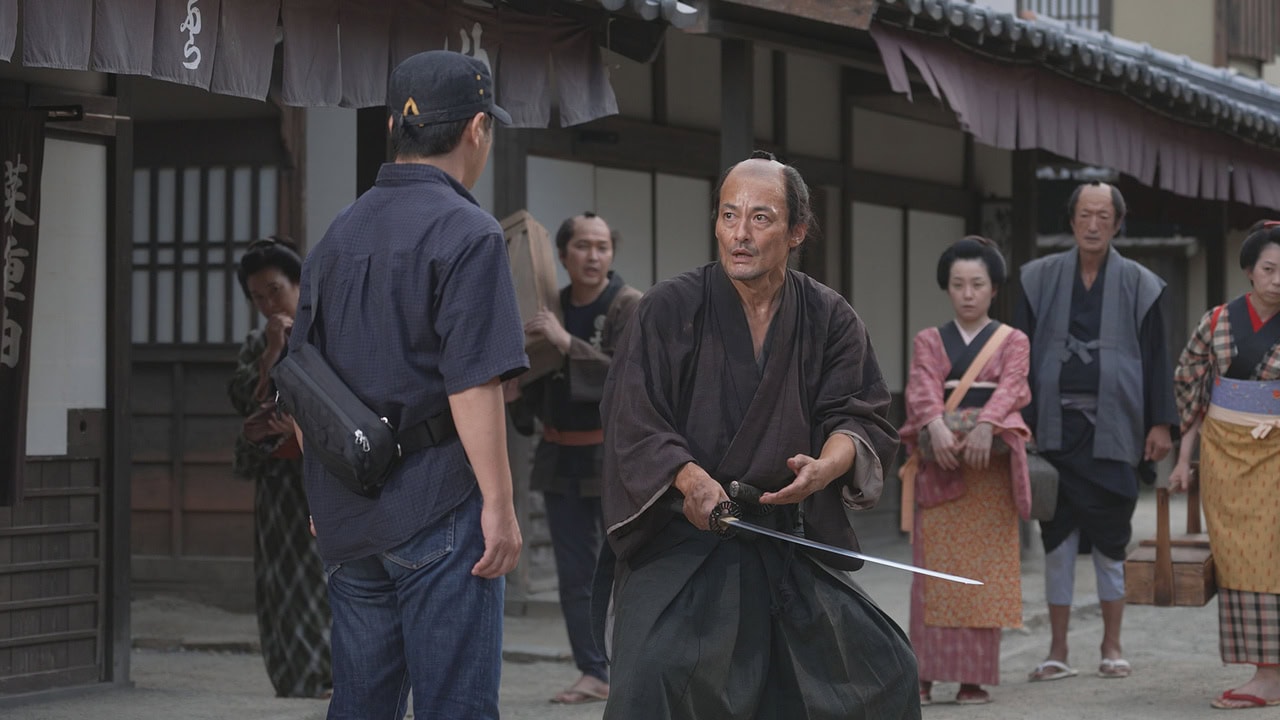
The fact that it was made for just 26 million yen (around $175,000) and that it was initially shown in just a single theater before becoming a word-of-mouth sensation makes it incredibly easy to root for writer-director Yasuda Jun’ichi’s A Samurai in Time. The fact that the film itself is a kooky time-travel tale with a sweet side, a great lead performance, and a palpable love of filmmaking only makes it that much easier.
Kosaka Shinzaemon (Yamaguchi Makiya) is an Edo-period samurai of no particular renown who’s sent out one night to take down a swordsman from a rival clan. Eager to prove himself as a warrior of real caliber, Kosaka crosses blades with Yamagata Hikokuro (Shonozaki Ken), only for a stray bolt of lightning to strike his sword and zap him straight into 2007.
A Samurai in Time instantly adds a fun wrinkle to its time-travel hook by having Kosaka wake up on the set of a jidaigeki TV show—a samurai serial set in the period he’s just arrived from. As well as providing the humorous sight of a baffled Kosaka stumbling through an artificial recreation of his own world, this conceit provides a quick way to get the film’s story on its feet. The people around him just assume that Kosaka is one of the many costumed extras wandering around, albeit one who’s oddly committed to his role. And when Kosaka realizes what’s happened, his samurai skills allow him to join the jidaigeki industry as a stunt performer.
The film-within-a-film conceit lends A Samurai in Time a charm reminiscent of another Japanese sleeper hit, 2017’s One Cut of the Dead. Like that film, A Samurai in Time delights in deconstructing itself, taking us behind the scenes to reveal how the shows that Kosaka works on are made. We’ll see a scene in rehearsal and then watch the finished article play out, often looking a lot like the “real world” that Kosaka left behind. So we get to enjoy a samurai story and a story about how samurai stories are made, with the film dancing happily between the two.
The tone is generally as light and zany as the film’s B-movie title suggests, and we do get some typical “man out of time” gags like Kosaka’s struggles with an unlikely new foe: the vacuum cleaner. But A Samurai in Time isn’t just having fun with fake swords and chonmage wigs, as it also provides a lot of gentle reflections about history, modernity, and our place in it all.
At one point, Kosaka weeps with joy over the little things that we take for granted but which would be marvels to those who came before us, like sweet treats that were considered luxuries in his time. And he sees beauty in the soapy samurai shows that others overlook—not just the painstaking work that goes into them from scores of dedicated craftsmen, but the way that they keep the spirit of his era alive. Even if they’re cheap and silly and formulaic, these shows are a tribute to a world that’s gone and all the people that lived in it.
Through it all, Yamaguchi plays Kosaka with an unfailing dignity. Whether the character is weeping over supermarket deserts or ruminating on the death of everyone he knew, Yamaguchi performs each moment with a grave sincerity that counterbalances the film’s playful artifice and breezy tone. Other characters across Yasuda’s film laugh at how affected Kosaka is by the corny jidaigeki shows, but viewers might find themselves in a similar situation to our hero because this goofy samurai tale is also surprisingly moving.
Since 2001, we've brought you uncompromising, candid takes on the world of film, music, television, video games, theater, and more. Independently owned and operated publications like Slant have been hit hard in recent years, but we’re committed to keeping our content free and accessible—meaning no paywalls or fees.
If you like what we do, please consider subscribing to our Patreon or making a donation.