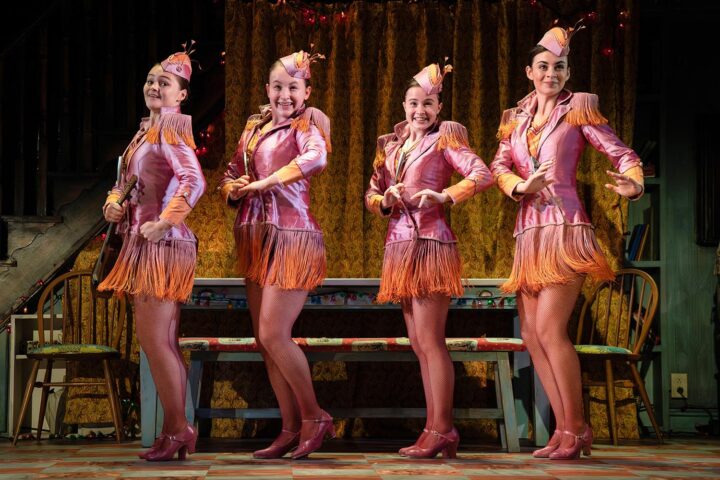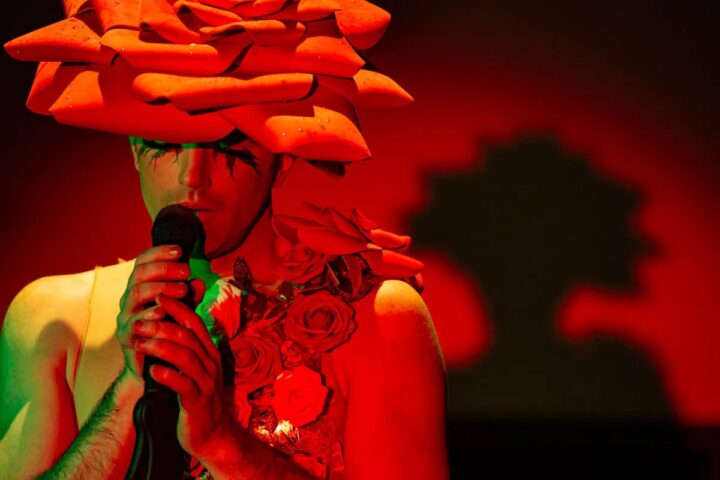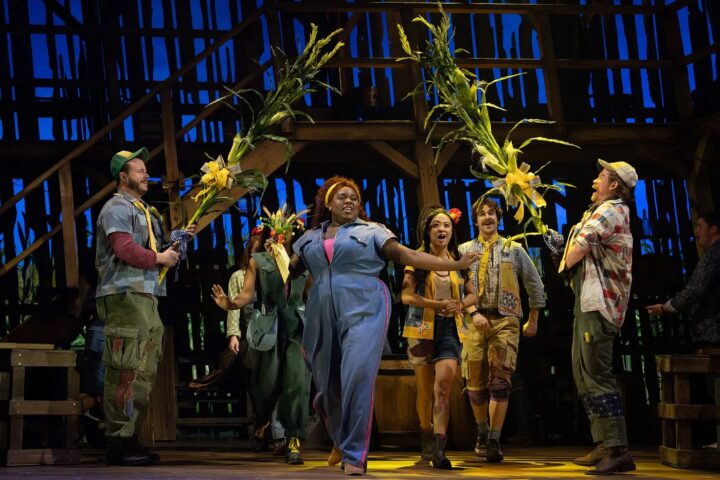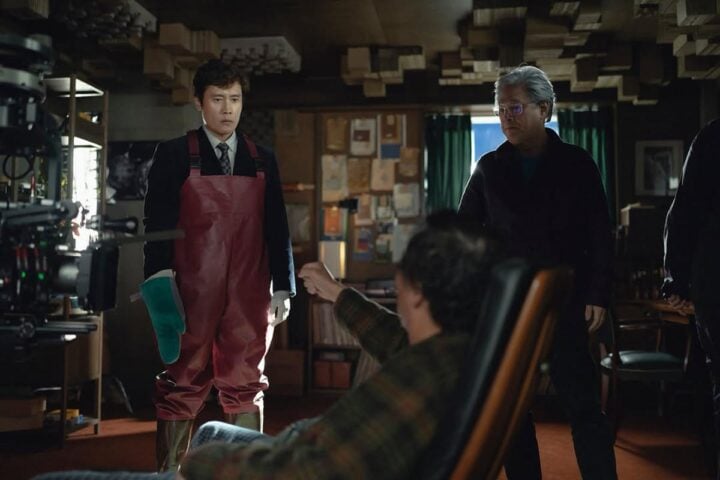
The surefire celebrity-stocked hits like Art and Othello might suggest that producers are trending toward what’s safest these days, but outside of the glaring lights of Broadway, theatermakers—and especially the nonprofits that platform them—are meeting the moment with refreshing derring-do. In one way or another, the shows on this list were high-risk endeavors that gloriously paid off, from puppet musicals to wholesale reimaginings of canonical works to the hot-off-the-shelf new plays from a little theater company that could.
The Unexpected Musicals: Dead as a Dodo and Mexodus
It’s been a rough year for new musicals, with only two non-jukebox musicals that opened on Broadway—Operation Mincemeat and Two Strangers (Carry a Cake Across New York)—continuing into 2026. The very best musicals of the year, like the Ragtime revival, Dead Outlaw, and Oratorio for Living Things, have been transfers of productions already appearing on this list in years past. So the real musical theater highlights have shown up when least expected.
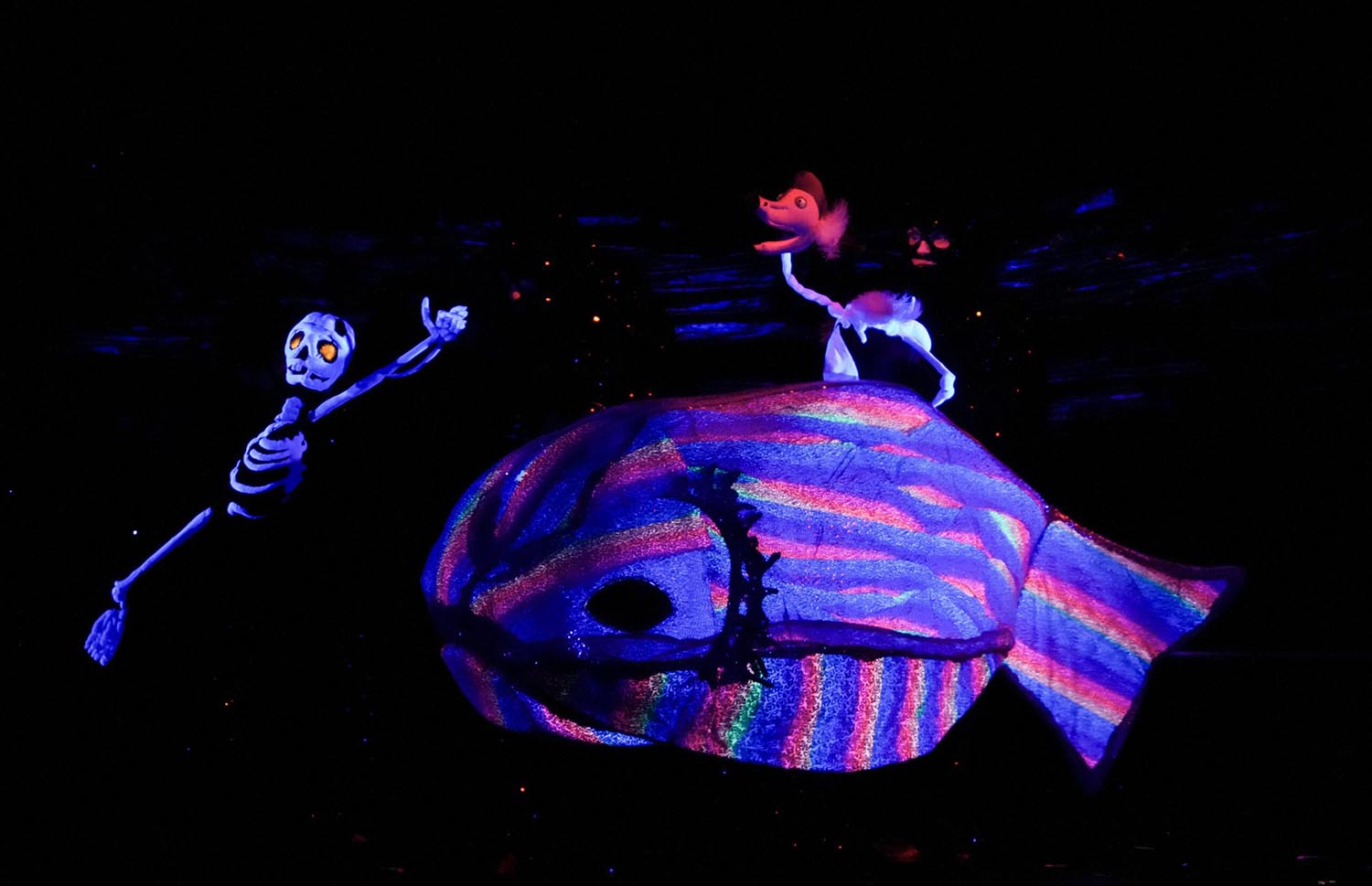
In January, there was the exhilarating whimsy of Dead as a Dodo, an existentialist puppet musical about a boy and a dodo wandering the underworld looking for bones. An offering from the company Wakka Wakka as part of the Under the Radar Festival, the musical tempered the weight of its heartbreaking core with the glittering visual wonder of the show’s expressive ensemble storytelling. The songwriter Thor Gunnar Thorvaldsson provided a small, lovely collection of tunes that outstripped much of the Broadway playlists this year, but even the score played second fiddle to the landscape of projections and puppetry.
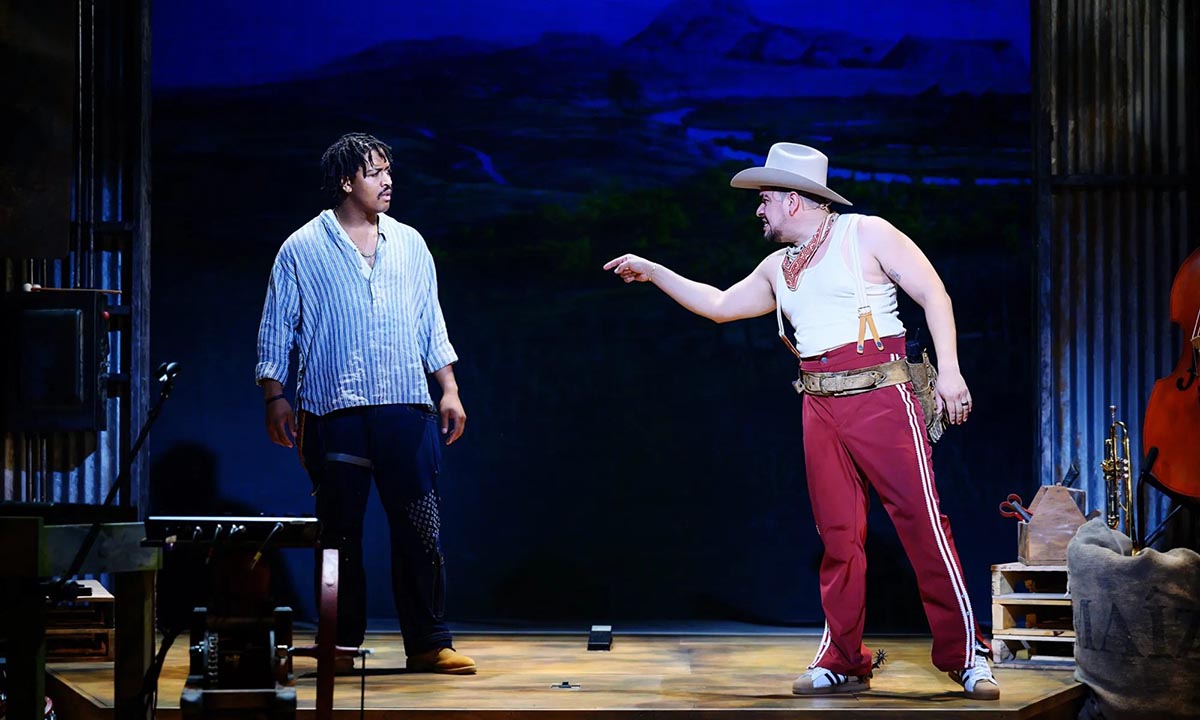
But music has seldom mattered more on stage than in Mexodus, a two-person marvel from Audible’s Minetta Lane Theater by Brian Quijada and Nygel D. Robinson that amplifies the little-known stories of enslaved Americans who fled not to the north but across the border to Mexico. Quijada and Robinson are astonishing virtuosos and they perform the versatile songs while looping all of their instruments—from piano and drums to every variety of household objects—live. Mirroring the high-wire flight of Robinson’s protagonist Henry, every move is high-risk: record one wrong riff and it’s stuck in the loop for the rest of the song.
That tension, though, is outstripped by Mexodus’s warmth and the chemistry of its two creators. It’s not so much that Mexodus, with its fast-blasting historical rap lyrics, feels indebted to Hamilton. Rather, it seems like the next frontier in rigorously and freshly inventive theatrical storytelling, across a border that Hamilton may have scouted out ahead.
The Women-Led Ensembles: John Proctor Is the Villain and Liberation
Starry Broadway plays with movie star men and mainly male ensembles like Glengarry Glen Ross, Waiting for Godot, and Good Night, and Good Luck all came in undercooked this year. In a landscape often starved for first-tier opportunities for female playwrights, Kimberly Belflower’s John Proctor Is the Villain and Bess Wohl’s Liberation marvelously detonated on stage this year with the help of two explosive ensembles.
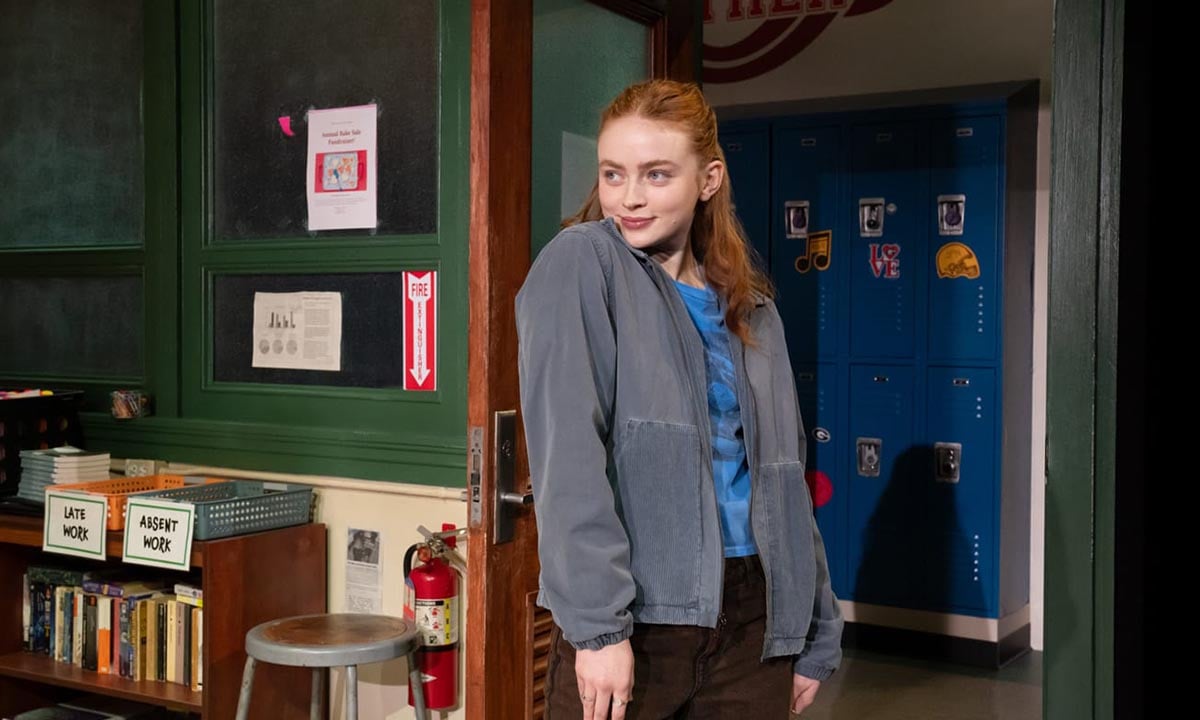
John Proctor Is the Villain, in crackling conversation with Arthur Miller’s The Crucible, focuses on a group of high school juniors in Georgia wrestling with accusations of sexual harassment and assault in their classroom and community. It’s a #MeToo masterpiece that skillfully introduces the frictions between the students’ earnestly professed values and the personal ties that get in the way of upholding them; the stakes of taking the right side as a teenager have seldom felt higher. And though Danya Taymor’s sharp production featured a universally whip-smart cast of not-quite-high school actors who performed adolescence persuasively, the play was also a breakout showcase for 19-year-old Finna Strazza, the only actual teen cast member, as the adorkably high-strung Beth.
And then there’s Liberation. Wohl’s big swings as a storyteller were impressive when the play opened off-Broadway in February, but perhaps Whitney White’s production hadn’t quite pulled off the ambitious conceit yet: A contemporary narrator meta-theatrically performs as her own mother, leading a consciousness-raising group in the 1970s, with characters stepping in and out of roles to support the narrator’s quest to understand her mother’s choices. But by the time the show reached Broadway this fall, Liberation had come close to epic flawlessness. The carefully calibrated dynamics among the septet of women, led by the ever-magnetic Susannah Flood, are perfectly balanced now, and the play, which questions nothing less than the meaning of life and the forces at play that stop us from finding it, roars to a breathtakingly emotional conclusion.
The Scrappy Theater Company of Your Dreams: Deep Blue Sound and Not Not Jane’s
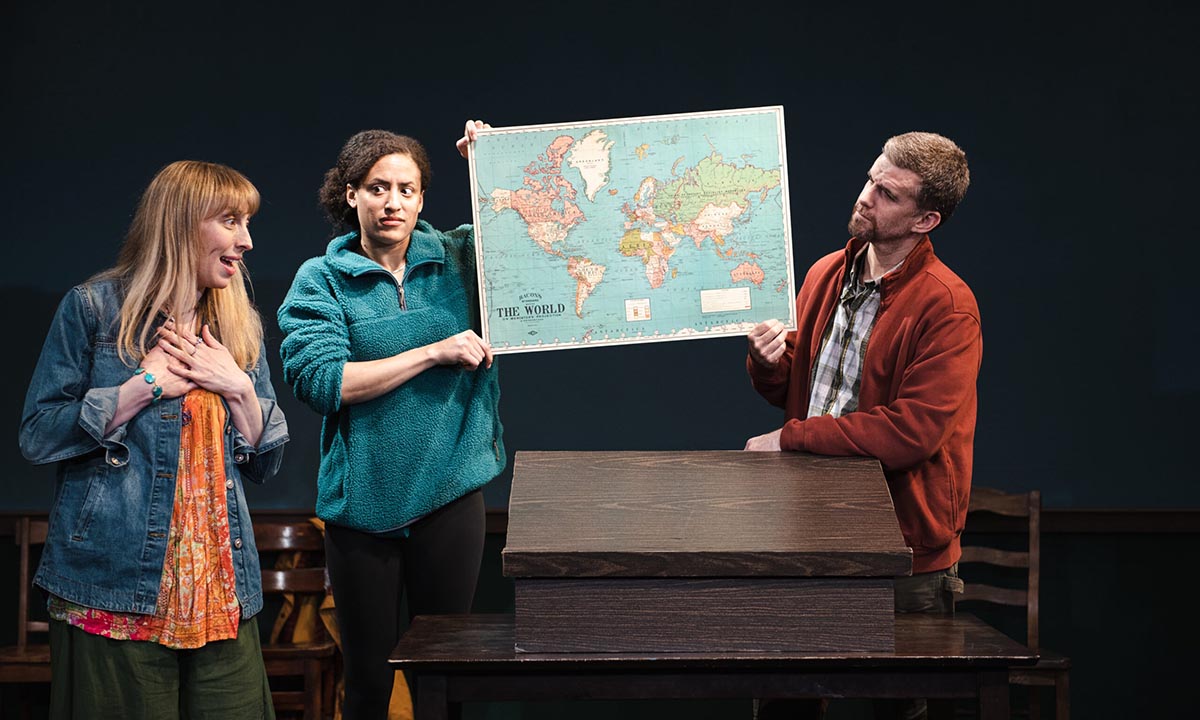
If there’s one theater company in New York delivering the goods with can’t-miss reliability, that’d be Clubbed Thumb. For much of the year, the company flew under the radar commissioning and developing new plays that share an effervescent absurdity grounded in warmth and an overarching interest in weirdos sharing their strangeness in tenderly built community. Clubbed Thumb jack-in-the-boxes to life each May with a trio of plays in their Summerworks series, some of which transfer to longer runs.
This year, one of those runs was Abe Koogler’s Deep Blue Sound, a magnificent study of a tiny island as its residents grapple with the disappearance of the local whale population. Like the best of Clubbed Thumb’s works, disorientation gradually gives way to clarity: Following a dizzying introductory sequence as the islanders debate what to do about those whales, Koogler carves windows into each character’s life through tiny scenelets that coalesce into a loving portrait of interconnectedness. And while Deep Blue Sound is a true ensemble piece, there were particularly stunning performances, in Arin Arbus’s gentle staging, from Mia Katigbak, Miriam Silverman, and especially Maryann Plunkett as a woman confronting her mortality.
And for less than two weeks at this year’s Summerworks, Clubbed Thumb treated audiences to Mara Nelson-Greenberg’s Not Not Jane’s, a delirious, hilariously sad farce about loneliness and corporate brand strategy. A woman named Jane (Susannah Perkins) applies for grant funding to build a chair café in her bedroom to give people a place to rest. Nelson-Greenberg fully embraces our basest triggers for laughter: I haven’t guffawed harder in years than at an extended sequence in which one character attempts to profess his love for another but keeps getting interrupted by a drill that makes fart sounds. But zany as it may be, Not Not Jane’s also honors how closely silliness and sorrow can sit to one another. Perhaps, Clubbed Thumb’s plays argue, deep down we’re all wistful weirdos seeking community too.
The Jewish Family Autobiography: We Had a World and Becoming Eve
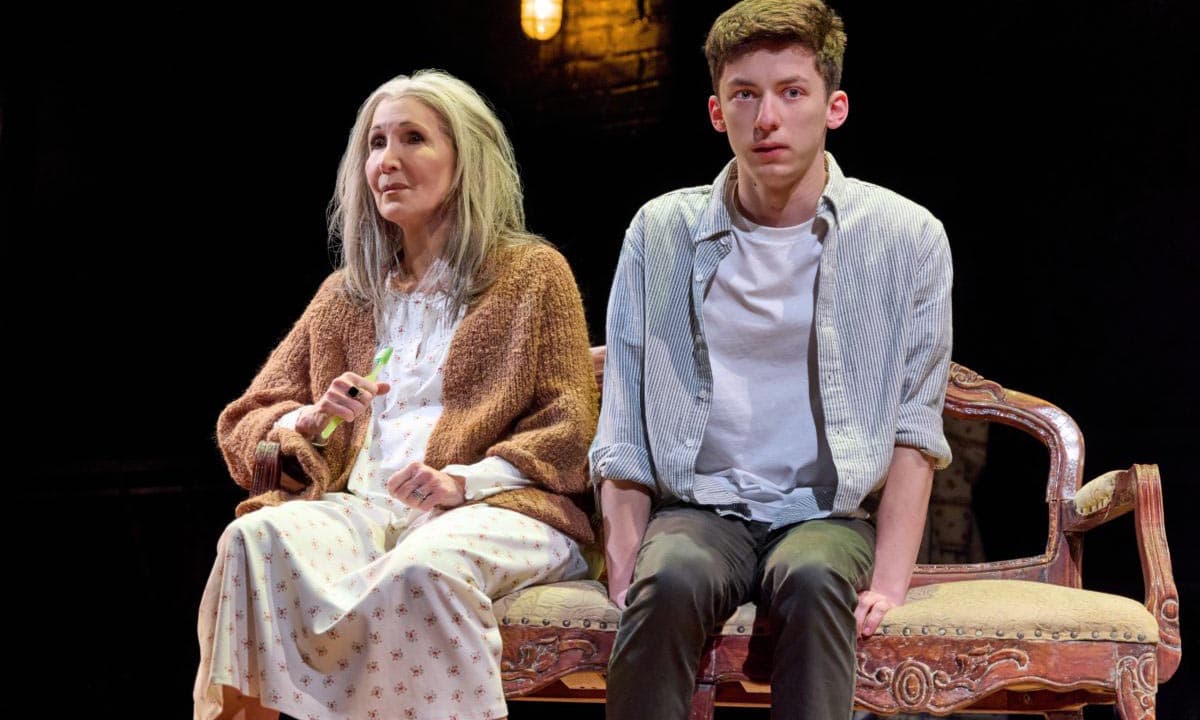
Joshua Harmon is the celebrated playwright of works like Prayer for the French Republic and Significant Other, but he’s never been as assured or impactful in his storytelling as in We Had a World, his own tale of growing up with his mother (Jeanine Serralles) and alcoholic grandmother (Joanna Gleason). As the playwright’s avatar, Andrew Barth Feldman, once a teenaged Evan Hansen, revealed himself as a fully mature dramatic actor, wryly irreverent in navigating the play’s direct address and meta-theatrics. Harmon’s inclusion of a real final audio recording with his grandmother capped off an increasingly heart-stopping evening, which, for queer Jewish New York theater kids in the audience (with mothers and grandmothers in complex relationships of their own), hit particularly hard.
But family ties are even more fraught in Becoming Eve, Emil Weinstein’s captivating, caring take on the story of Abby Chava Stein, an Orthodox rabbi who came out as transgender in 2015. Played with equal measures of angst and self-assuredness by Tommy Dorfman, Abby came to life in both human and puppet form: Tyne Rafaeli’s thoughtful production incorporated puppetry in flashback scenes, allowing separation between the grown-up Abby and the younger version of herself with which she never fully identified. And most moving of all was the play’s climax, a searing coming-out scene in which Abby shares her identity with her unfathoming father, rendered with stirring complexity by Richard Schiff.
The Classics Revisited: Vanya and Creditors
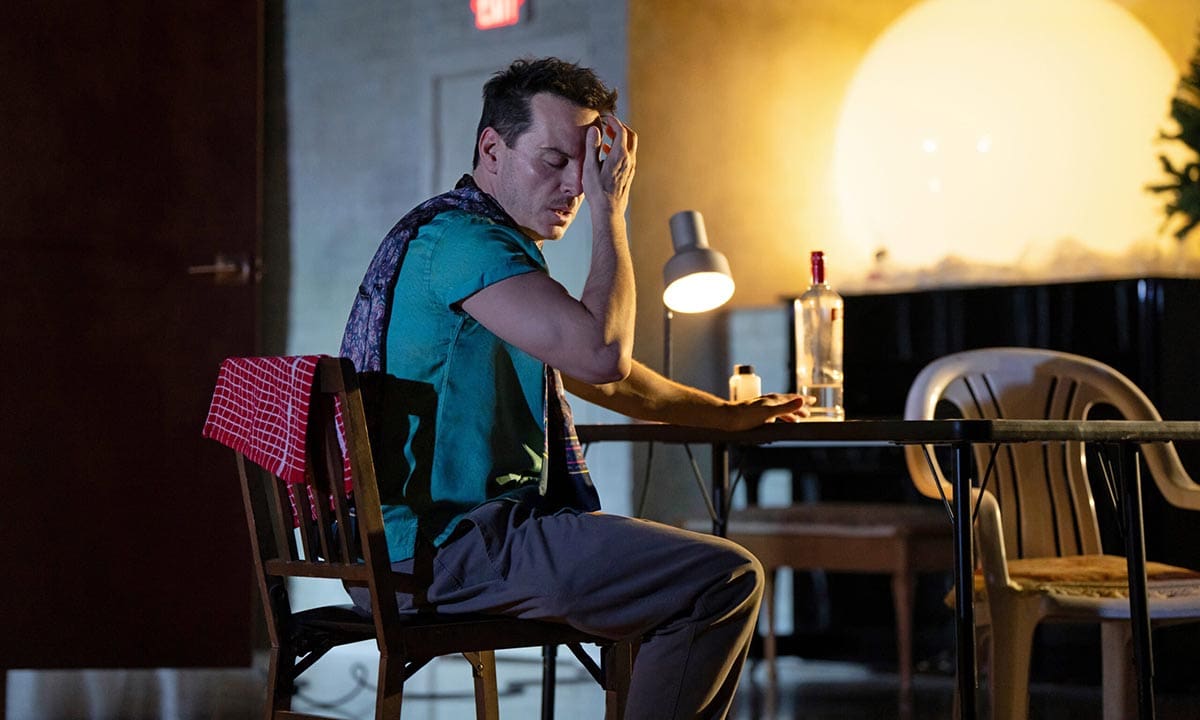
It’s been quite the year for revitalizations of classic plays in New York, including a pair of lesser-known Ibsen works and the crackerjack high-tension Oedipus currently running on Broadway. Some of those reimaginings came in virtuosic solo packages, like Andrew Scott’s one-man Vanya, a new Simon Stephens translation-cum-adaptation of the Chekhov play. Scott played all eight characters, delicately transforming himself with the slightest shifts in posture, accent, and glance. Looking back on Vanya, directed by Sam Yates, it’s hard to believe there was only one actor on stage, so fully did Scott make his invisible octet seem to appear all at once, eight unhappy Russians spread across the stage in one heartbroken body.
In Creditors, rippling with tension from the jump, Jen Silverman updated August Strindberg’s psychosexual triangle, gently steering the play to an ending that sharply diverged from the original. Staged as part of the new Audible/Together collaboration, director Ian Rickson assembled a trio giving career-topping performances: Liev Schrieber, Justice Smith, and Maggie Siff. As a celebrated writer and her current and former husbands encircle each other, each pair sharing a wickedly suspenseful scene, Creditors just builds and builds. The play is, for the most part, quietly conversation-driven, but the thumping of our heartbeats probably provided sufficiently high-octane underscoring. There was no tauter acting in New York this year.
Since 2001, we've brought you uncompromising, candid takes on the world of film, music, television, video games, theater, and more. Independently owned and operated publications like Slant have been hit hard in recent years, but we’re committed to keeping our content free and accessible—meaning no paywalls or fees.
If you like what we do, please consider subscribing to our Patreon or making a donation.