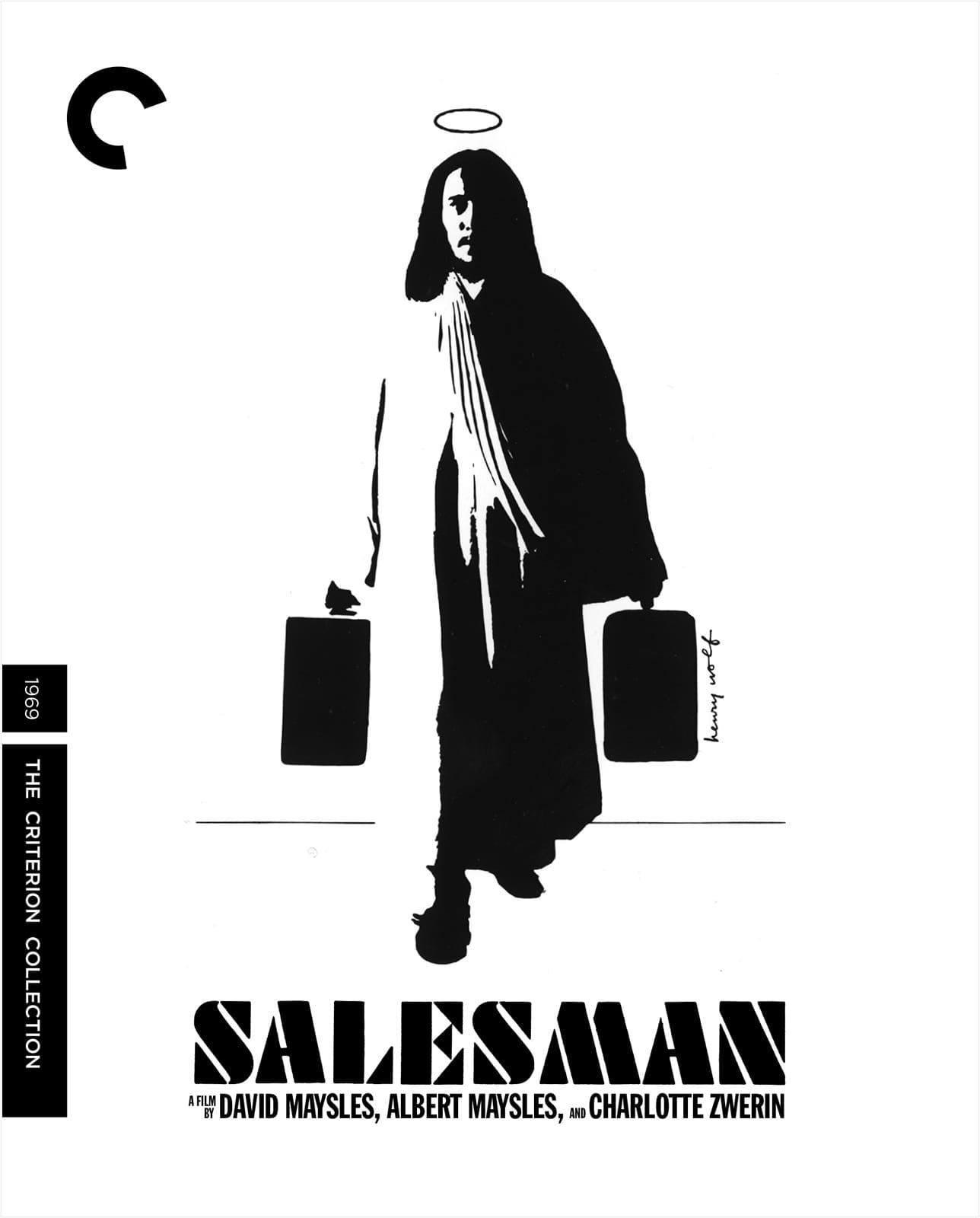
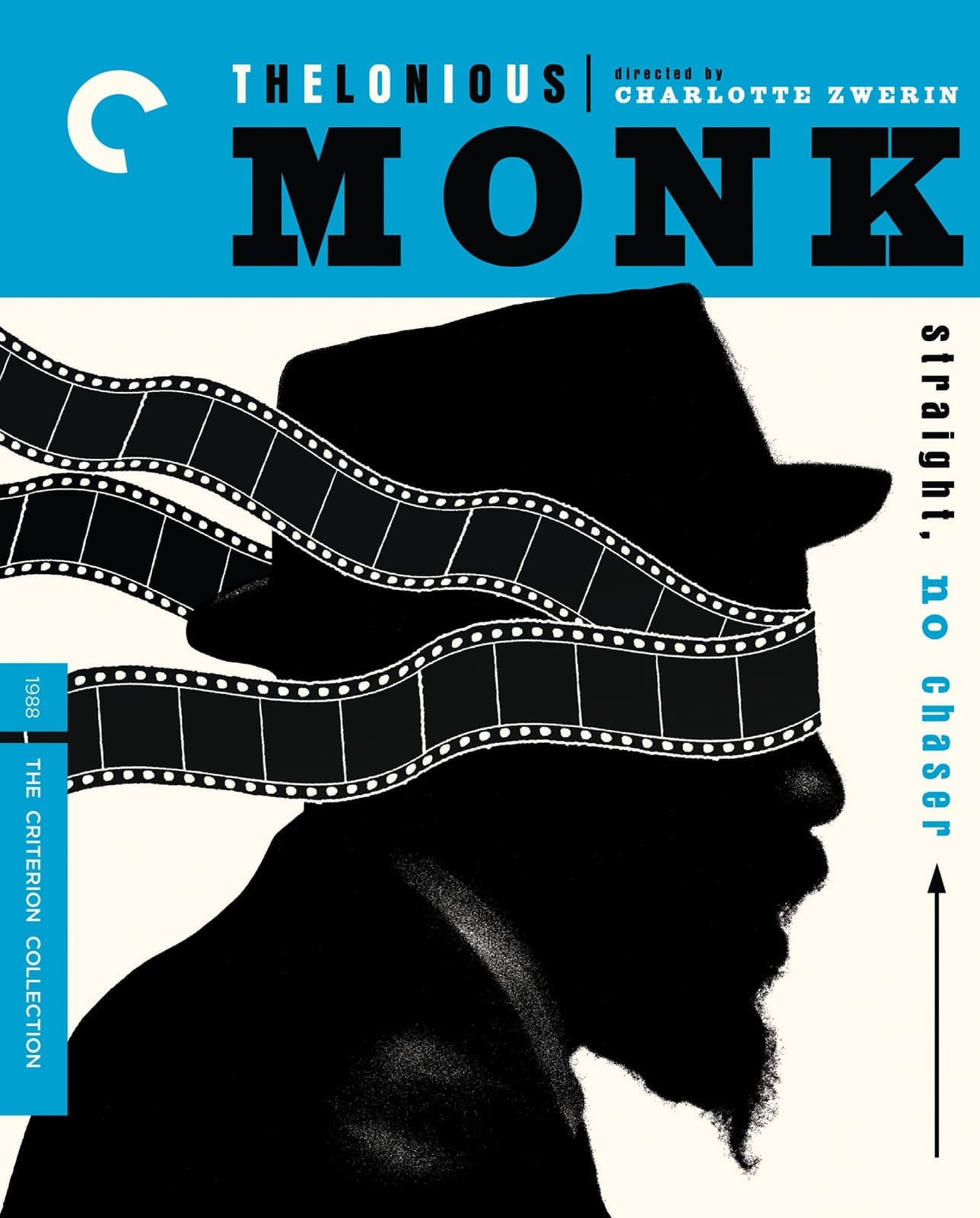
 In the 1960s, during which time she co-directed Salesman and Gimme Shelter, Charlotte Zwerin helped to define a mode of documentary filmmaking that became known as direct cinema. Zwerin collaborated with Albert and David Maysles primarily in the post-production phase, sorting through their raw footage to help shape and structure it into a coherent narrative. And that skillset is on full display in Thelonious Monk: Straight, No Chaser, one of Zwerin’s few solo-directed feature documentaries.
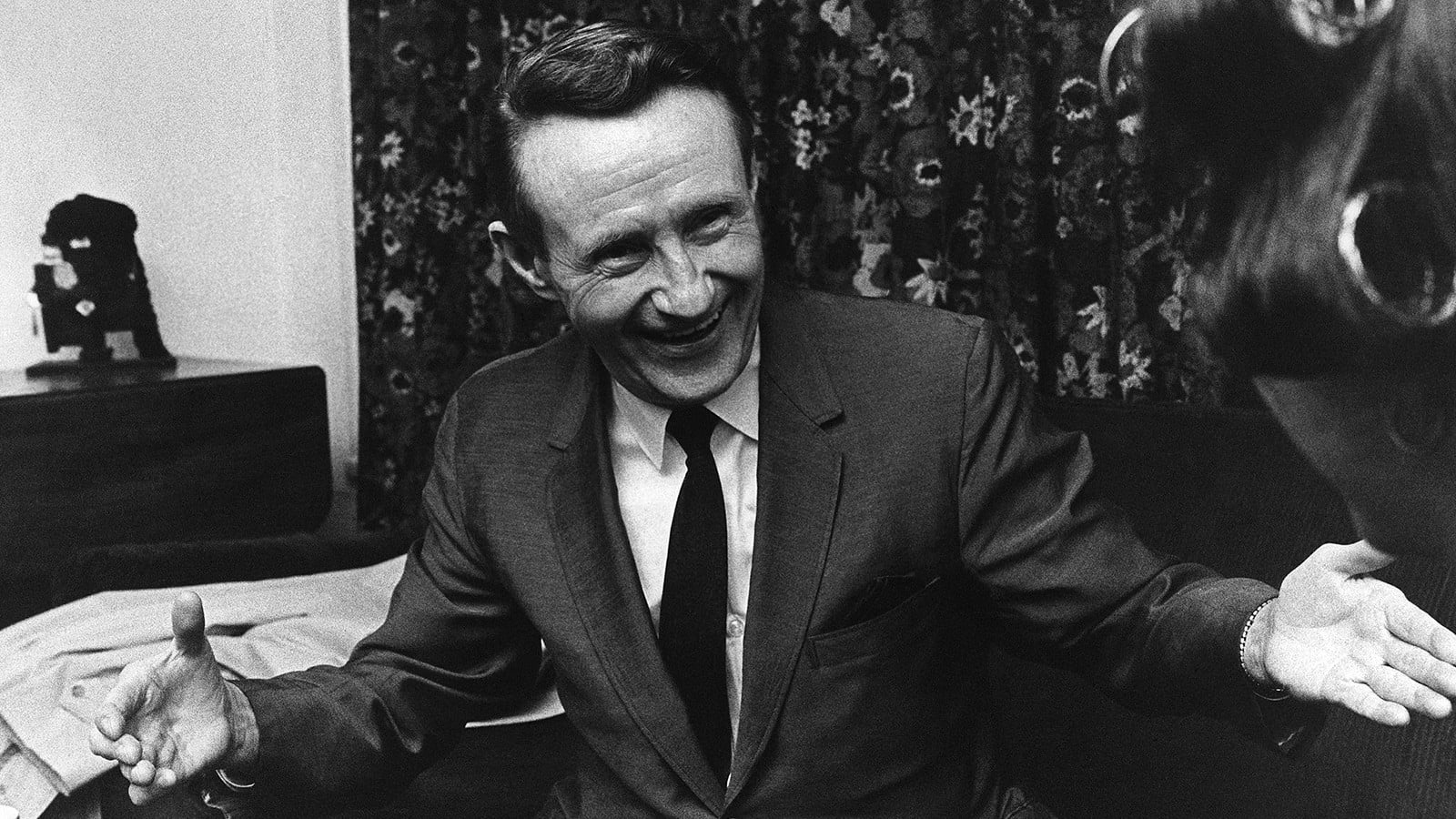
The film was produced following Thelonious Monk’s death in 1982, and the majority of the footage showcasing his live performances and daily life off stage was filmed for West German television in 1967 for a one-hour special that only aired in Germany. Rather than settle into a conventional unspooling of Monk’s life and work, Straight, No Chaser bounces around in rhythmic fashion, as if trying to capture the man’s feel for jazz music. Monk appears on screen in various lights, whether pounding on piano keys during performances, spinning around in circles in a hallway, or petting the head of a friendly cat.
Throughout Straight, No Chaser fluidly and sharply supplements the archival footage, which evinces the fly-on-the-wall approach of direct cinema, with contextual information. Voiceover-driven photo montages offer insights into Monk’s childhood, while interviewees share their recollections of Monk and provide commentary on, among other things, the origins of bebop.
Monk had a famously peculiar demeanor. He said little, and he had no evident desire to entertain questions about his work. When a reporter asks him whether he prefers performing or composing music, Monk responds: “I do both.” As the footage of Monk in his own element makes plain, he was clearly most comfortable when playing the piano.
The most striking commentary comes from Thelonious Monk Jr., who describes his father as introverted and prone to erratic behavior, and how he would sometimes look at his son as if they were strangers to one another. Monk Jr. says his father was “complex,” but the film doesn’t resolve that complexity, with the archival footage shedding no definitive light on his thought process, behavior, or identity in a conventional biographical sense.
The talking heads may speculate on, say, the relationship between Monk’s savant-like ability with musical instruments and his unpredictable behavior, which resulted in hospitalization, but the archival footage largely lets the music speak for itself. And Zwerin’s prioritizing of the German footage works to honor Monk’s wish to not elaborate on his music, while also deflating notions about what the relationship between reporters and their subjects should be.
Image/Sound
This new 4K digital restoration was created from a 35mm blowup interpositive, and the images, from the 1960s archival footage to the talking-head interviews, soar with precise clarity and depth. The transfer is especially alive to the grit of the back-and-white West German TV footage. The monaural soundtrack helps bring Thelonious Monk’s live performances to vivid life without artificially amplifying them, and there’s no noticeable distortion on the track.
Extras
Criterion’s disc comes with a trio of charming supplements. In an introduction recorded in 2003, Charlotte Zwerin explains how she got involved in documentary filmmaking, noting that she thought “the best way to become a filmmaker was to watch films.” Perhaps appropriately, a new program abounds in stills and clips from her work as writer Michael Schulman, editor Bernadine Colish, and Zwerin’s nieces Lisa and Laura Tesone take a deep dive into the making of Thelonious Monk: Straight, No Chaser and Zwerin’s career as a whole. And in a newly recorded interview, Thelonious Monk Jr. reflects on his father’s memory, how films like Lady Sings the Blues dubiously depict the world of jazz, and more. Finally, a booklet contains an essay by musician and scholar Paul Grimstad, who discusses, among other things, the film’s origins and how its almost improvisatory construction honors Monk’s music.
Overall
Thelonious Monk: Straight, No Chaser is essential for both its improvisatory look at Thelonious Monk and its implicit reflection on the ethics of portraiture.
Since 2001, we've brought you uncompromising, candid takes on the world of film, music, television, video games, theater, and more. Independently owned and operated publications like Slant have been hit hard in recent years, but we’re committed to keeping our content free and accessible—meaning no paywalls or fees.
If you like what we do, please consider subscribing to our Patreon or making a donation.