It’s difficult to tell whether Russian-Israeli filmmaker Leon Prudovsky’s My Neighbor Adolf, a high-concept dramedy that tackles Holocaust trauma in the uneasily combined flavors of slapstick sitcom and Hitchcockian suspense film, is intended to challenge or add to the genre of Holokitsch. That the film’s leads, David Hayman and the late Udo Kier, have appeared in some dubious cinematic reenactments of Nazi atrocities (most notably The Boy in the Striped Pyjamas and Werewolf Women of the SS, respectively) only deepens the question.
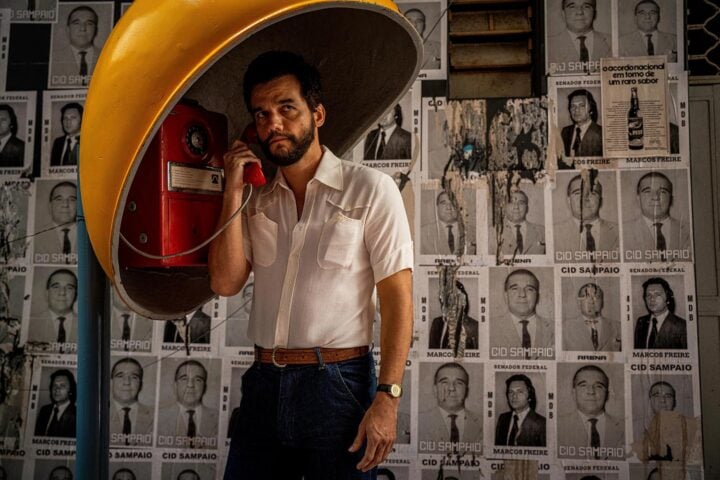
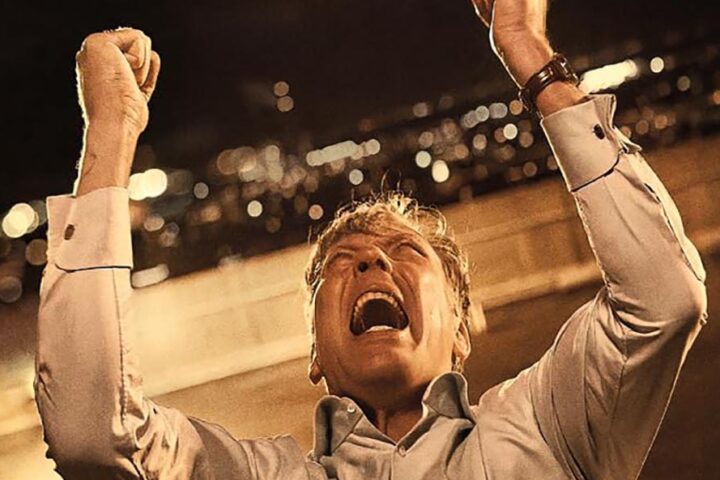
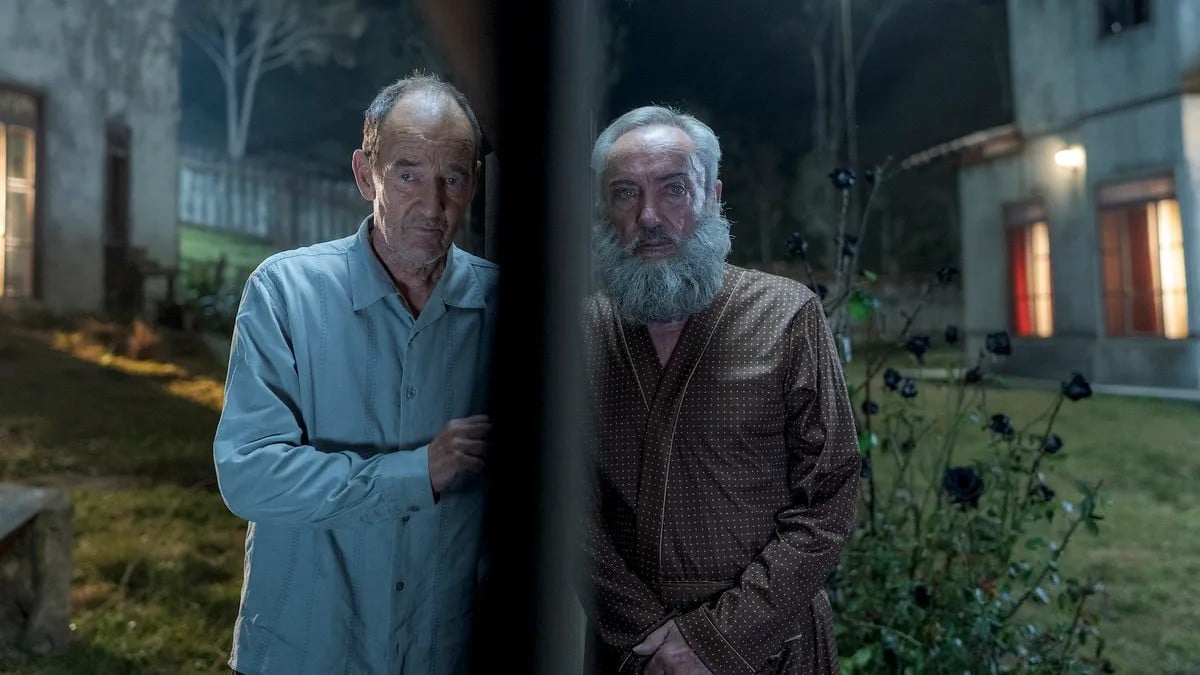
Marek Polsky (Hayman) is a death camp survivor living out the postwar years in the mountains of Colombia. He passes his days in paranoid isolation, tending to his beloved rose garden—a reminder of his murdered family—and solving chess puzzles. One day, shortly after the Mossad’s abduction of Adolf Eichmann from Argentina makes international headlines, Herman Herzog (Kier), a mysterious German with a cadre of goose-stepping associates and a passion for dogs and landscape artistry, moves in next door and desecrates Marek’s garden.
Marek convinces himself that Herzog is none other than Adolf Hitler, whom he claims to have once locked eyes with at the 1934 World Chess Championship. When he brings his theory to the Israeli consulate in Bogota, though, the staff laugh off this frail, fearful, Yiddish-speaking Jew. His paranoia only deepened, he thus embarks on an obsessive mission to spy on and (through a shared love of chess) befriend his new neighbor, all to find proof of his suspicions.
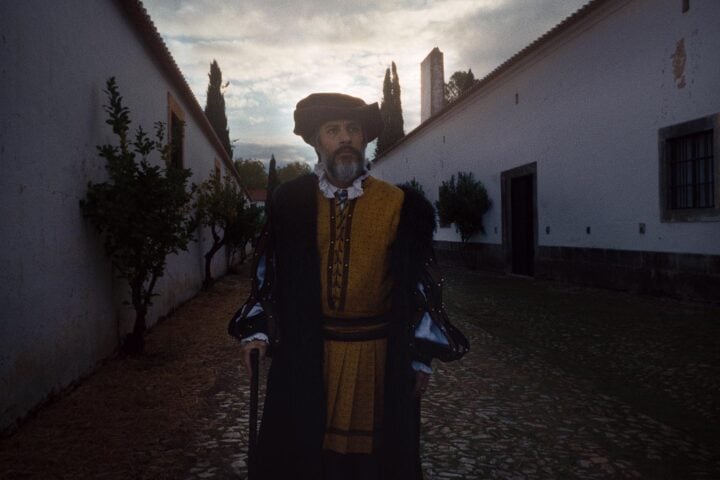
Prudovsky at once wrings this premise for whimsical absurdism and slow-burn suspense, on each side vulgarizing the memory of the Holocaust. In one lane are mocking string-and-woodwind musical cues (with the occasional military snare drum) and scenarios revolving around wacky deceptions and bungled spying attempts. (Poop, pee, and testicle jokes are abundant.) Sitting right next to this are the weary, haunted gravitas of the central performances and budget-friendly aesthetic pastiche of Holocaust cinema. Cinematographer Radek Ladczuk’s grim, desaturated color palette, together with the varied vocabulary of flat frontal-plane compositions, anxious tracking shots, and woozy handheld close-ups, place the film firmly in conversation with the last three decades of prestige Nazi genocide reenactments.
The broad comedy beats are largely excruciating, unless one finds bodily excretions or screaming alte kakers inherently riotous, but nor are they outre enough in their tastelessness to warrant comparisons to a gonzo sacrilege like Jerry Lewis’s The Day the Clown Cried. At its best, My Neighbor Adolf uses the cover of bad taste to smuggle in some truly thorny thematic angles: a pronounced ambivalence about the Israeli state’s relationship with Holocaust survivors and the Jewish diaspora alongside its foundational self-image as the great avenger; the prospect of forgiving a Nazi; and the question of when Jewish fears of antisemitism are and aren’t justified. But it doesn’t push hard enough on any of these to be properly confrontational, settling instead for easy sentimentality and vague homilies about empathy and individuality.
There’s modestly effective suspense in the buildup of the is-he-or-isn’t-he mystery surrounding Herzog’s identity, with the film introducing new developments to pull the audience’s suspicions in one direction and then the other at a steady pace, and complicating the emotional textures as Herzog’s relationship with Marek softens into unexpected affection well before the mystery is resolved. It’s to the two leads’ great credit that we buy any of this, because their characters, as bluntly written by Prudovsky and Dmitri Malinsky, don’t score many points on plausibility or depth. But My Neighbor Adolf operates on a myopic scale by taking the route of sentimentality, leading to a tidy resolution unbefitting the gravitas of its subject matter, which Prudovsky seems to be neither sophisticated nor crass enough to do justice.
Since 2001, we've brought you uncompromising, candid takes on the world of film, music, television, video games, theater, and more. Independently owned and operated publications like Slant have been hit hard in recent years, but we’re committed to keeping our content free and accessible—meaning no paywalls or fees.
If you like what we do, please consider subscribing to our Patreon or making a donation.