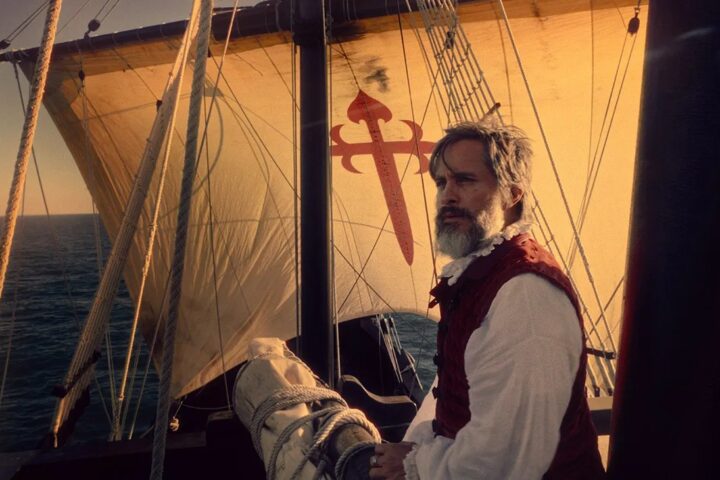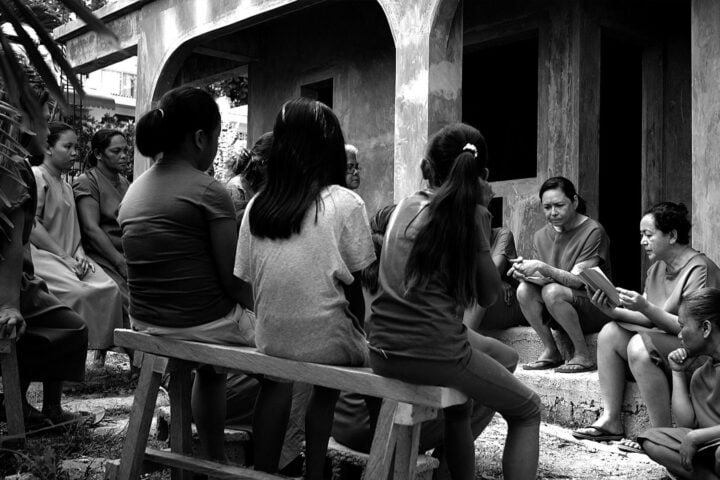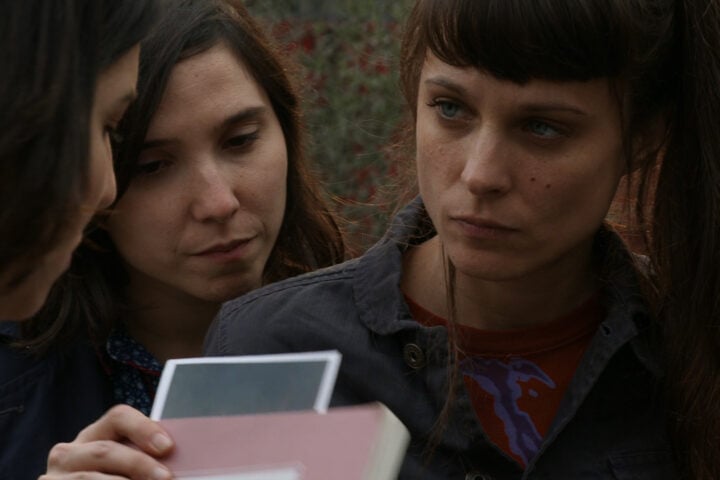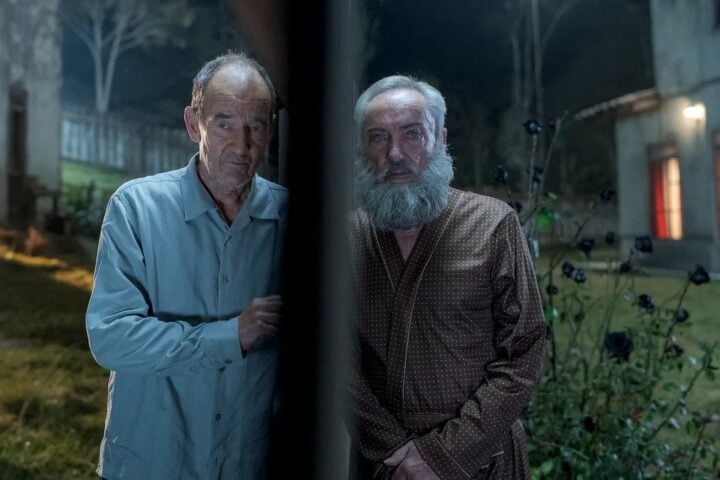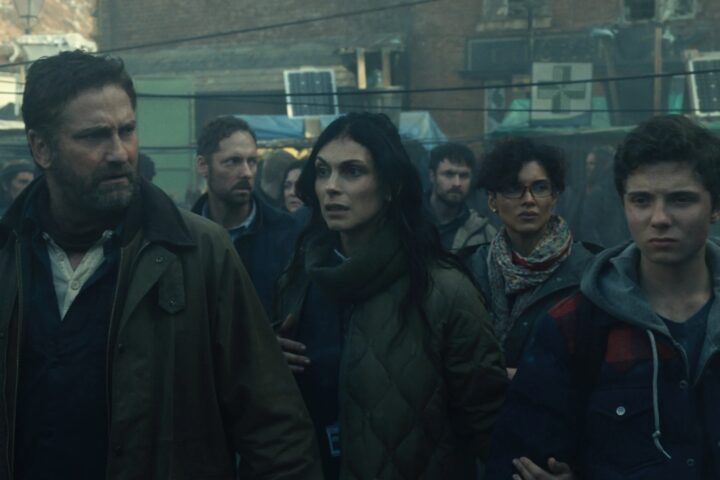
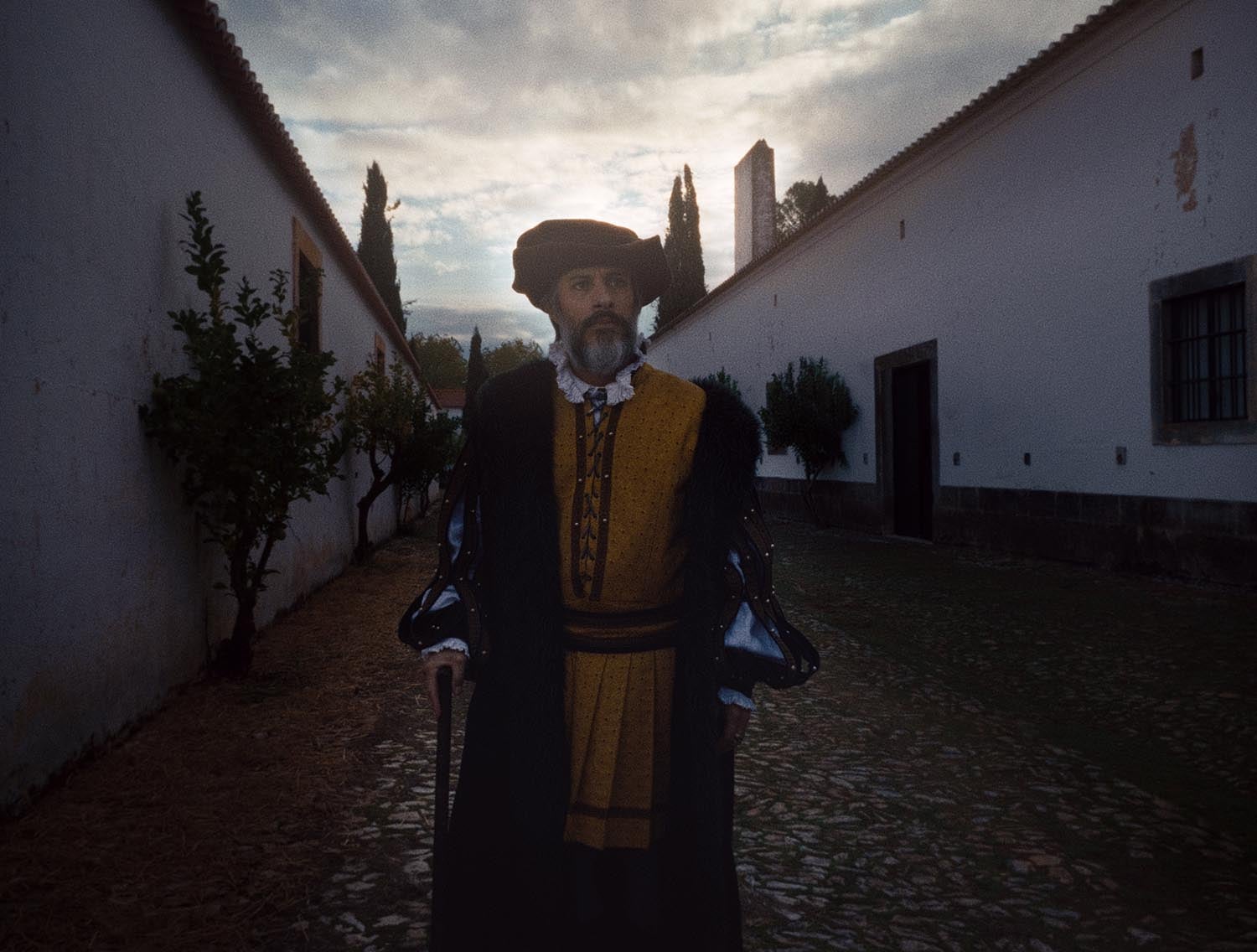
Don’t be fooled by the length of Lav Diaz’s Magellan, which clocks in at a comparatively slender 160 minutes for the Filipino filmmaker. While its duration may be but a fraction of his more novelistic works, Diaz’s latest look back at his country’s history offers no less trenchant insight—and also boasts even more entrancing visuals in full color. While Diaz remains coy about whether he will make a longer project with this material, audiences have plenty to mull over in this poetic “acid trip” version of Magellan.
Rather than restaging a historical epic of the native resistance to the 16th-century attempts of Portuguese navigator Ferdinand Magellan (Gael García Bernal) to conquer and convert the indigenous tribes he encounters in the east, this international co-production between Spain and Portugal pokes holes in established mythology. Paramount to this vision of violent uprising against colonialism is Diaz’s casting doubt on the existence of the national folk hero Lapulapu, a suggestion that has courted controversy with historians in his home country.
I spoke with Diaz in Los Angeles, where the filmmaker was promoting a retrospective of his work at the American Cinematheque. Our conversation covered how working with a more global team on Magellan changed his usual process, what he draws from other art forms as inspiration for his cinematic artistry, and why he’s been satisfied with the discourse started by the film.
You’re here for a retrospective of your work. Do you look back at your films and see them as a full body that’s been building over time?
It’s just one film for me—one whole thing. This is a continuing discourse. It’s all dealing with the suffering of other people, and not just particularly [that of] the Philippines. But it can be universal. I’m talking about Philippine history always—different periods in our country’s struggle. But it’s everybody’s struggle. The human condition.
Since the unifying theme of your work is examining Filipino history, did going back to such a foundational story in the country’s history cast a new light on the ones you have made about more recent chapters in the nation’s struggle?
It’s both mythology and history. It’s a cliché, but history keeps repeating itself. We’re circling this abyss, and I don’t know if it’s gonna change. We try to create discourse using the medium of cinema, but at the same time, you question if it can really help change things. We’re trying!
If it’s something you devote your life’s work to, you have to have at least some hope that it is making a difference, right?
Yeah, it raises awareness of having a voice. I believe it changes some things, but not so much.
You’ve noted that mythmaking is central to demagoguery and the specific Filipino experience of your lifetime with the Marcos family and Duterte. Do you see cinema as a countervailing force against those political winds?
In the case of the Philippines, mythmaking is huge. You start with the Lapulapu myth. He was declared the first national hero, and people embraced that. Then, Marcos funded this film before he ran, called Drawn by Fate. It was a huge hit, and he created the [idea of himself as a] Second World War hero. He invented 69 awards that it got, and people embraced that. Until now, they still think that Marcos is the best thing that ever happened to the country, and Trump is doing that now here. He’s trying to put the Trump name on everything.
What was the conversation like in the Philippines, then, when you released Magellan there?
Some historians question my premise that Lapulapu is a myth. But it’s a dialogue. I told them, “You are historians, but you need to investigate as well. Don’t just accept the narrative written by Europeans and Western publishing.” We need to have a voice that’s near the truth. We need to investigate the whole thing again on our own terms, not on the white man’s terms.
I asked a Filipino-American friend how she thought people would respond to the suggestion that Lapulapu is a myth, and she said there would be reactions!
But amazingly, on the island of Cebu [where Magellan landed], when it was shown, people were okay with it. The ones who really reacted, ironically, were the historians. I said, “Come on. Are you sure? How did you investigate it?” We just followed the narrative. There are so many sources; there are witnesses; survivors have their own accounts. And, of course, if you go by data, things don’t add up. It’s a cold case for me to open up again.
Do you think of Magellan as an act of revisionist history? Or is the original myth the real revisionist story?
It’s an invitation for discourse. It’s a very Socratic way of doing things. I pose that question on Lapulapu, on [Enrique de] Malacca. The speech of Albuquerque is a real speech. You can call it revisionist, but let’s talk about it. If you confront history with some changes, immediately, they will say, “Oh, it’s revisionism.” Come on, investigate first. Let’s dig deeper and examine history. That’s why I’m challenging the historians in the Philippines who call it revisionism. Let’s have a dialogue about this issue, because you’re always following the narrative of the Europeans.
Magellan is the product of cross-cultural exchange between Spain, Portugal, and the Philippines. Was that more of just something that aided the production practically, or did it have a spiritual function in providing a model of how a colonizing nation and its former colonies could collaborate as equals?
It came naturally. I’m friends with Albert Serra, and he offered help. He could sense that I’m always having a hard time getting funding. In my early works, I was shooting alone. When he was curating my work in Barcelona, he said, “We can help you get better funding, Lav, if you have an idea that will have Spain and the Philippines in the story.” I said, “Magellan would be the easiest thing.” He agreed, and the same thing [happened] in Lisbon with Joaquim Sapinho. So…thank you, Ferdinand Magellan. If you call it a spiritual thing, yes, because the connection just happened. These two guys were very open. They read books.
And Gael came [on board] as well. Gael is half Caucasian, half Indigenous, so there’s irony as well with him playing Magellan. He knows and loves history. He can talk forever about Cortez, Montezuma—all those guys—and all those wars between big tribes in Mexico. And he studied philosophy as well, so these connections just happened. Gael knows my work as well. He watched it in cinemas at the festivals in Mexico. Of course, it’s not easy. We had a hard time finding all the money. We used my small camera as well. It was a collision, just like doing free jazz music, where everything comes [together] in the end. You keep playing and playing, and then there’s this harmonious union of sounds. It’s poetry, man.
You couldn’t follow your usual process of waking up early on the day of the shoot and writing the scenes because the dialogue had to be translated into Portuguese for Gael. Did operating with a bit less spontaneity change the product at all?
I broke my pattern! It was okay because I needed to have the discipline to adjust. If you’re the director or writer, you have to adjust to people’s needs. Gael [needed] to learn Portuguese because he’s Spanish-speaking, and his Spanish is from Mexico, so he needs to learn all those things. And then, of course, the tonal compositions of the language are 16th-century. I wrote the material in advance, and I had to force myself to write those things so that one guy could translate into Portuguese, one guy into Spanish, and compare notes. Then, Gael would study it. So we needed to go through this new process. It’s a cultural mix, so I understand. I’m open to it.
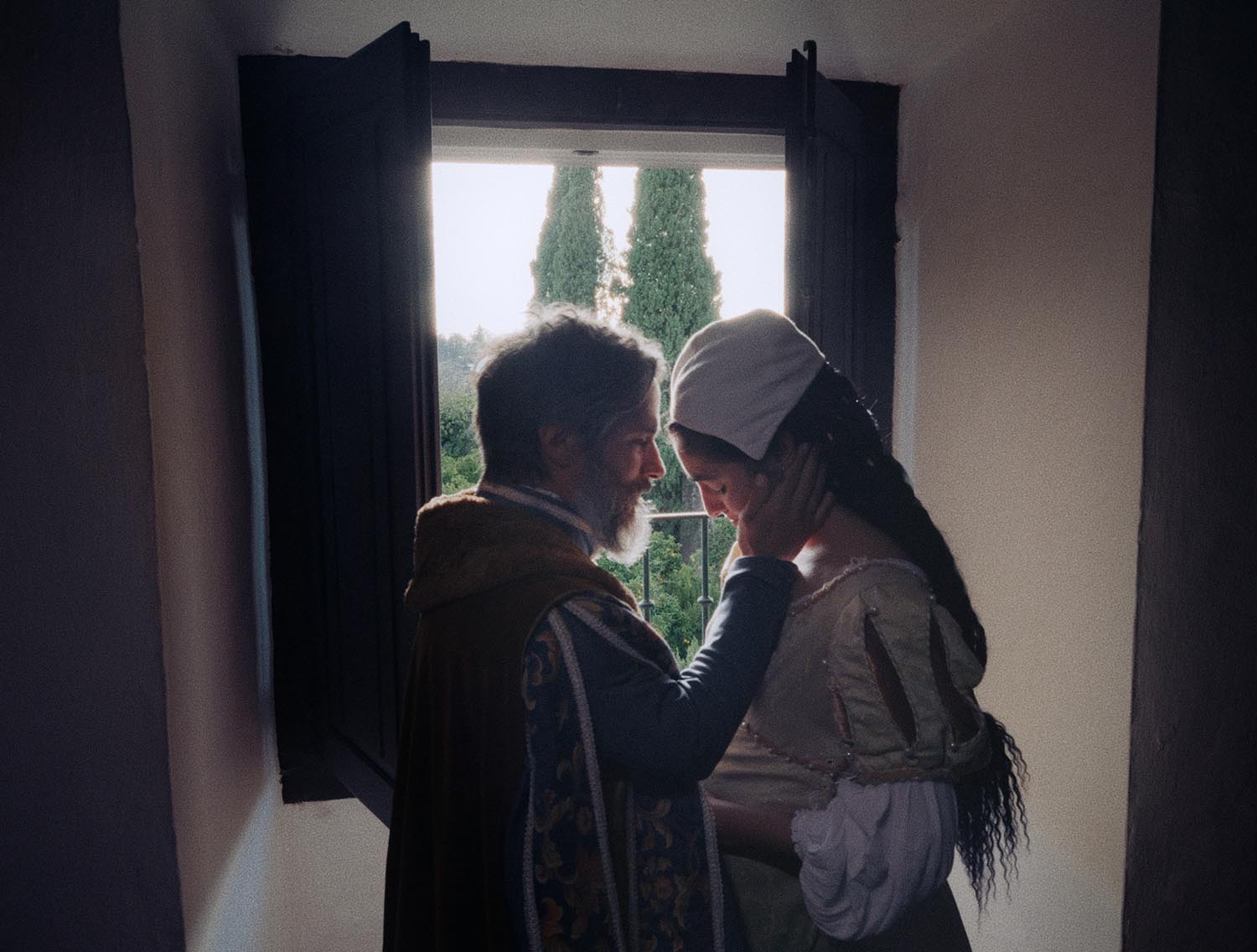
You’ve mentioned that Gael brought more of a Hollywood perspective to the film. How did you find a way of kind of harmonizing your sensibilities?
It was hard at the very beginning because I’m so used to working alone or having a very lean group and motley crew. But with Gael, he’s used to being pampered in the Hollywood way. But, at the end of the day, it’s all about culture and understanding every individual in the production. You need to understand from the utility man to the cook and all the actors.
The more directors I talk to, the more I realize that the job is people management as much as anything.
You’re a doctor as well. You’re also a psychiatrist, because you’re dealing with their idiosyncrasies and uniqueness. Everything is sui generis.
You’ve likened Magellan to an “acid trip” or a poem in comparison to your other works. How does that change the way you construct the film in the edit?
Well, we shot a lot, so the final cut that you’re watching went through so much. I think I have a full 10 to 12 hours of footage, so to cut that into a three-hour thing, it’s like, “Wow, what am I gonna do?” I call it an acid trip because of how we organized and articulated the vastness into a single narrative that can still work. I call it an acid trip because it’s just like taking LSD. Think of the Beatles’s “Strawberry Fields Forever” and how they adjusted the syllabic measures. You listen to that song, and you think it’s easy. But if you start dissecting it, [you may ask], “How did they come up with this music?” There are so many variations, everything is changing, and the melody is so good. I called it an acid trip because of songs like “Strawberry Fields Forever,” Bob Dylan’s “Like a Rolling Stone,” or some poetry by Rilke. You go through a difficult process, and you have to connect things so that it will work. In cinema, it’s articulating it visually. But cinema is very complicated, because you also have to go for beats and rhythm as well. Finding those is very difficult with vast materials! But, for now, this is the best cut.
You’ve stated wanting to democratically let viewers soak in a frame across a single take. But the edit is the filmmaker’s most forceful tool, because you’re forcing viewers to see images in your desired order. With so many interesting smashes and juxtapositions in Magellan, do you have an overarching ideology of the cut?
For me, it’s very instinctive. Originally, it was supposed to be black and white, and when we showed the images, the colors were so good that we considered color. It became part of the process. Am I going to allow color now here? And I said, “Yes, we can do it.” So we started articulating it in color, and then connecting the images is another struggle. You act like a musician and an editor, in a very journalistic way. You have to check the grammar, syntax, and syllabic measures. But when you connect things, you have to feel it. You have to be very primal. Destroy all the notions you have. Destroy it, detach from it, then watch and experience it. That’s more important. If you keep going with theories, it will destroy the whole thing. It limits you. You have to be free. If it works, it works. With Magellan, amazingly, it worked.
Does that mean that all of the former film critic has left you?
It’s very hard to go for that [mindset]. I studied cinema as well, all the theories and everything. It’s very distracting, but it helps with discourse. Before you go into the process of filmmaking. It helps when you talk about the rigidness of Antonioni, the spirituality of Tarkovsky, and the humanism of Ozu. You mix all those perspectives and then just destroy them.
You’ve described a key feature of novels as having gaps in them. Were you able to create gaps in Magellan despite it being in a more poetic register?
One day, if I’m allowed to do the long [version of Magellan], it’s gonna be a novel. For me, it’s the highest art form, especially the classics. The way Tolstoy, Dostoyevsky, Kafka, all those guys did it, they created things that are hard to approximate in the medium of cinema because things are being imposed on it by these market orthodoxies of two-hour [runtimes]. These things limit cinema, and to approximate the novel is why I made those long films.
You’ve said that you don’t like thinking about endings because they can feel artificial, but how do you conceive of your beginnings to bring people into the world you’ve created? In Magellan, that opening shot of the native woman perceiving the colonizers imposing on her home is so striking.
[In many] indigenous cultures, even now, they still think the same way: [that] a Messiah, a white man, is coming to save them. That myth is the idea of emancipation—the waiting for the white man to come and save you. That opening shot has an urgency [to it for the way it wants] to destroy the myth. Come on, they didn’t come to save them.
I know you’ve said that there may be an extended version of Magellan coming…
I don’t know if I’ll do it! This work is already fulfilled, in a way.
If both were to exist, what would make the poetic version special beyond the convenient runtime?
For me, you cannot compare them. If I do the eight- or nine-hour version, it’s another film. It will go to another discourse. Maybe it will center on Beatriz [Magellan’s wife] or Enrique de Malacca [Magellan’s slave translator]. Or it might be an adventure film!
Since 2001, we've brought you uncompromising, candid takes on the world of film, music, television, video games, theater, and more. Independently owned and operated publications like Slant have been hit hard in recent years, but we’re committed to keeping our content free and accessible—meaning no paywalls or fees.
If you like what we do, please consider subscribing to our Patreon or making a donation.