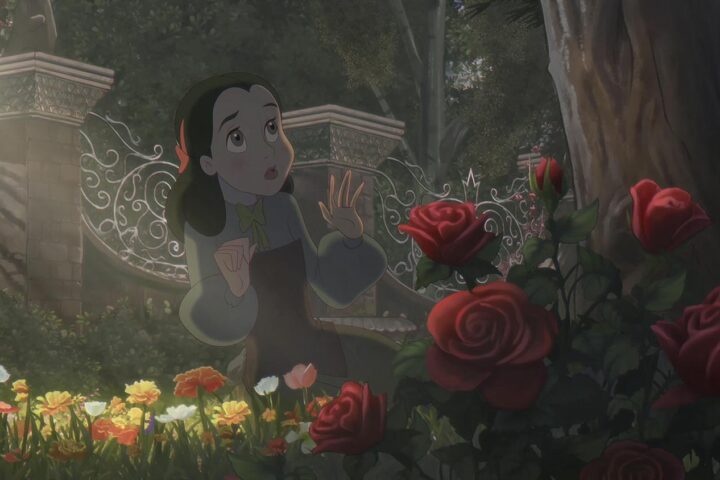
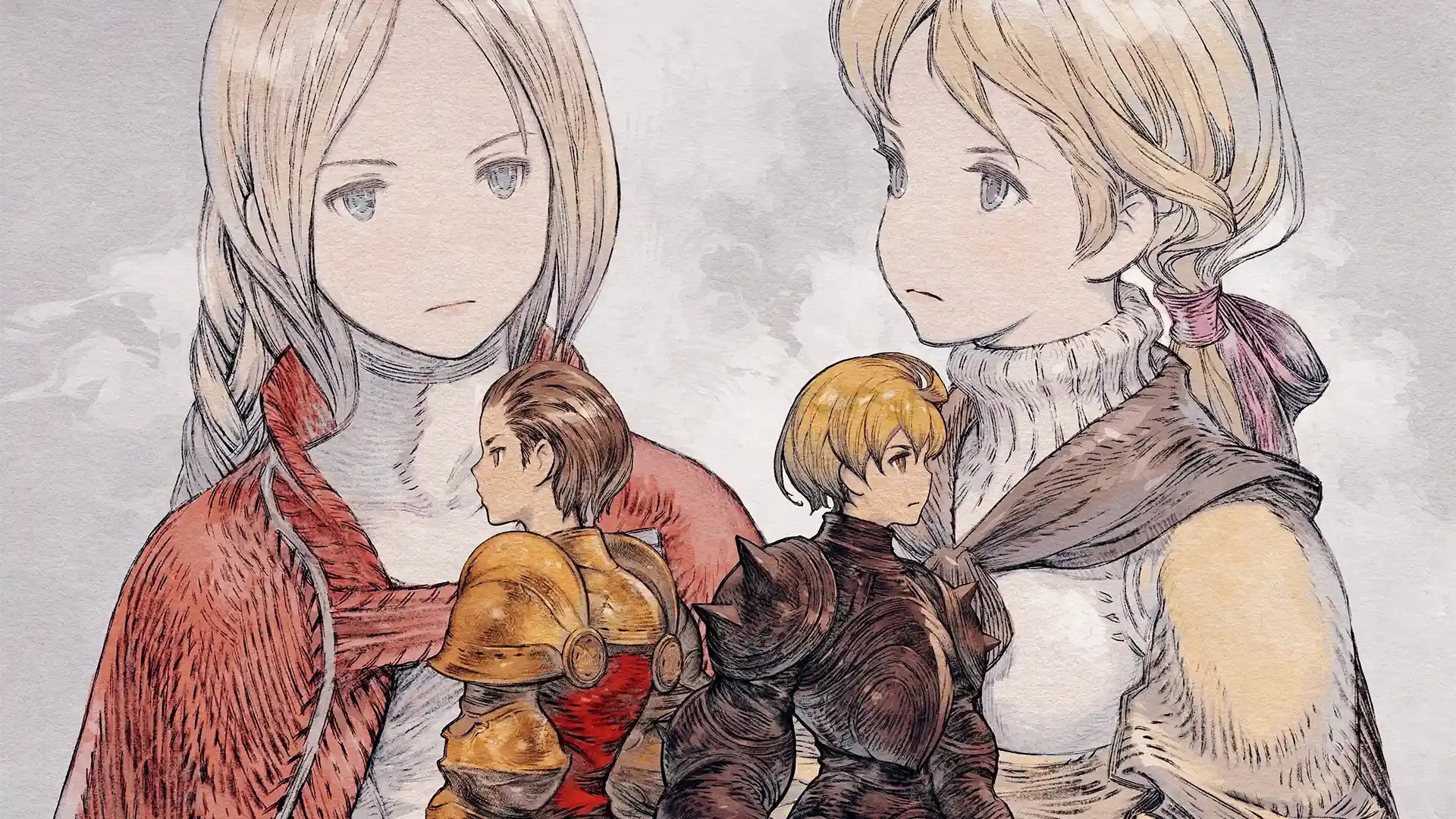
The historical record of the kingdom of Ivalice is dotted with inflection points triggered by Delita Heiral, a commoner who emerged from the so-called War of the Lions as a hero. So, too, has Ivalice been more subtly shaped by Delita’s childhood friend, Ramza Beoulve, the protagonist of Final Fantasy Tactics. As the game’s narrator explains, a vengeful church buried the tales of Ramza’s feats and sacrifices during the struggle for the country’s throne. All that we help him achieve, everything we can’t keep him from losing, will soon be forgotten.
Directed and written by Matsuno Yasumi and first released in 1997, Final Fantasy Tactics is a treatise on historicization: its artificiality, its fickleness, and its capacity to abuse and be abused. What, then, does it mean for Square Enix to remaster the title? In an industry and culture bent on recommodifying the past—often with an airbrush in hand and idiosyncratic expression in its sights—this renovation could easily have betrayed the convictions of its source material. But be at rest: Final Fantasy Tactics: The Ivalice Chronicles is a gentle and thoughtful touch-up of a foundational work, a brushing of the text’s sharp teeth.
The passage of nearly three decades has done little to dull the buzzing tension of Final Fantasy Tactics’s turn-based skirmishes. Throughout, you unleash your cadre of soldiers on dioramic landscapes that beg to be held in hand and rotated around, their topography scrutinized for strategic positions. The stages are, for the most part, thrillingly compact—less sprawling battlefields than boxing rings, where one stride too far into enemy lines could spell swift death. As a result, combat consistently provides white-knuckle thrills despite the unhurried pacing of your party’s actions and impromptu poetic incantations.
The Ivalice Chronicles adds the option to fast forward character animations and dialogue, the latter of which has received perfectly weary voice acting in the remaster. But in contrast to Square Enix’s implementation of the speed-up setting in Tactics Ogre: Reborn, where it’s an on/off toggle, here you must actively hold down a button. What can initially feel like a nuisance proves a charming commitment to theme. Repeatedly activating and maintaining turbo mode forces you to consider what you’re accelerating: war, austerity, heartbreak, and other woes rarely rushed in reality. It’s more honest and affecting to let it all play out at its own pace.
Ramza’s quest, to be sure, lacks not for distress. The conflict of Final Fantasy Tactics erupts in the wake of a 50-year-long war: Ivalice, hamstrung by debt, can’t pay its veterans, and many turn to crime and violence to survive. That backdrop inspires immense sympathy for Ramza’s followers, each endearingly large-footed, bear-pawed, and randomly named. The state has failed them, leaving you to invest in their wellbeing, to equip, protect, and sustain them.
The hours you spend tinkering with gear and perusing shops and unlocking new skills for your warriors become demonstrations of devoted care. Even in the menu-filled, occasionally tedious realm of party management, Final Fantasy Tactics asserts its core belief: that the course of history is molded not just by generational events of upheaval, but by the choices we make in every passing second. We define the future with every moment we spend tending to the needs of our allies and spurning our oppressors, every insistence on the promise of something better.
Thus does Final Fantasy Tactics, as both a political saga and a mechanical exercise, gain renewed urgency given the state of much of the world—as we barrel toward abysses too manifold to count, as arms open to fascism, and as the virtue of truth is steadily obliterated. In the story of Ramza, and in life, we see that we don’t plummet into chaos as much as we descend into it one step at a time. That way, too, lies the path out.
This game was reviewed with a code provided by fortyseven communications.
Since 2001, we've brought you uncompromising, candid takes on the world of film, music, television, video games, theater, and more. Independently owned and operated publications like Slant have been hit hard in recent years, but we’re committed to keeping our content free and accessible—meaning no paywalls or fees.
If you like what we do, please consider subscribing to our Patreon or making a donation.