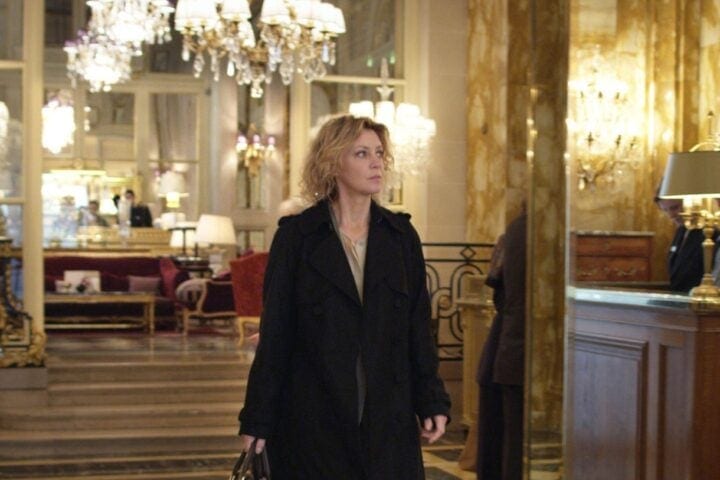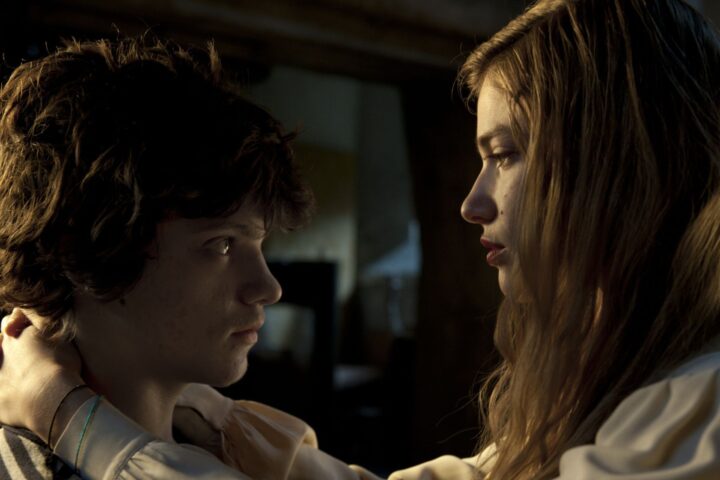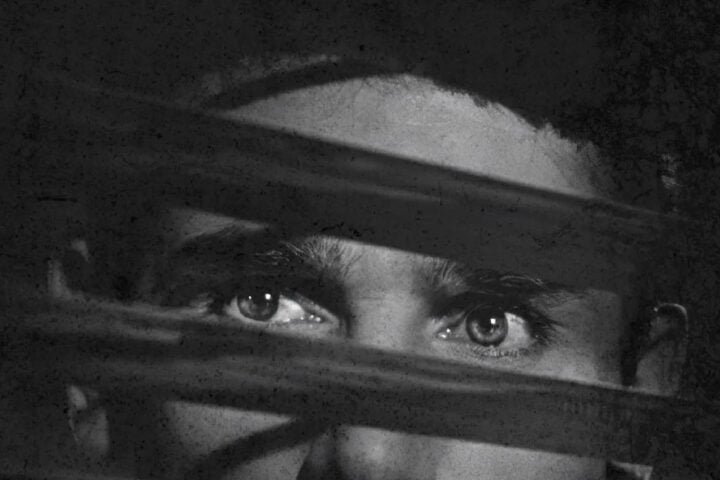
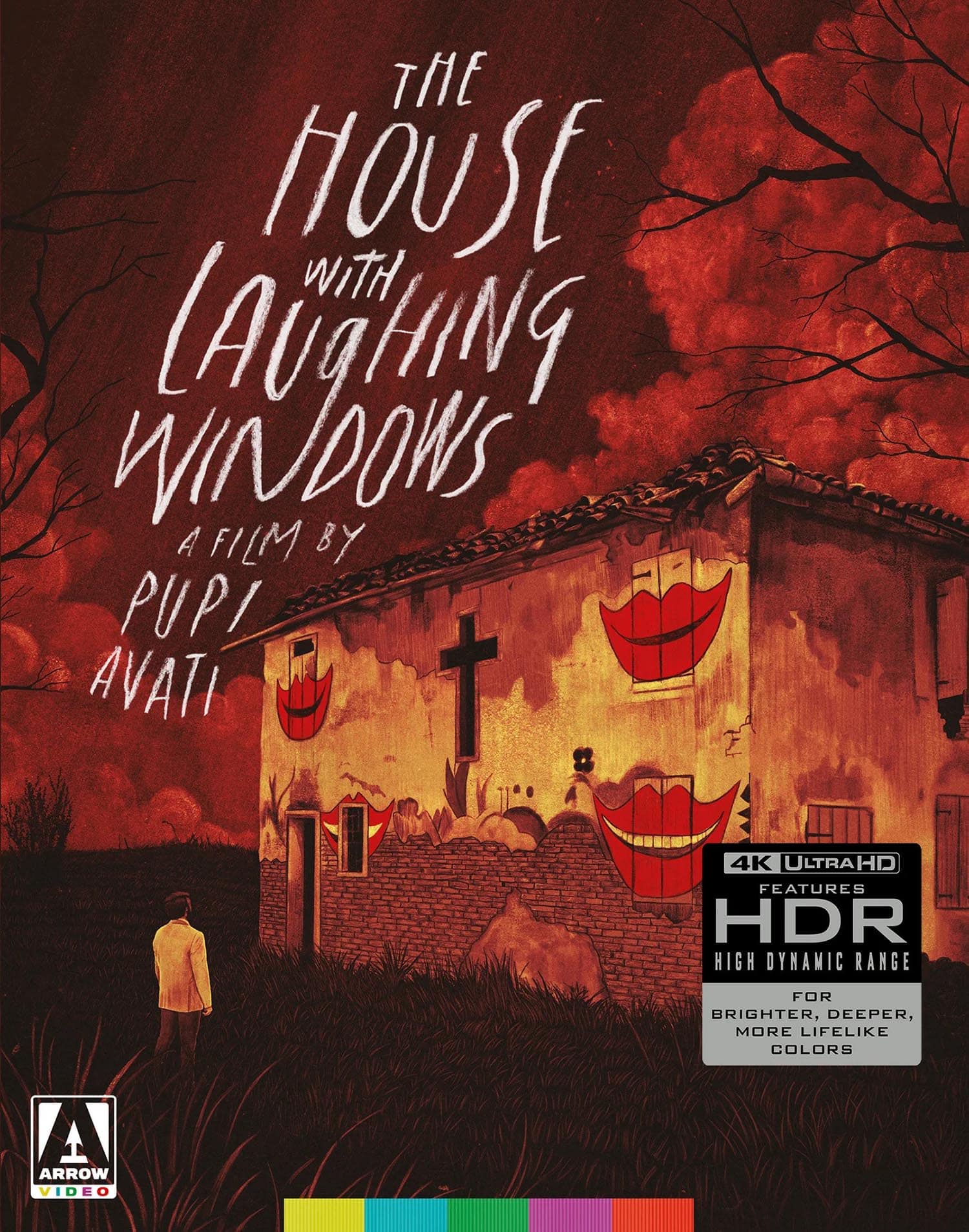
 Tourists haven’t flocked to the Italian island village in Pupi Avati’s slow-burning giallo The House with Laughing Windows since “the German pigs in 1940.” And when art restorer Stefano (Lino Capolicchio) arrives there, he finds a town that the Italian economic miracle of the 1950s and ’60s left behind. The trauma from a foreign occupation and fascist past lingers in the air like an invisible, untreated sickness, and every strange, sad, or suspicious face that casts its skeptical gaze upon Stefano hints at the tainted, shattered nature of their collective soul.
Assigned to restore a fresco of the Christian martyr Saint Sebastian, Stefano is confronted by an image of horrific violence: a man with four knives embedded in his chest and stomach. Not only are the murderers in the fresco covered up by years of dirt and debris, but the church which houses it was used by the SS during World War II to store corpses. Even more unsettling is that the artist who painted it returned from Brazil having gone mad and murdered several townspeople with the help of his two sisters.
A decidedly un-violent film that’s fixated on the legacy of violence, The House with Laughing Windows brims with enigmatic dread. Every scene and location evokes a potent sense of unease and disorientation, with nearly every townsperson involved in keeping a secret from any and all outsiders. There’s “no entertainment, just wine,” and while the curious Stefano looks to unearth clues of a new murder that happens in this ossified village, all he discovers are muffled threats over the telephone and a haunting tape recording of the muttered rantings of a lunatic.
The fresco’s painter is known as “the painter of agony,” but his agony is also that of the island, and the brutal realities he captures in his paintings are the reality of the villagers as well. Just as violence flowed from that reality into his paintings, so, too, does it continue to flow from those paintings back into the village. This cyclical violence, and the secrecy around it, is what gives The House with Laughing Windows its raw, unnerving charge. Its bone-chilling finale especially cuts deep, both literally and metaphorically, not as much through the crimson flow of blood it depicts as the philosophical and historical weight contained within the carnage.
Image/Sound
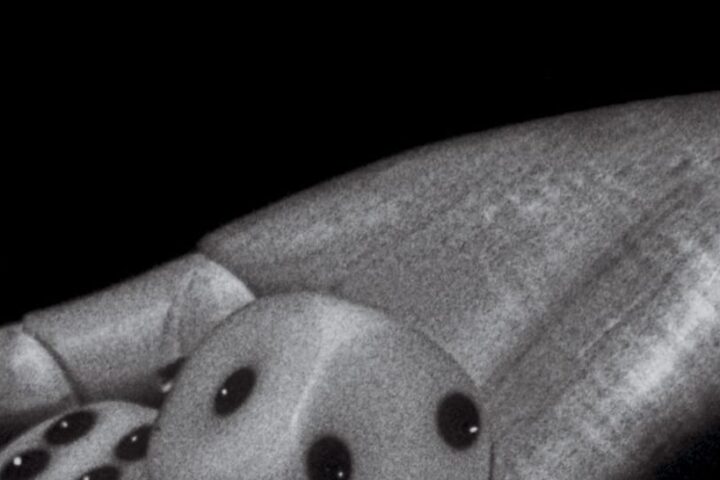
Arrow’s transfer of a 4K restoration from the original camera negative looks fantastic. The black levels are deep and inky, while the color balancing is naturalistic, highlighting a subtle yet wide range of muted colors found in the various frescos, buildings, costumes, as well as the more vibrant blues and greens found in the brighter, exterior daytime sequences. The image detail is spectacular throughout and the grain is stable and consistent. The mono audio track isn’t as impressive, but it’s robust enough for Amedeo Tommassi’s suitably eerie score to resonate and the Foley effects and post-dubbed Italian audio come through loud and clear.
Extras
In the first of two new audio commentaries, critics Alexandra Heller-Nicholas and Josh Nelson delve into their personal histories with gialli and The House with Laughing Windows before exploring the film’s ambivalence toward modernity and its engagement with the cultural changes that occurred in Italy in the three decades after WWII. The second commentary, with critics Eugenio Ercolani and Troy Howarth, nicely complements the first, focusing more on the inspirations for the film and the backgrounds of its actors, filmmakers, and locations.
The feature-length documentary Painted Screams includes interviews with director Pupi Avati, the screenwriters, and various actors and crew members, who all talk about making the film on the cheap and provide insight into its pre-production and production process. There are also two excellent new video essays by Kat Ellinger and Chris Alexander. Ellinger discusses The House with Laughing Windows as a work of giallo fantastico, concentrating on its more surrealist impulses, while also touching on the various Apollonian and Dionysian elements at play in the film. Meanwhile, Alexander examines the haunting opening title sequence, arguing why it functions as the perfect mission statement for the film. Rounding out this gorgeously packaged release are a double-sided foldout poster and a sturdy, 58-page bound booklet with essays by Matt Rogerson, Willow Maclay, Alexia Kannas, Anton Bitel, and Stefano Baschiera.
Overall
Arrow’s 4K release of Pupi Avati’s criminally underseen giallo from 1976 boasts a gorgeous transfer and an array of magnificently curated extras.
Since 2001, we've brought you uncompromising, candid takes on the world of film, music, television, video games, theater, and more. Independently owned and operated publications like Slant have been hit hard in recent years, but we’re committed to keeping our content free and accessible—meaning no paywalls or fees.
If you like what we do, please consider subscribing to our Patreon or making a donation.