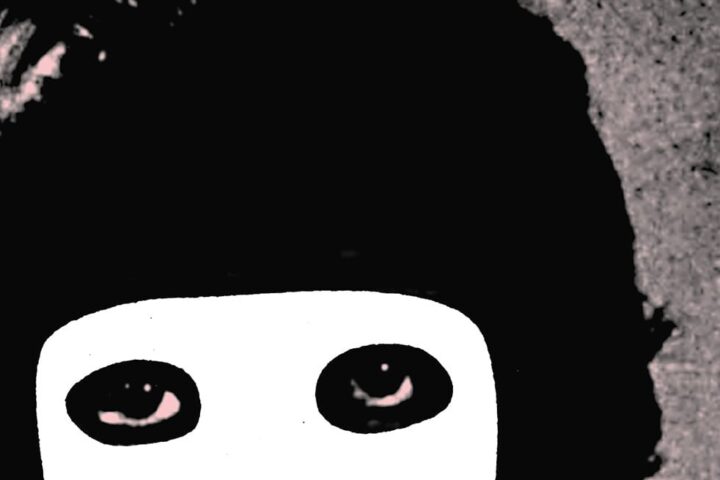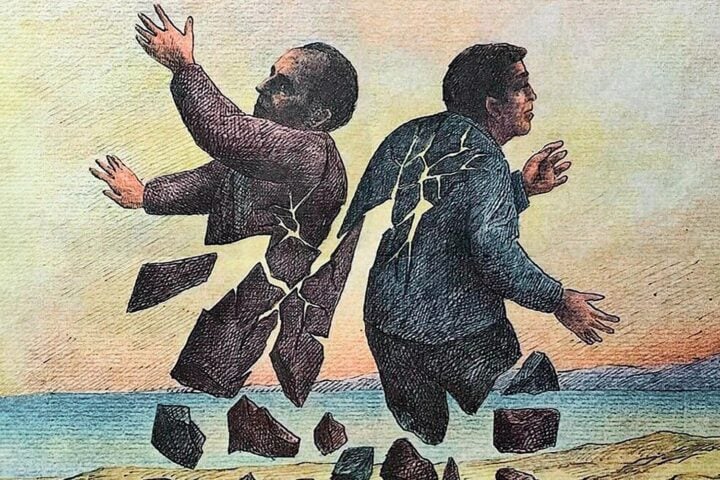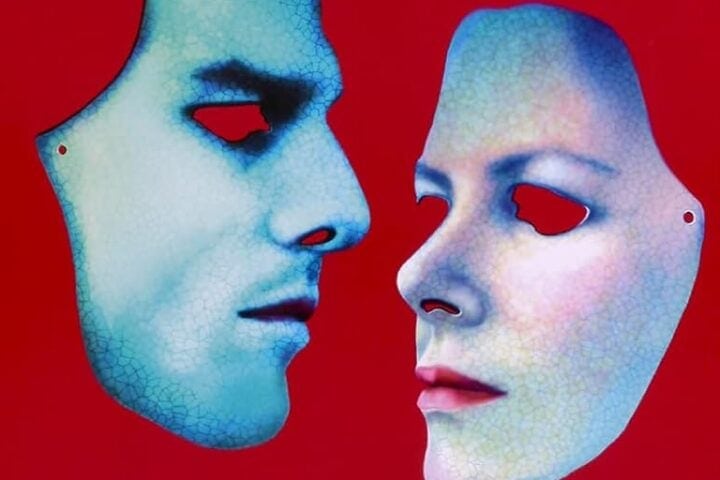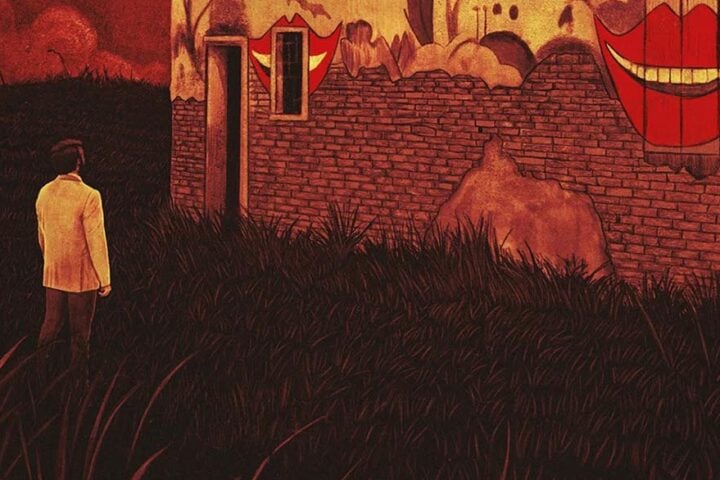
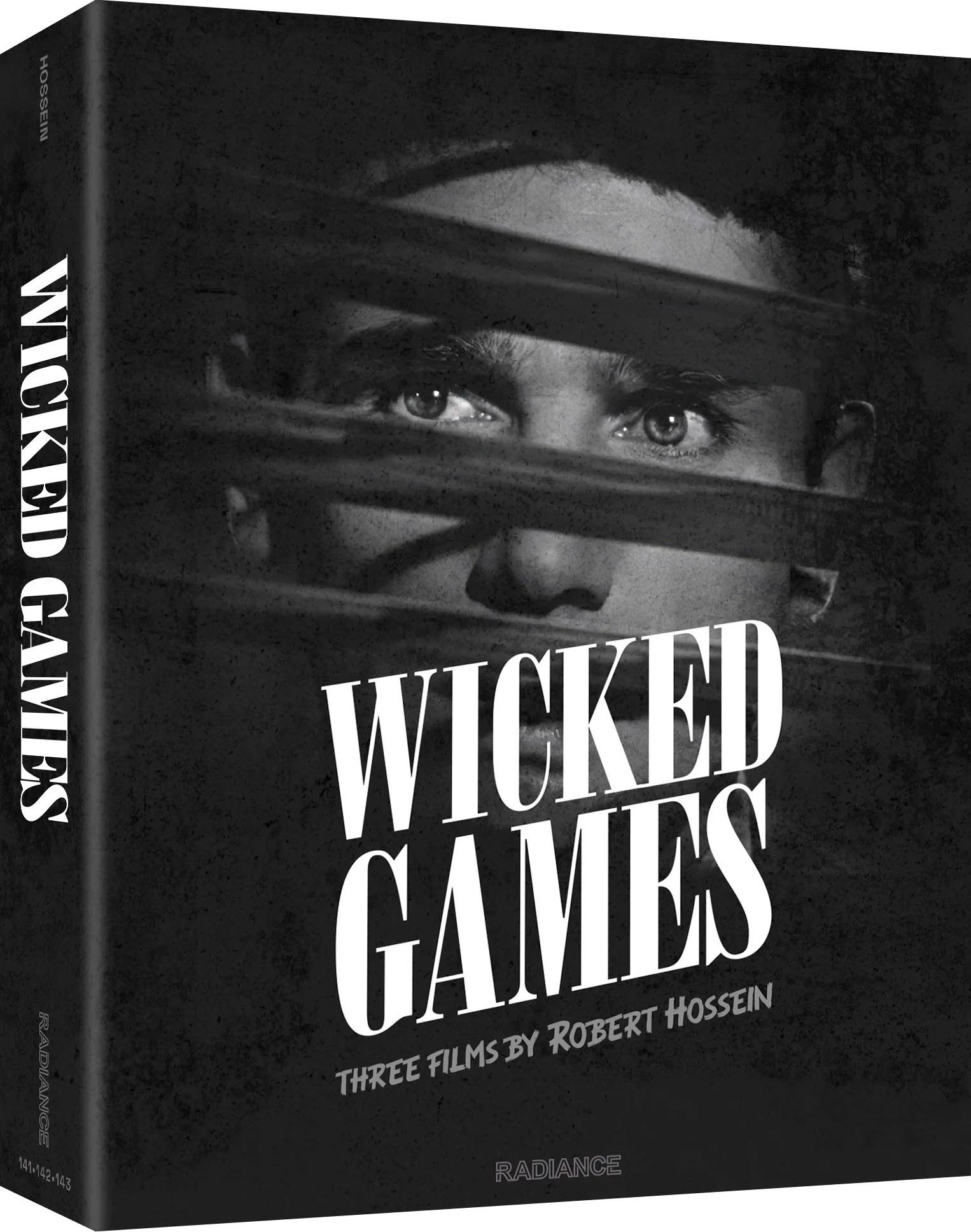
 The same year he had his breakthrough performance in Jules Dassin’s Rififi, Robert Hossein directed his first film. The trio of titles included in Radiance’s Wicked Games: Three Films by Robert Hossein were released between 1955 and 1961, parallel to the genesis and rise of the French New Wave, with Agnès Varda’s La Pointe Courte on one end and Jean-Luc Godard’s A Woman Is a Woman on the other. The Cahiers du Cinéma critics dismissed Hossein’s work as old-fashioned, lumping him in with the French “tradition of quality” filmmakers that François Truffaut in particular railed against. To add insult to injury, the extreme popularity of the New Wave films abroad all but assured Hossein’s early works wouldn’t get much of a chance to find an audience outside of France.
Based on a play by crime novelist and playwright Frédéric Dard, The Wicked Go to Hell opens with two contemptible crooks, Macquart (Henri Vidal) and Rudel (Serge Reggiani), at each other’s throats after being accused of ratting out a recently executed inmate. With neither man willing to confess, the duo hatch a successful escape plan and hole up in the remote house of a painter (Guy Kerner) and his beautiful young wife, Eva (Marina Vlady). It’s a scenario that’s perhaps a bit old-hat, but Hossein uses it as a means to challenge and explore traditional codes of masculinity and honor, bringing a modern sensibility to the proceedings.
The Wicked Go to Hell is marked by its lean, efficient narrative and stark visual style, both of which carry over to the noir-tinged opening of Nude in a White Car. Vlady, Hossein’s wife at the time, again plays an object of desire named Eva, though here she’s in femme fatale mode, shrouded in darkness and picking up the hapless Pierre (Robert Hossein) on the side of the road and seducing him before kicking him out of her car at gunpoint. Or was it her after all?
After Pierre tracks down the car, he discovers Eva in a wheelchair, living with her lookalike sister and caretaker, Hélène. The film, like The Wicked Go to Hell, revolves around a trio caught up in mind games. And as the focus shifts away from which of the sisters was actually in the car on that fateful night and toward the resentments that may or may not be driving Eva and Hélène as they vie for Pierre’s affections, the plot grows increasingly absurd. Pity, then, that the film’s dry, self-serious tone only brings a certain leadenness to the proceedings.
The austerity that Hossein was prone to as an artist better serves the final film in the set. Shot in a mountainous, stunningly beautiful region of Montenegro, The Taste of Violence focuses on the conflict between a band of revolutionaries and the military forces of an unnamed, oppressive Latin American country. Hossein is less interested in the political dimensions of his story than the moral and existential conflicts that drive the trio of rebels, who capture the president’s daughter, Maria (Giovanna Ralli), and plan to ransom her for 50 prisoners of war.
Again, Hossein triangulates his exploration of greed, lust, and loyalty among a small group of men, led by the noble Perez (Hossein), while shifting allegiances show how men can drift away from honor when money and sex are on the table. While Perez is initially presented as righteous, his sister (Madeleine Robinson) and Maria disavow him of his self-perceived virtuousness and martyr complex, undermining his belief in the value of violent rebellion. The story’s ethical quandaries play out in rigorously composed compositions that deemphasize the more thrilling elements of typical wartime-set westerns, and in doing so key themselves to the fractured interiority of men who are forced to confront the faultiness of their preconceptions.
Image/Sound
Sourced from recent 2K restorations by Gaumont, the three transfers look fantastic across the board. The image is consistently sharp and very crisp, with strong detail reaching far into the backgrounds, as evidenced by the wide shots of Montenegrin vistas in A Taste of Violence. There’s no sign of any damage or debris and contrast is impressive. The mono audio tracks are a touch less impressive, but there’s no discernible hisses in the countless stretches of silence that Hossein likes to employ and the dialogue is nice and crisp.
Extras
Critic and author Tim Lucas provides excellent audio commentaries for each of the three films. In addition to expert scene and aesthetic analyses, he delves into the backgrounds of many of the films’ actors, as well as the fascinating career of Robert Hossein and how the boom of the French New Wave filmmakers around the same time hampered his success outside of France.
Along with the commentary, the disc on which Wicked Go to Hell is housed comes with a new making-of featurette with historian Lucas Balbo, who discusses the film’s performances and the challenges that Hossein faced throughout its making, including the harsh shooting conditions. Even more insightful is film historian Howard S. Berger’s video essay on Hossein that highlights his singular presence as an actor and his spare yet elegant visual style.
The highlight of Nude in a White Car’s disc is critic Samm Deighan’s excellent video essay about the evolution of the femme fatale, touching on everything from the character type’s roots in German Expressionist movement and works of French poetic realism through. In a brief interview, actress Marina Vlady talks about the joys and challenges of making a number of films with Hossein, her husband at the time, at the beginning of his career.
The final disc includes an interview with author C. Courtney Joyner about The Taste of Violence, which he places within the context of the Zapata western subgenre that would become popular in the 1960s. There’s also a brief interview with filmmaker Alex Cox, who extends much praise to Hossein’s filmmaking style. Lastly, the package is rounded out with a lovely 40-page booklet with archival writing on the films by Lucas Balbo and Robert Hossein and a lengthy essay by critic Walter Chaw, who astutely analyzes the shared themes and aesthetics of all three films.
Overall
Packed with thoughtful and engaging new extras, Radiance Films’s excellent new box set brings much-needed attention to a singular actor-director’s early output.
Since 2001, we've brought you uncompromising, candid takes on the world of film, music, television, video games, theater, and more. Independently owned and operated publications like Slant have been hit hard in recent years, but we’re committed to keeping our content free and accessible—meaning no paywalls or fees.
If you like what we do, please consider subscribing to our Patreon or making a donation.