Death is a paradox, at once the most familiar part of our world and, per Shakespeare, “the undiscovered country.” Mascha Schilinski’s haunting Sound of Falling, which is set across the entirety of the last century in rural eastern Germany, probes at the inner lives of four girls of different generations who live in close proximity to death—and to each other.
First, we meet Erika (Lea Drinda), a young woman who fills the slower hours on her parents’ WWII-era farm by imitating her amputee uncle, Fritz (Martin Rother), binding her calf to her thigh and traipsing around the house—when she’s not sneaking glances at his naked torso. Whatever else connects the different eras Sound of Falling jumps between, dark and confused intrafamilial longings always seem to hang in the air around the farm, and Schilinski’s characters, like Erika, constantly seesaw between the pleasure principle and the death drive.
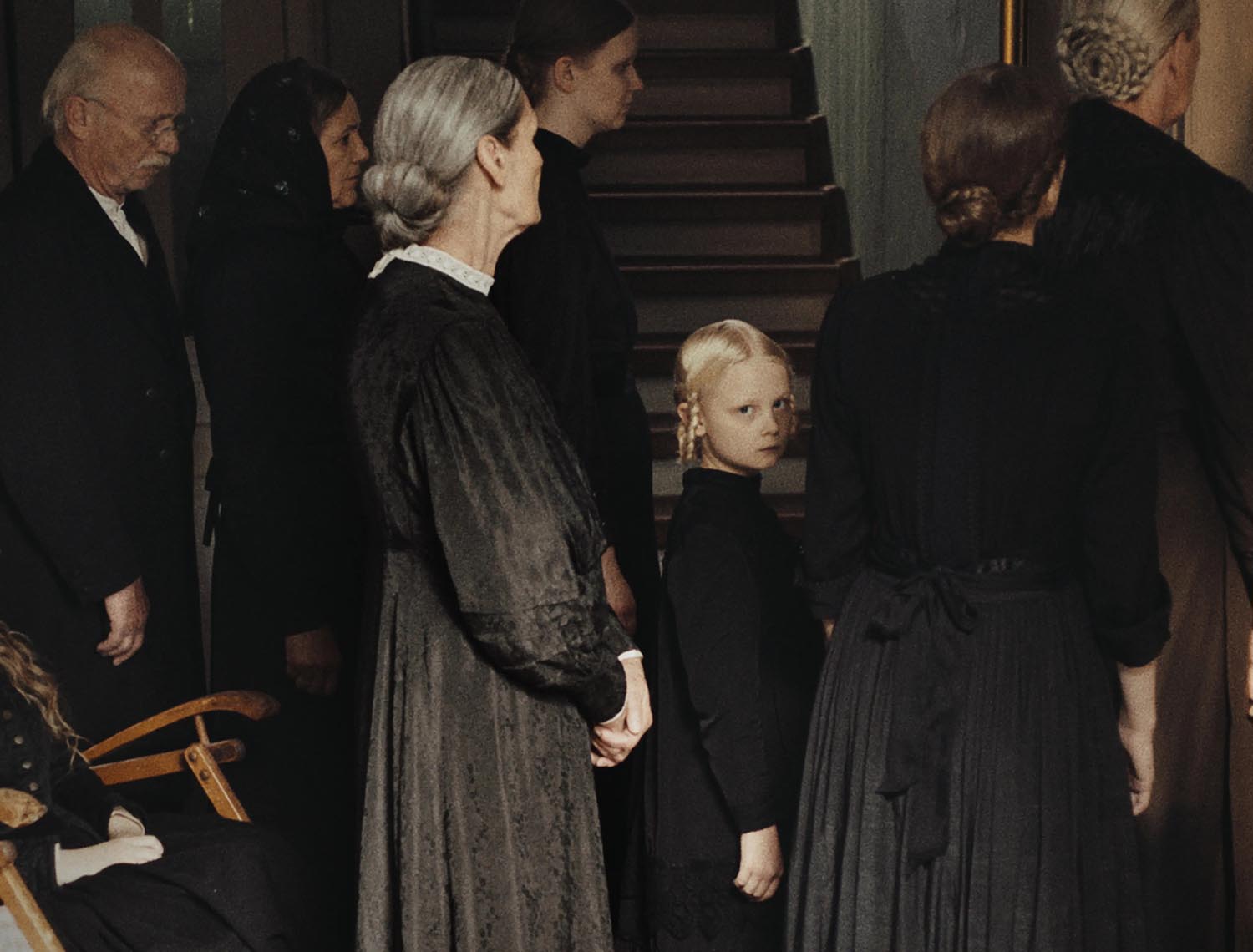
More childish, less overtly erotic versions of the same fascinations drive the much younger Alma (Hanna Heckt). Her brother, Fritz (Filip Schnack)—we realize quickly that he’s a younger version of Erika’s uncle, and that the farmhouse they live in is the same as in the earlier scene—has recently had his leg amputated for reasons only tangentially related to the Great War that’s currently being waged. Throughout this stretch of Schilinski’s film, Alma and her sisters illicitly spy on his troubled convalescence through the keyhole in his door. The specter of death can be found throughout the house; Alma is transfixed by a photograph of her mother posing with the propped-up body of a child who died before Alma was born, also called Alma.
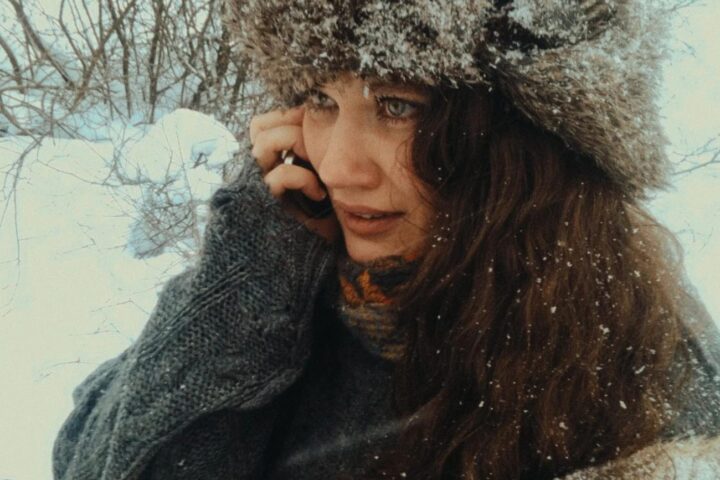
Doubles and reflections across the eras compound as Schilinski introduces us to other introspective youngsters confronting death on the Saxon plains. Abrupt transitions bring us, first, to the GDR era and the teenaged Angelika (Lena Urzendowsky), a later offspring of the family experiencing a particularly odious case of incestuous desire and suicidal ideation, and, then, roughly in the contemporary era, Lenka (Laeni Geiseler), whose family has moved into the old farmhouse. Safer and more comfortable than earlier generations of girls, Lenka is nevertheless challenged by the inaccessibility of death when she comes across Kaya (Ninel Geiger), a strange and gloomy girl whose mother has died tragically.
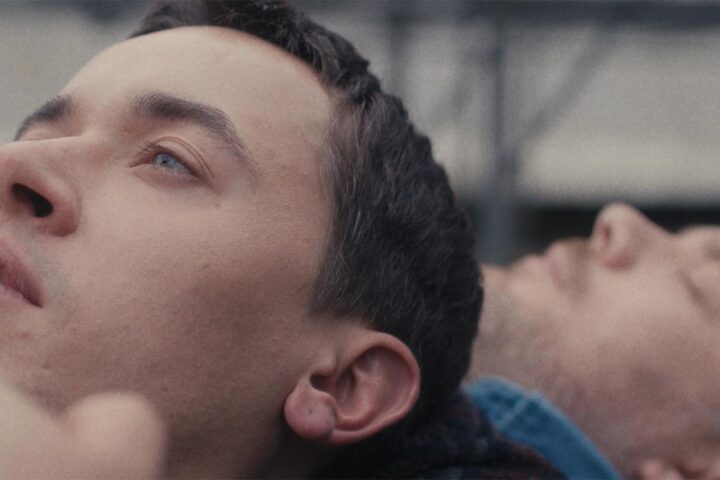
The film’s German title translates to Looking into the Sun. That, at one point, is what we see Angelika do as she lies amid the wheat fields and contemplates an escape from her sordid realities. Whatever else changes between thee eras depicted in the film, of course, celestial bodies remain where they are (a wonderful traveling shot of Angelika sprinting across a field emphasizes the moon, thanks to parallax, standing in place).
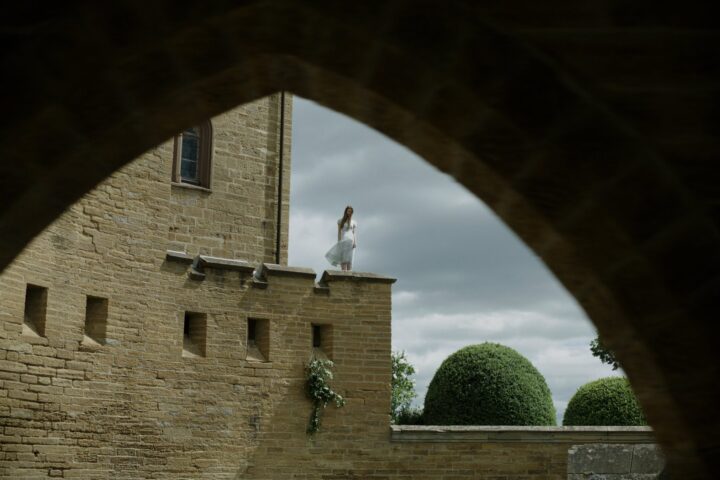
Each of the stories takes place during summer, with the grain of Fabian Gamper’s 35mm images giving the farmhouse and its surrounding landscape a look that’s warm, nostalgic, and almost dreamlike. The severity of Alma’s agrarian 1910s existence evokes Michel Haneke’s The White Ribbon, but the air of irreality created by Sound of Falling’s labyrinthine narrative structure and dreamy images makes the film closer to Andrei Tarkovsky’s elusive, poetic The Mirror.
The almost gothic setting in which Alma and her family engage in their strange Victorian customs may be more engaging, and Lenka’s experiences may be more relatable as a sort of strange-vacation memoir, but Angelika is the most complex character. Oppressed by the large family whose jovial communality masks their inner trauma, Angelika’s need to grow up and break out on her own has been cynically capitalized on by her skeevy uncle Uwe (Konstantin Lindhorst), who, it’s heavily implied, has groomed and seduced her. Urzendowsky stands out among a set of fantastic young actors, capturing the pain beneath the surface of Angelika’s cool teenage exterior—that is, the burgeoning awareness of what Uncle Uwe has done to her.
Visual and audio motifs tie the worlds of these girls’ together: a hole in the barn door that offers escape or capture, vaguely threatening eels that live in a river, characters who look to the sky and mutter the word “warm” to themselves, photographs that turn the living into ghosts and project the dead into the world of the living. Schilinski’s poetic interweaving of four generations suggests, well, the sound of falling, of the past resonating in the present. Every time we transition between time periods, a low hum crescendos to an overwhelming bassy drone, as if a microphone had been dropped from one plane of time and was rushing downwards to another.
As one might unfortunately expect from a look at the last century of German history in particular, the past comes off in Sound of Falling as an onerous, if unseen, weight on the present, or even as an unhealable wound. It’s not for nothing that one of the only characters to appear in more than one timeframe is Fritz, whose nightly phantom pains prompts Alma to observe, “it’s funny how something can hurt when it’s not there anymore.” The absence of the dead, like the absence of a leg, seems to be no barrier to our feeling their pain.
Since 2001, we've brought you uncompromising, candid takes on the world of film, music, television, video games, theater, and more. Independently owned and operated publications like Slant have been hit hard in recent years, but we’re committed to keeping our content free and accessible—meaning no paywalls or fees.
If you like what we do, please consider subscribing to our Patreon or making a donation.