 One of the most intriguing characteristics of Wes Anderson’s films is the paradox between the extreme orderliness of their compositions and the equally outsized flexibility in structure allowed by it. His narratives always exude the density of a thick, small-print block of text, and like a writer—in particular, like one of the modernists who he clearly admires—Anderson exhibits little compunction about moving back and forth between a story’s present, past, and future within the same paragraph, so to speak. With the help of voiceover narration and precisely framed (and often labeled) illustrations, the writer-director creates elastic pockets in a plot’s timeline, rushing off on tangents flooded with information about side characters before snapping back to the story in progress.
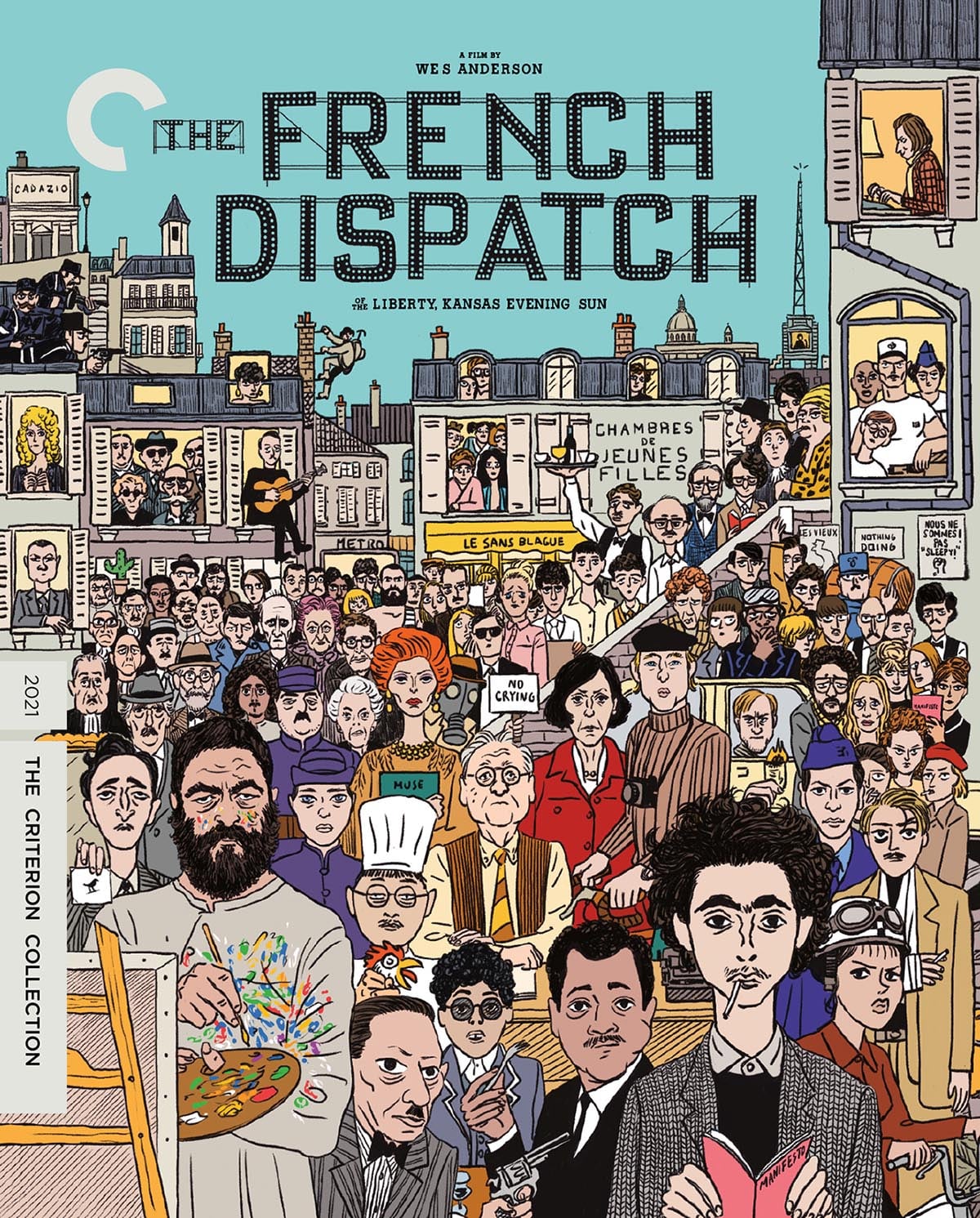
The French Dispatch takes Anderson’s signature play with nested narrations and his love of midcentury culture to new heights. This painstakingly detailed film embeds stories within newspaper articles, lectures, and TV interviews, and incorporates animation and text, in tribute to a mode of authorship that’s mostly disappeared with the decline of print media. Weaving several vignettes that illustrate stories from the titular newspaper based in the fictional and cheekily named French burgh of Ennui-sur-Blasé, The French Dispatch exhibits what may have been special about a borderline fantastical culture, but the film’s sense of busyness keeps it from achieving the emotional impact that its finale is clearly aiming for.
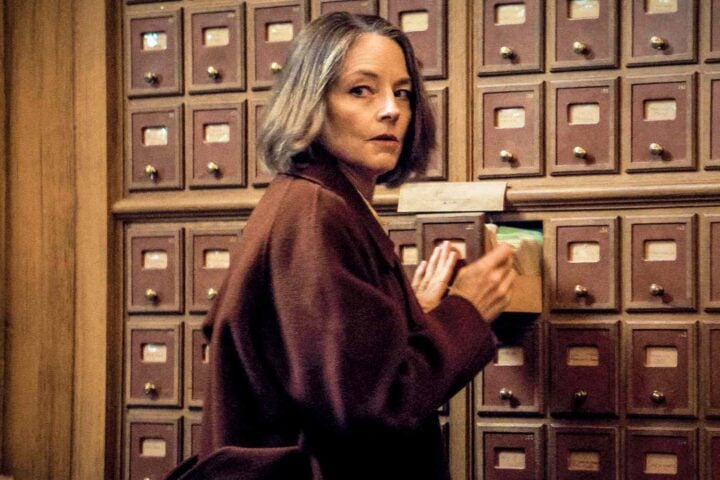
The film is set sometime in the 1960s, as can be gleaned from the cars and the wallpaper, and buildings and spaces bear the influence of Jacques Tati’s Monsieur Hulot movies. In the prologue, a narrator (Anjelica Huston) eloquently introduces us to the various functionaries who pursue their respective crafts in the walls of the newspaper’s labyrinthine but cramped building, almost every one of them played by Anderson mainstays. At the center of the organization is its editor, Arthur Howitzer Jr. (Bill Murray), who began the small, expat publication as an outlet of his father’s newspaper in Liberty, Kansas.
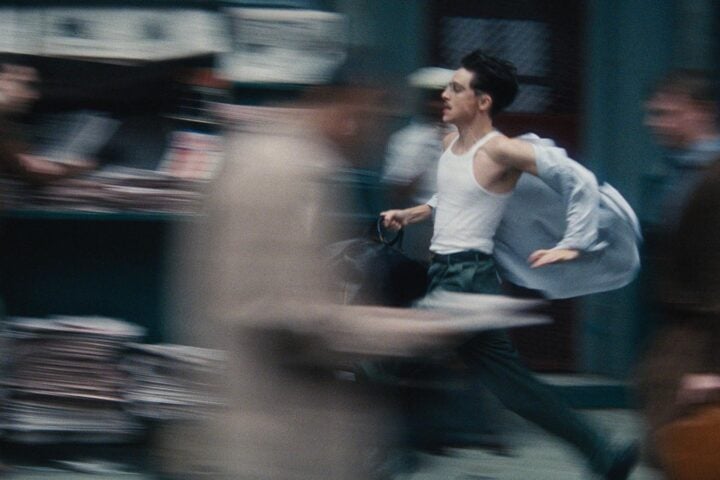
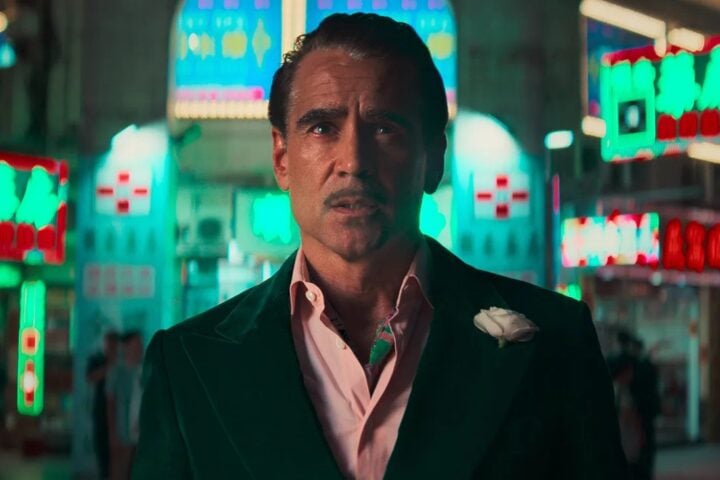
We don’t see too much of these characters, though, as most of the screen time is dedicated to stories by three of the paper’s star writers. Arts reporter J.K.L. Berensen (Tilda Swinton), wearing giant dentures and a bright red wig, recounts the story of Moses Rosenthaler (Benicio del Toro), an abstract artist who’s locked up in the local prison for a double homicide. Lucinda Krementz (Frances McDormand), an aging radical with a hidden vulnerable streak, writes of the local student uprising headed by a passionate youth named Zeffirelli (Timothée Chalamet). And the erudite and sonorous-voiced Roebuck Wright (Jeffrey Wright) tells of a famous chef (Stephen Park) who gets wrapped up in a kidnapping plot and a police stand-off with the local criminal underground whose nameless leader is played by Edward Norton.
These relatively self-contained shorts each pay tribute to the casually serious midcentury intellectual, with their comfortable clothes, dangling cigarettes, and deceptively rigorous approach to the life of the mind. And their intense attention to language is, of course, reflected in Anderson’s own cinematic language. Throughout The French Dispatch, the filmmaker uses overt stylistic devices to delineate levels of narration—the lectures and interviews that frame the stories are in color, but the stories themselves are in black and white—only to profligately mix these styles up on an expressive whim. At one point, he switches back to color to show us Saoirse Ronan’s striking blue eyes as her showgirl character peers through a mail slot. At another, he abruptly transitions to animation for a rollicking action scene.
Anderson’s film is a tizzy but a tightly controlled one, each frame so drolly composed that its meticulousness itself becomes a joke. On occasion, the action even grinds to a halt to serve Anderson’s need to see everything as a pictogram, as a riot in a prison-turned-art-gallery stops in place, improvised weapons looking ludicrous when frozen mid-swing. The French Dispatch is an often fascinating, wondrous exercise in complex narration and visual composition. But despite a wistful epilogue that makes Anderson’s genuine remorse about the passing of a certain kind of literary reporting evident, it’s not always easy to share his sense of feeling.
The French Dispatch’s anthology format makes it difficult to draw emotional, rather than purely intellectual, connections between the individual staff of the newspaper. It doesn’t help that the film is so chockfull of recognizable talent with such tiny parts that Elisabeth Moss isn’t the only one who feels wasted, as well as a source of distraction. The sentiment needed to really sell the wistful conclusion gets buried beneath all the cameos and stylistic flair. It’s appropriate, then, that characters make frequent reference to a sign stenciled over the door in Howitzer’s private office that reminds his staffers not to cry. The good news for Howitzer—but much more ambivalent news for the rest of us—is that despite The French Dispatch’s last-act turn to the sentimental, it’s likely that the audience won’t even be tempted to do so.
Image/Sound
Criterion has transferred a new 4K master of the film that would be extremely difficult to improve upon. The Dolby Vision HDR ensures that there’s a spectacular range of pastel shades in the color sequences and that the contrast in black-and-white scenes is consistently striking. Image clarity is immaculate and every last detail, be it the cracks in an old French building or a minute shift in facial expression, practically pops off the screen. On the audio front, the 5.1 audio track is perfectly balanced, allowing the bustling backgrounds and effects along with Alexandre Desplat’s playful score to take center stage without ever drowning out the dialogue.
Extras
In a new commentary track recorded for this release, Wes Anderson and collaborators Roman Coppola and Jason Schwartzman talk at length about shooting on location in Angoulême, France, the New Yorker pieces that inspired the film, and more. Anderson specifically discusses his desire to re-create a Paris that feels both real and highly informed by French cinema.
Two of the more compelling extras—a selected-scene storyboard animatic and a featurette on the miniatures used in The French Dispatch—attest to the skill and craft that went into creating the on-screen world. Meanwhile, an interview with German visual artist Sandro Kopp touches on the creation of Moses Rosenthaler’s paintings in the film.
Among the other notable extras, actor Rupert Friend reads the late David Bordwell’s essay on French Dispatch over clips from the film, a behind-the-scenes featurette takes a fly-on-the-wall look at Anderson at work on set, and various actors from the film read excerpts from famous New Yorker articles. Rounding out this stacked edition are a pair of audio-only interviews from The New Yorker Radio Hour, an Anderson-directed music video, four short featurettes, and a gorgeous bound booklet with excerpts from the magazine issue of The French Dispatch used for the film’s promotion and a typically erudite essay by critic Richard Brody.
Overall
The Criterion Collection rolls out the red carpet for director Wes Anderson’s ode to France, French cinema, and The New Yorker.
Since 2001, we've brought you uncompromising, candid takes on the world of film, music, television, video games, theater, and more. Independently owned and operated publications like Slant have been hit hard in recent years, but we’re committed to keeping our content free and accessible—meaning no paywalls or fees.
If you like what we do, please consider subscribing to our Patreon or making a donation.