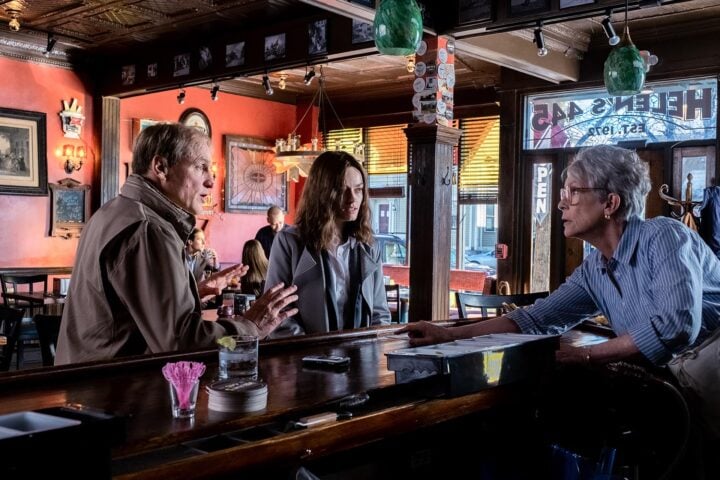
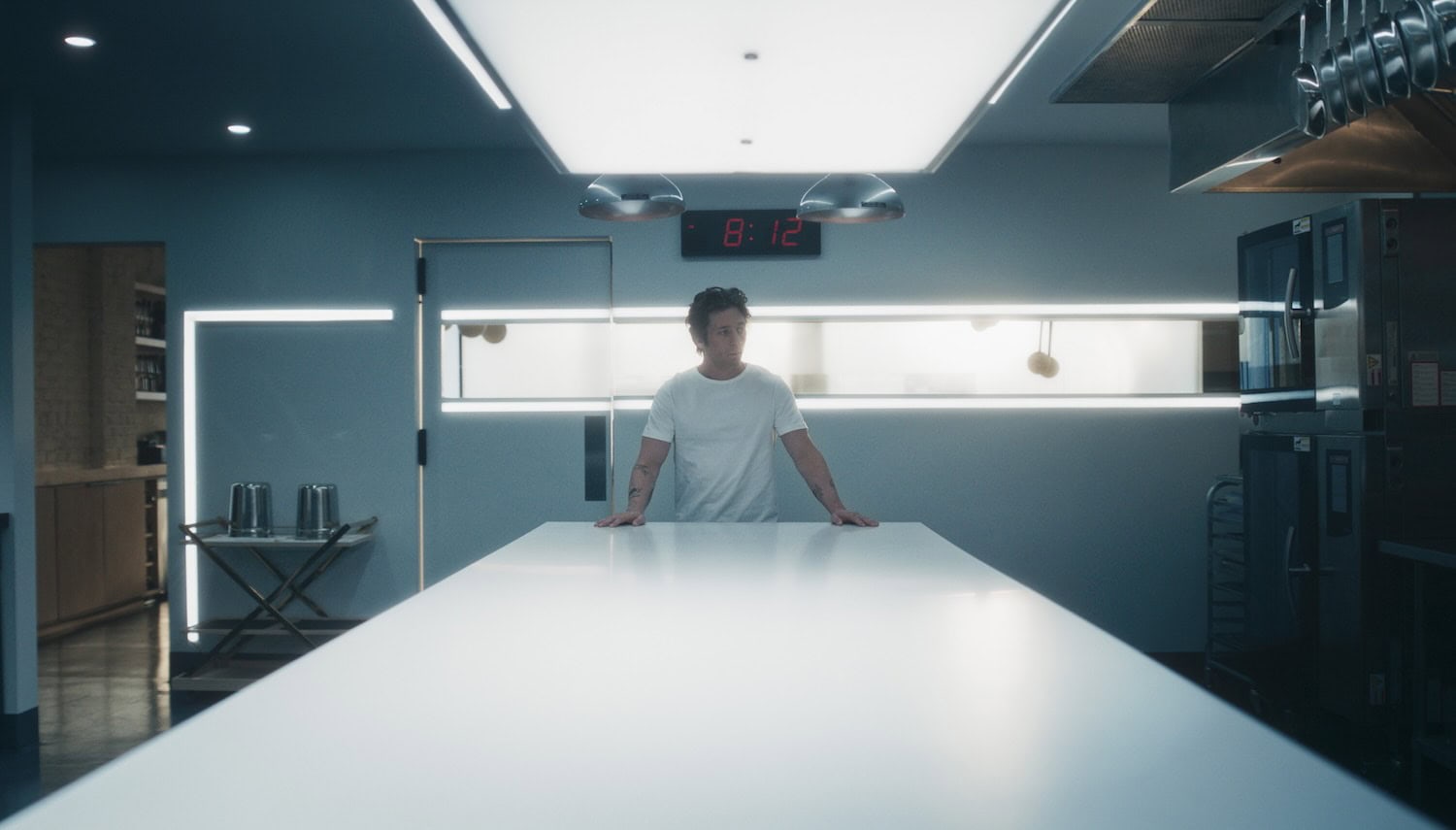
Almost immediately, The Bear became known for its intensity, baking a story about grief into its rapid-fire depiction of food being made and characters shouting at one another. In retrospect, this version of The Bear more or less ended when Carmy (Jeremy Allen White) got himself locked in a walk-in freezer at the end of season two and seemed to forever drive away his on-again, off-again maybe girlfriend, Claire (Molly Gordon).
That season, the series condensed much of its characters’ food-fueled acrimony into a charmingly distressing, cameo-filled sixth-episode flashback largely set around the Berzatto family table. Now, a parallel episode from season four, set at a wedding, culminates not with anyone driving a sedan into a living room, but with a daddy-daughter dance.
Like its characters, The Bear is trying to find a mellower way of being. Sure, the new season ends with a shouting match, and the Bear’s maître d’, Richie (Ebon Moss-Bachrach), has reason to be angry at Carmy. But on the whole, these 10 episodes have a warmer vibe that befits the show’s recurring theme of learning to appreciate the time we have with the people we love.
The Bear adopts this tone despite the fact that the characters have a deadline looming over them. Episode one, “Groundhogs,” sees the staff and management of the Bear beginning to process their first negative review, just as their financier, Uncle Jimmy (Oliver Platt), arrives in the kitchen with an LED clock counting down the hours—adding up to several months—until the restaurant will have to shutter due to its rising debt. In the subsequent episodes, though we’ll often cut back to the clock, the characters simply keep their heads down and push forward, improving where they can but spending remarkably little time screaming at each other.
It’s a change of pace reflected in the show’s montages, which take up significant chunks of the first five episodes, and which emphasize harmony over discord, people working together to make the impossible dream of a restaurant work. Showrunner Christopher Storer has assembled a prodigious playlist for the season: We hear Tangerine Dream’s “Forks” from the Thief soundtrack, while Sonny & Cher’s “I Got You Babe” and St. Vincent’s “Slow Disco” are turned into leitmotifs (even R.E.M.’s “Strange Currencies” makes a sly return appearance). Across these sequences, Storer and company prove themselves once again adept at capturing the images and sounds that make Chicago, a place of incredible contradictions, a gem of a city—massive but homey, crowded but not cramped, loud but rhythmic.

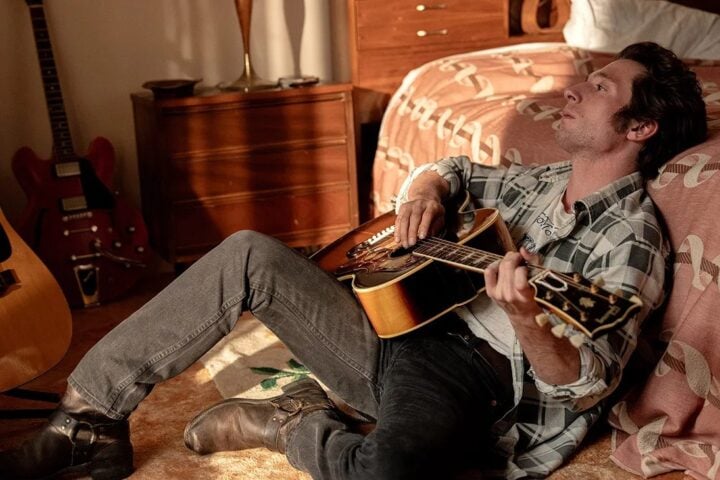
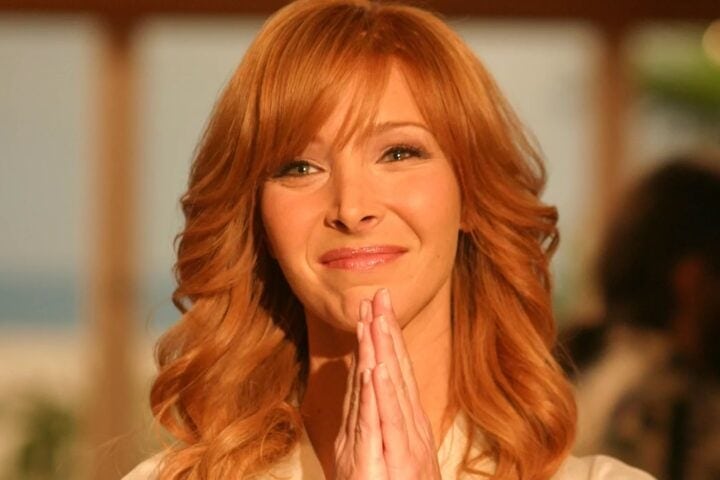
Despite this harmony, of course, there’s still beef between the characters. Only now, as if the series were trying to justify its best comedy Emmy win, much of the interpersonal tension is played for laughs. First mentioned in season one, the feud between Carmy’s sister, Natalie (Abby Elliott), and her former best friend, Francine “Francie” Fak (Brie Larson), comes to a head at Tiffany (Gillian Jacobs) and Frank’s (Josh Hartnett) wedding. “She knows what she did,” Natalie snarkily responds to just about everyone throughout the season when they ask what happened between her and Francie, and the seventh episode, “Bears,” delights in teasing viewers about the exact source of their acrimony.
Self-improvement emerges as a major theme this season. Carmy learning to work and be vulnerable with others is the thread that connects this season to prior ones, though the series devotes at least equal time to Sydney (Ayo Edebiri). In awe of Carmy’s skills but put off by his irascibility, stubbornness, and unpredictability, Sydney has been contemplating leaving the Bear for a restaurant being opened in Chicago’s (rapidly gentrifying) Avondale neighborhood by Adam Shapiro (played by the actor of the same name).
The series draws out Sydney’s decision, which gives it a chance to explore her world apart from the Bear. Episode four, “Worms,” focuses almost entirely on Sydney as she mulls the decision during a hair appointment. Co-written by Edebiri and Lionel Boyce, who plays pastry chef Marcus, the episode delivers the show’s first real trip to Chicago’s South Side, highlighting the distance between the Bear’s River North location and the culture of the majority Black South Side. More importantly, we see how easily Sydney moves between and within groups of people, her authenticity and patience winning over the 11-year-old daughter (Arion King) of her hairdresser (Danielle Deadwyler) as easily as it’s won over the Berzattos.
The show’s core drama centers around Carmy’s attempt to cope with the death of his older brother (Jon Bernthal), providing White with meaty actorly moments when Carmy explodes or shuts down when he gets overwhelmed. But its core ideal is embodied in Sydney, who has far fewer hang-ups about genuinely connecting to people. If this is what meals—what restaurants—are meant to do, then the Bear could hardly do without Sydney, just as The Bear would feel empty without Edebiri’s assured realization of Sydney’s core decentness.
The clock ticking down on the Bear’s future, and Sydney’s doubt about whether she’d want to be a part of that future, seem, somewhat ironically, to bring the group closer together. Season four of The Bear thus focuses on an irony that it captures with bittersweet wisdom: that it’s often when things are going their best that they begin to slip away.
Since 2001, we've brought you uncompromising, candid takes on the world of film, music, television, video games, theater, and more. Independently owned and operated publications like Slant have been hit hard in recent years, but we’re committed to keeping our content free and accessible—meaning no paywalls or fees.
If you like what we do, please consider subscribing to our Patreon or making a donation.