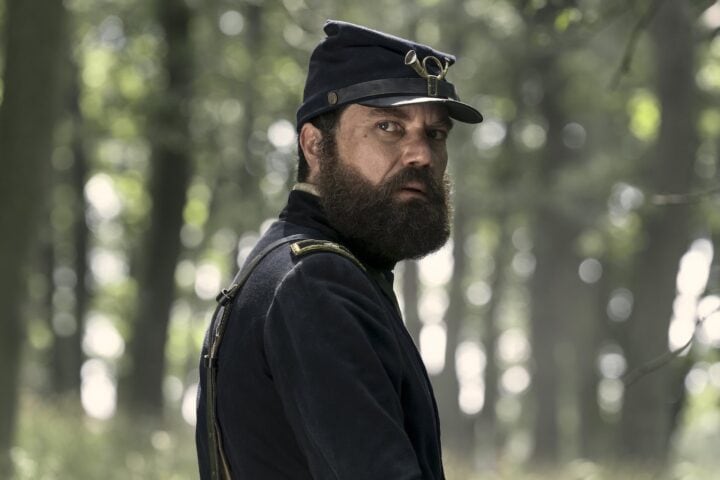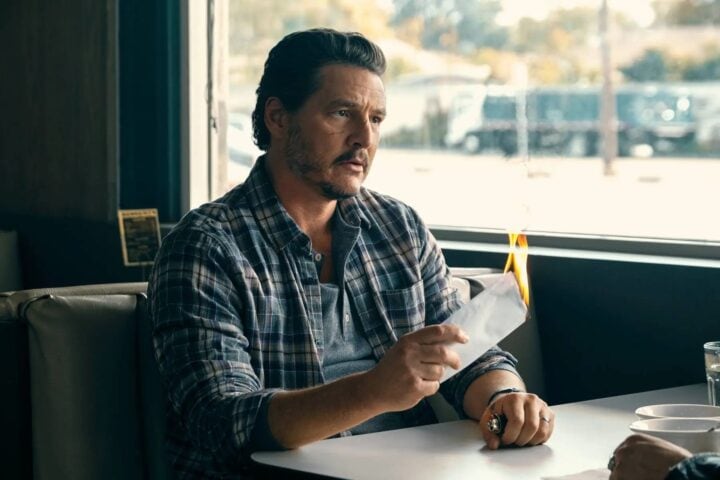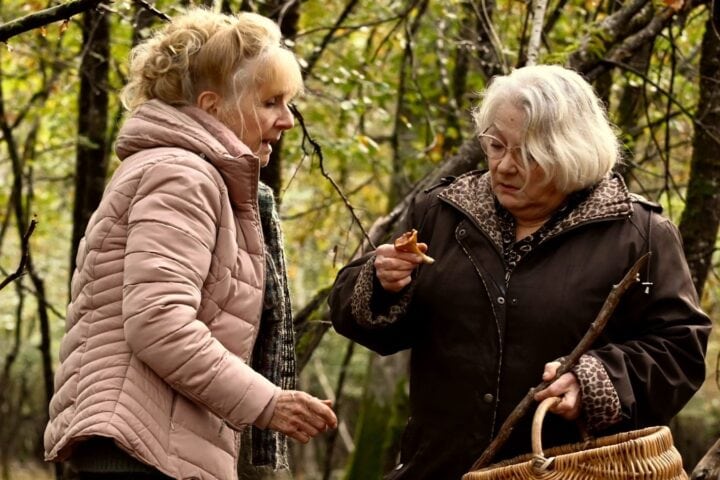
Mass school shootings feel as inherent to the mid-American landscape as SUVs and fundamentalist Christianity. Michael Shannon’s feature-length directorial debut, Eric LaRue, adapted by Brett Neveu from his 2002 play of the same name, attempts to capture just how little the social infrastructure of a small town in the United States can do for those affected by such spectacles of violence. But while Eric LaRue features a strong performance from Judy Greer, its portrait of this swath of the U.S. is essentially a patchwork of broad strokes that rarely feel like they’re bringing that world to credible life.
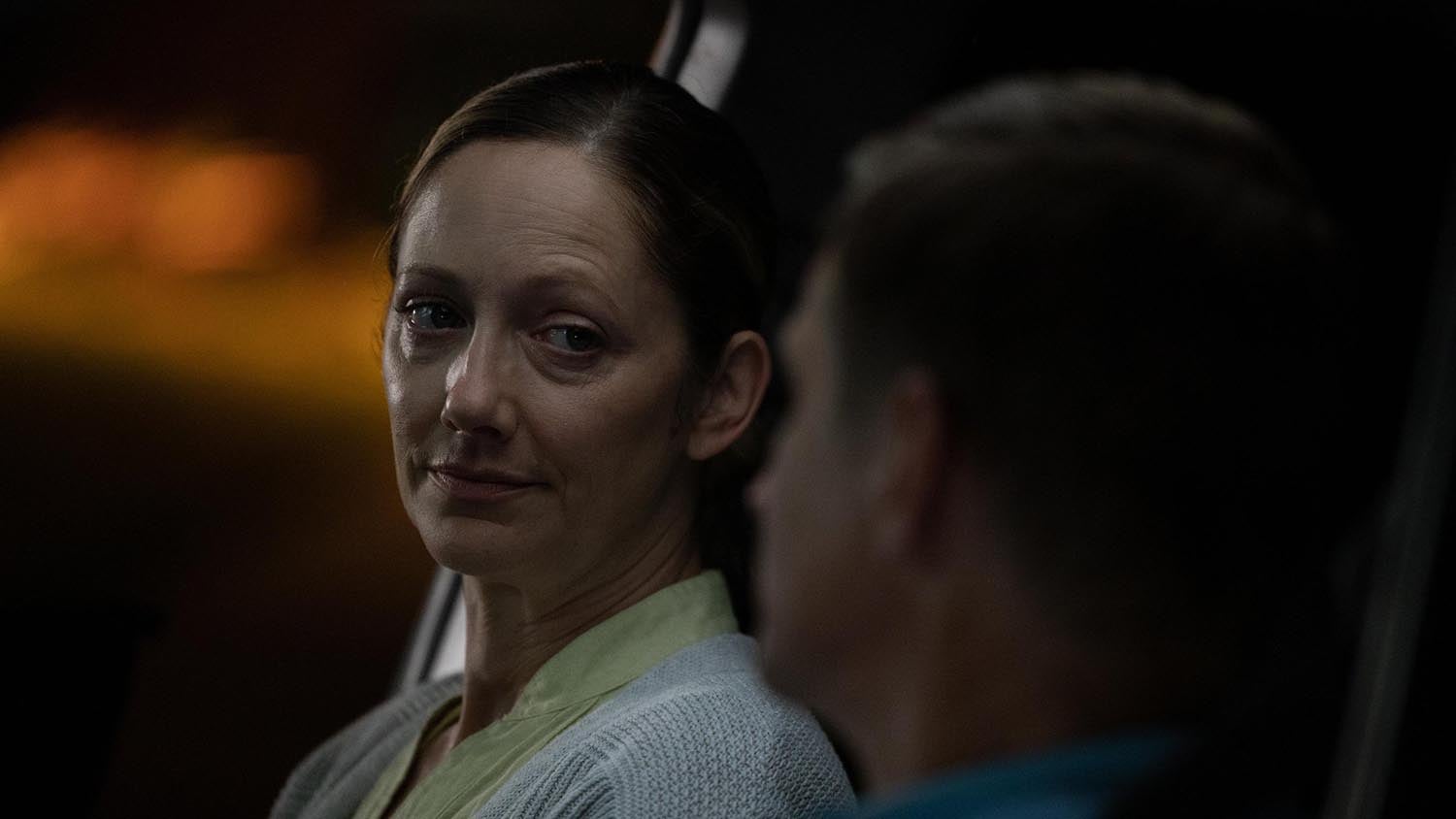
Disaffected and listless in the indeterminate period since her son, Eric (Nation Sage Henrikson), shot and killed three of his classmates, Janice (Greer) begins venturing back into the world in small ways. She returns to her job at a hardware store and opens up a dialogue with her pastor, Steve Calhan (Paul Sparks), who wants her to meet with the mothers of the boys who Eric killed. Janice’s tendency, though, is to retreat back to her home, where the nature documentaries on her TV block out thoughts of the untouched bedroom—her son’s—on the other side of the wall.
The woman’s depressive sulking stands in contrast to her husband Ron’s (Alexander Skarsgård) bouncy show of “healing.” Ron immediately scans as a sniveling hypocrite, having fled from Calhan’s Presbyterian church and embraced the born-again fundamentalism of Pastor Verne (Tracy Letts)—mostly, it’s implied, so he can share hugs with chipper Jesus-pusher Lisa (Alison Pill), whom he also works with. Skarsgård and Shannon present Ron as so openly weak-willed and two-faced that at times one wonders whether Eric LaRue, after a sober opening full of shallow-focused close-ups on Greer’s face, will develop into some kind of satire.
The sense that the filmmakers have a dark comedy on their hands that they can’t commit to is accentuated by the fact that a significant portion of the plot revolves around the competition between Verne and Calhan over who will be able to arrange a meeting between Janice, Ron, and “the mothers” (i.e., the moms of the murdered high schoolers). The venality of this competition, of course, belies the pastors’ alleged spiritual and community-oriented intentions.
One of the script’s best turns is the way it depicts even the relatively sympathetic and good-hearted Calhan as totally unequipped to handle the situation between the mothers, despite his Midwest-preacher projection of soft but authoritative wisdom (Verne, by contrast, comes off as a misogynist con man). Take the scene in which Janice and two of the mothers, Jill (Kate Arrington) and Stephanie (Annie Parisse), finally agree to talk, during which Calhan the mediator interrupts and corrects nearly every statement that each woman makes. By the end, not even he seems sure exactly how he thinks they should speak to one another.

As serious as Eric LaRue is throughout this scene, even here one feels the filmmakers edging toward comedy given the flagrancy of Calhan’s callowness and incompetency. Ditto the oblivious Ron’s pseudo-humble perfidity across the film. But in such moments, Eric LaRue tends to pull back and reassert that it’s straightforward drama, punctuating such scenes with, say, a close-up on a bereft Janice rather than her befuddled interlocutor, and as a result creating a tonal clash.
That’s not to say that a satire about our inability to deal with school shootings needs to be made. Some of the scenarios and characters in Eric LaRue, though, suggest it wouldn’t be such a bad idea. Arguably, Ron’s defining trait is that he lacks depth, and as a result, there’s a tinge of humor to nearly every mention of him, as when Stephanie complains that he once creepily offered her a neck massage. His isn’t the only behavior here that’s neat and conspicuous in its absurdity, but the film stops short of playing its provincial caricatures for laughs.
It’s in the moments when Eric LaRue doubles back into weighty, actorly drama that the broad strokes that could be the basis for a punchline become apparent as somewhat rickety foundations for feeling. Surely there are pastors in the world who are largely like Calhan and Verne, using tragedy to inflate either their wealth or their self-worth, and undoubtedly there are millions of artless husbands like Ron who think their wives can’t see them sneaking around. But to portray these characters so nakedly as such, with few complementary characteristics, makes Janice’s inner struggle seem like it plays out against a painted backdrop populated by caricatures rather than within something resembling a flesh-and-blood community.
Eric LaRue features some moving sequences, particularly Janice’s confrontations with the mothers and her cathartic conversation with Eric toward the end of the film. Ironically, though, its imagination of emotionally stunted middle America itself feels somehow stunted, somewhere between a melodrama of loss and redemption and an absurd comedy of small-town venality.
Since 2001, we've brought you uncompromising, candid takes on the world of film, music, television, video games, theater, and more. Independently owned and operated publications like Slant have been hit hard in recent years, but we’re committed to keeping our content free and accessible—meaning no paywalls or fees.
If you like what we do, please consider subscribing to our Patreon or making a donation.