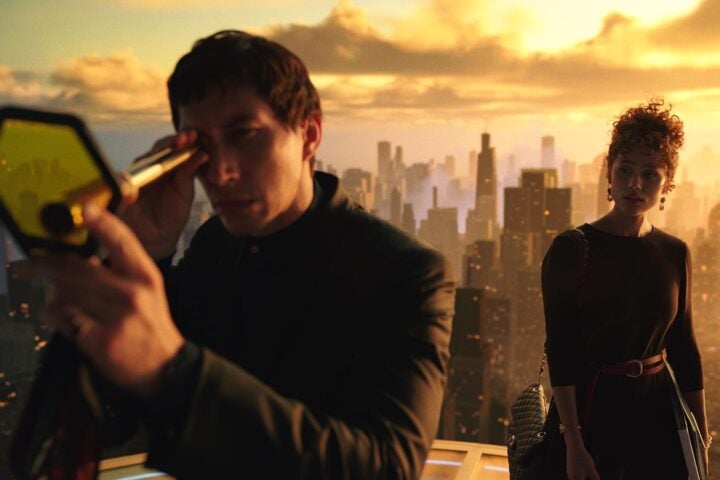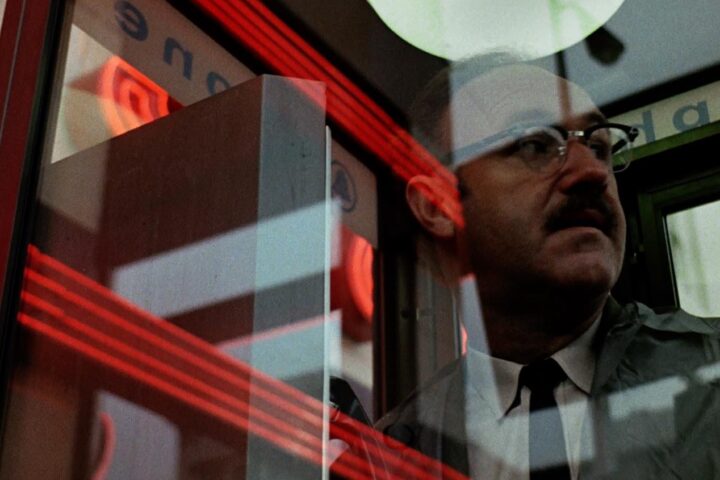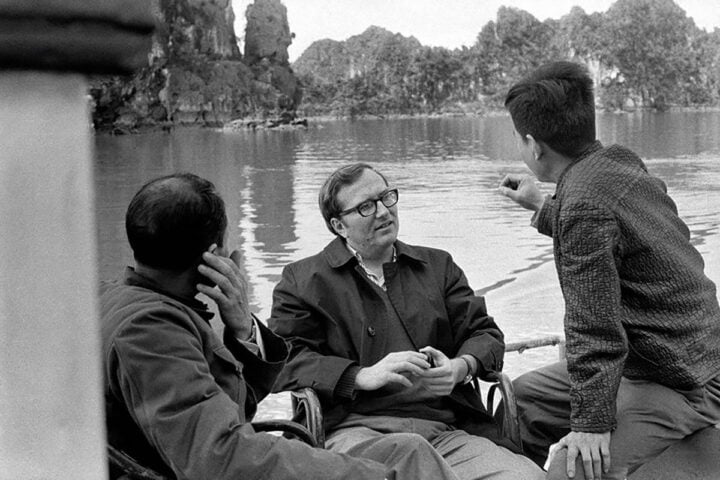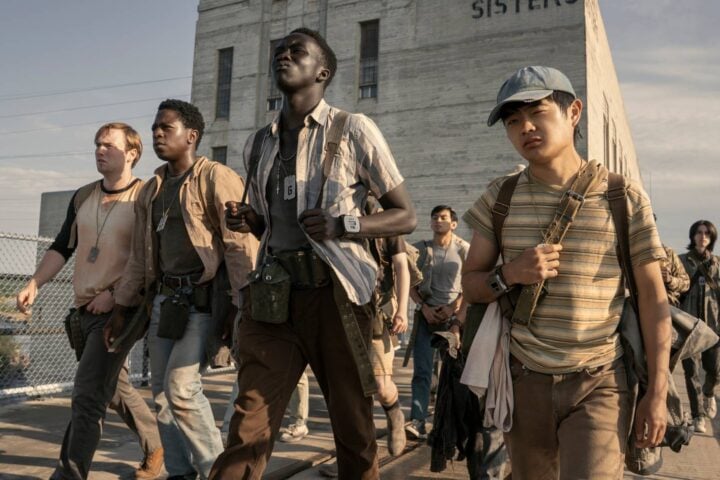
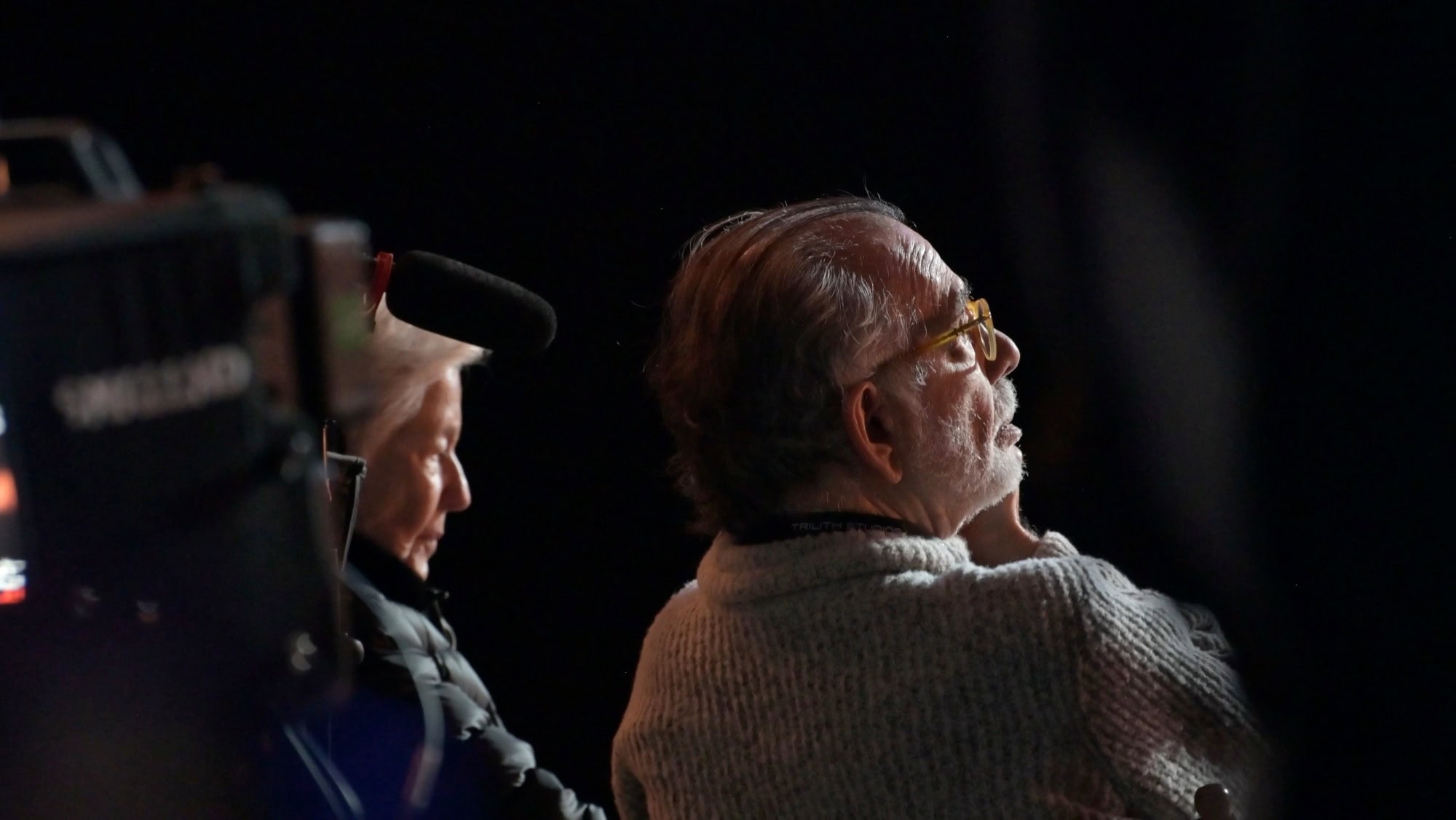
“Who cares if you die broke if you made something you think is beautiful?” Francis Ford Coppola asks at the start of Megadoc, Mike Figgis’s documentary on the making of Megalopolis. The remark sets the tone for what’s to come: a study of ambition, conflict, and creative risk. And while Megadoc, which follows the trajectory of Coppola’s self-financed passion project from the first days of pre-production to its Cannes premiere in 2024, won’t convince you of the film’s beauty if you’re among its detractors, Figgis’s anthem of aspiration and struggle leaves no doubt about Coppola’s beliefs.
Megadoc begins with Coppola trying to foster camaraderie among his cast with improvisational acting games. Aubrey Plaza, who ad-libs an arm-wrestling match with Dustin Hoffman at one point, appears to be the most eager participant, while Shia LaBeouf seems reluctant to engage in this process. These early moments capture the fragile balance between Coppola’s desire for creative freedom and the practicalities of managing a group of strong-willed performers.
As production on Megalopolis progresses, Megadoc shifts its attention to the negotiations and conflicts that define the filmmaking process. The exceedingly professional Giancarlo Esposito, who plays Mayor Cicero in the film, seeks to bring calm to the set, praising Coppola’s efforts amid so much uncertainty. By contrast, LaBeouf becomes the director’s foil. Their disagreements, over everything from acting techniques to the very definition of cinema, illustrate the tension between Coppola’s vision and his actors’ expectations. Their exchanges are revealing, portraying Coppola as both uncompromising and vulnerable.
One of the most significant figures in Megadoc is production designer Beth Mickle. Known for her work on Marvel films, she initially expresses excitement about collaborating with Coppola. But as budget cuts reduce the resources available to her team, her enthusiasm gives way to frustration, leading her and her staff to quit. Interviewed after her departure, Mickle reveals her disappointment with the lack of clarity around Coppola’s creative vision and finances. The trajectory of her involvement on the film offers a sobering counterpoint to Coppola’s ambition, highlighting the material realities that underlie even the most visionary projects.
Figgis himself occasionally steps into the frame to comment on the process, at one point noting how unusual it is for him to be documenting a production rather than directing one. Some cast members, such as Nathalie Emmanuel, resent his presence, while others gleefully accept it. These scenes underscore the difficulties of filming a production already under immense pressure and the uneasy role of the documentarian in shaping how events will be remembered.
Throughout, Megadoc pays close attention to what happens between takes. The camera lingers on moments of rest, conversation, and philosophical debate, capturing the rhythms of a set that alternates between bursts of creativity and long stretches of waiting. Coppola often retreats to his trailer to direct remotely after clashes with LaBeouf or other frustrations. These scenes emphasize both his authority and his isolation, suggesting a filmmaker caught between the weight of his past success and the uncertainty of whether Megalopolis will count as a new one.
Megadoc doesn’t set out to reframe Megalopolis as a misunderstood masterpiece. Rather, it seeks to capture the optimism of Coppola’s ideas, the conflicts that emerged throughout the film’s making, and the compromises that had to be made to bring it to fruition. In this way, comparisons to Hearts of Darkness: A Filmmaker’s Apocalypse, the 1991 film about the making of Coppola’s Apocalypse Now, are inevitable. Like that documentary classic, Megadoc is a thrilling portrait of artists negotiating the peaks and valleys of creation, and it will appeal to anyone with a fascination with how films of outsized ambition are brought to life.
Since 2001, we've brought you uncompromising, candid takes on the world of film, music, television, video games, theater, and more. Independently owned and operated publications like Slant have been hit hard in recent years, but we’re committed to keeping our content free and accessible—meaning no paywalls or fees.
If you like what we do, please consider subscribing to our Patreon or making a donation.