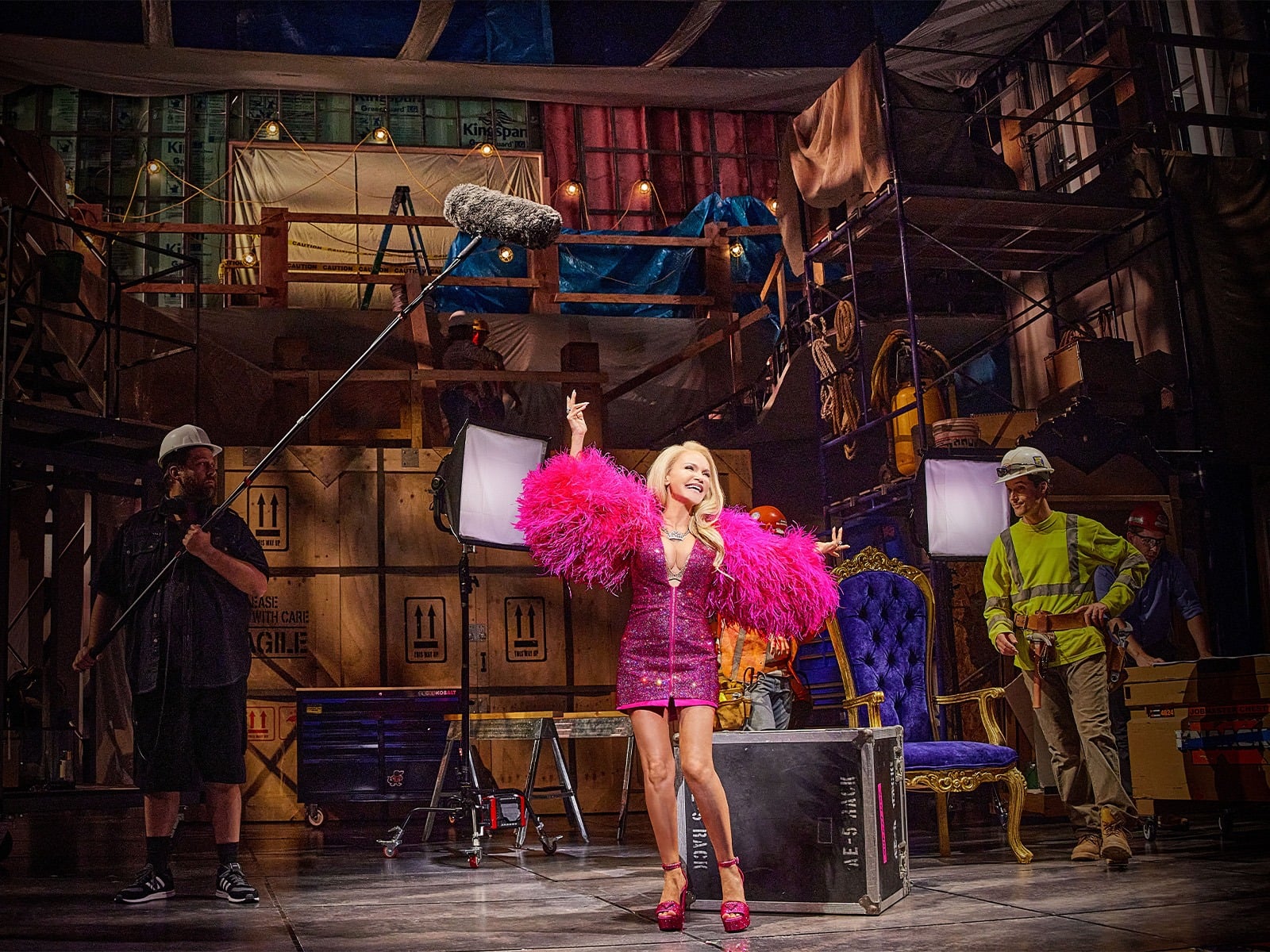
In 2004, socialite Jackie Siegel and her husband, billionaire timeshare king David Siegel, began building a 90,000-square-foot home in the outskirts of Orlando, the largest private residence in the United States. Twenty-one years later, it’s still not quite done. And The Queen of Versailles, starring Kristin Chenoweth as Jackie in her first role in a new Broadway musical since Wicked, often feels like a 90,000-square-foot musical under construction itself.
With a score by Stephen Schwartz (it’s his first new Broadway show since Wicked too) and a book by playwright Lindsey Ferrentino, The Queen of Versailles may have opened on Broadway with its scaffolding still up, but it’s still compellingly ambitious in its scope and bold in its merciless portrayal of its greed-enflamed protagonist, who fiercely battles her own burgeoning self-awareness. Jackie wants to be Marie Antoinette but only in frozen portraiture—the throne and dresses and cake sans the threat of guillotines or rising social consciousness.
Jackie is all excess—she has a staff of 37, “10 kitchens or so,” and a roller rink inside her home, not to mention seven kids—and that energy seems to have also infected Schwartz and Ferrentino. Why build one opening number when you could have three?
The show starts satirically with the French court of Louix XVI and Marie Antoinette paying tribute to the Palace of Versailles and their own unlimited wealth. We then cut to Jackie’s own replica Versailles-in-progress, where she’s being trailed by a camera crew on the construction site. Ferrentino’s oft-wry book draws most of its incidents from Lauren Greenfield’s 2012 documentary of the same title, and Michael Arden’s staging often deploys giant screens with characters talking to camera. Next, we flash back in time to Endwell, New York, where a teenage Jackie sings a classic musical theater I Want song, “Caviar Dreams,” pining to break free of her small town while preparing a corpse for the morgue at her part-time nursing job.
None of these entry points are entirely wrong-headed, but The Queen of Versailles refuses to pick one or settle down stylistically. Neither does Schwartz’s score, which zig-zags between a folky pop sound and pastiche (there’s harpischord-infused baroque material for the French court, a courtship soft-shoe, and an unfortunate western number). Arden, so aesthetically precise in Maybe Happy Ending and Parade, hasn’t pinned down a consistent visual storytelling style here either, though Dane Laffrey’s sets are appropriately marvelous.
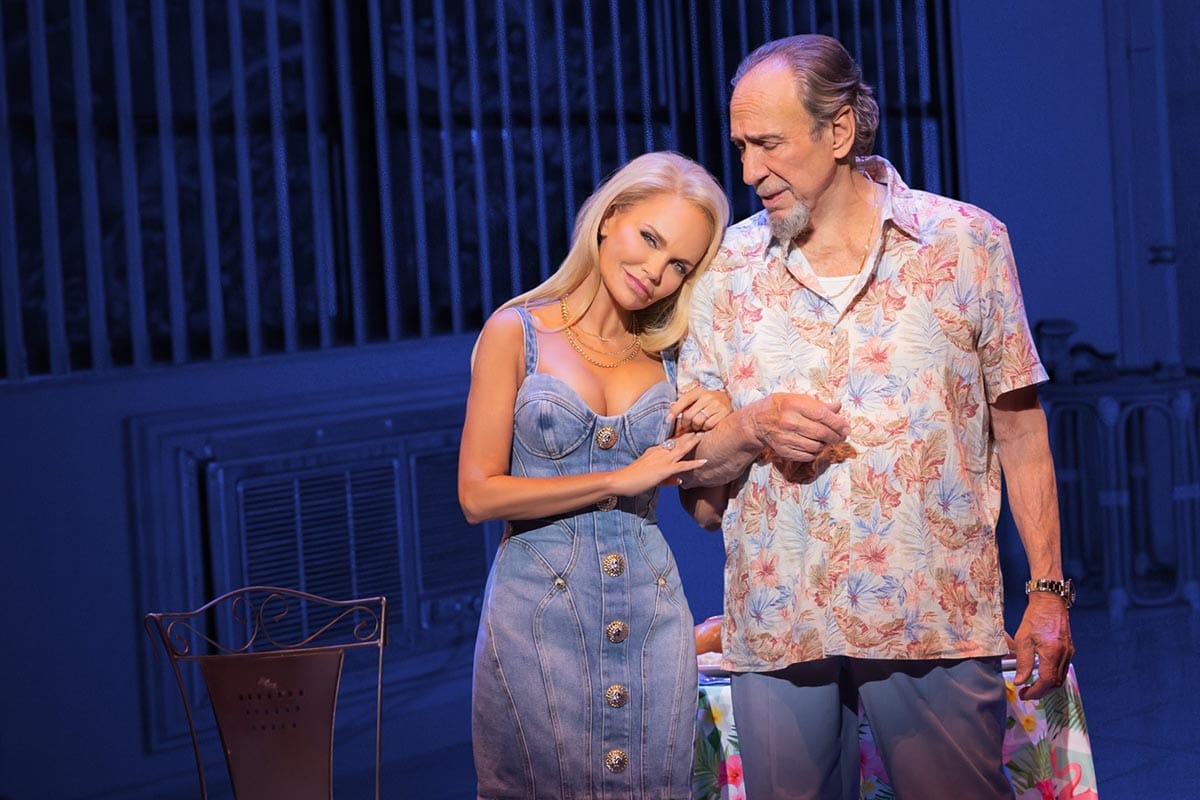
If the pieces of the show aren’t cohesive, though, Chenoweth’s performance is. She’s wholly persuasive in suggesting that Jackie starts out demanding more and more to provide for her children, only to then find that she can’t stop once she’s started. Jackie slips further and further from our sympathy as she doggedly pursues her hollow vision of the American dream.
“Only in America can you become a wife, a billionaire, and a Jew all in one day,” Jackie toasts after victoriously marrying the much older David (a cantankerously low-key F. Murray Abraham), the owner of Westgate Resorts. Jackie, who almost became an I.B.M. engineer, might be smart, but she’s dumbed herself down (and, as the show keeps reminding us, surgically raised her bosom up) to get ahead as a pageant contestant and then as a trophy wife. Chenoweth’s vocal versatility and sophisticated sound create a crackling contrast between Jackie’s outward superficiality and the humanness that might broil underneath.
The musical hits its stride in the second act once it moves beyond what’s depicted in the documentary, which ends mid-Great Recession as the Siegels’ empire begins to crumble, and sets off on its own design. Jackie’s eldest daughter, Victoria (Nina White), who just wishes for a simpler life, benefits most from the show’s side quests; she gets the best, weirdest song in the show, a deliciously Kurt Weill-like “Pavane for a Dead Lizard.”
Ferrentino nimbly navigates a tonal shift toward tragedy as Jackie discovers that she’s no longer building this palace for anyone but herself. Even though the real-life Siegel recently joined the show as a producer, The Queen of Versailles could hardly be more excoriating of her addiction to amassing wealth at the expense of relationships. The show even suggests that Jackie’s ongoing charitable work to combat the opioid crisis after one of her children overdoses is just a cover for self-absorption. “It doesn’t get better than this,” Jackie ultimately sings into her ring light, both a celebration and a warning to her social media followers.
But if Jackie is the show’s complex centerpiece, the show is most moving in a brief aside, a monologue lifted from the documentary in which the family nanny (Melody Butiu) laments that she hasn’t seen her own kids in the Philippines in decades. Jackie might not grasp the fullness of her nanny’s humanity, but the creators of The Queen of Versailles would have done well to build an extra wing or two for these everyday people living in the socialite’s shadow.
The Queen of Versailles is now running at the St. James Theatre.
Since 2001, we've brought you uncompromising, candid takes on the world of film, music, television, video games, theater, and more. Independently owned and operated publications like Slant have been hit hard in recent years, but we’re committed to keeping our content free and accessible—meaning no paywalls or fees.
If you like what we do, please consider subscribing to our Patreon or making a donation.