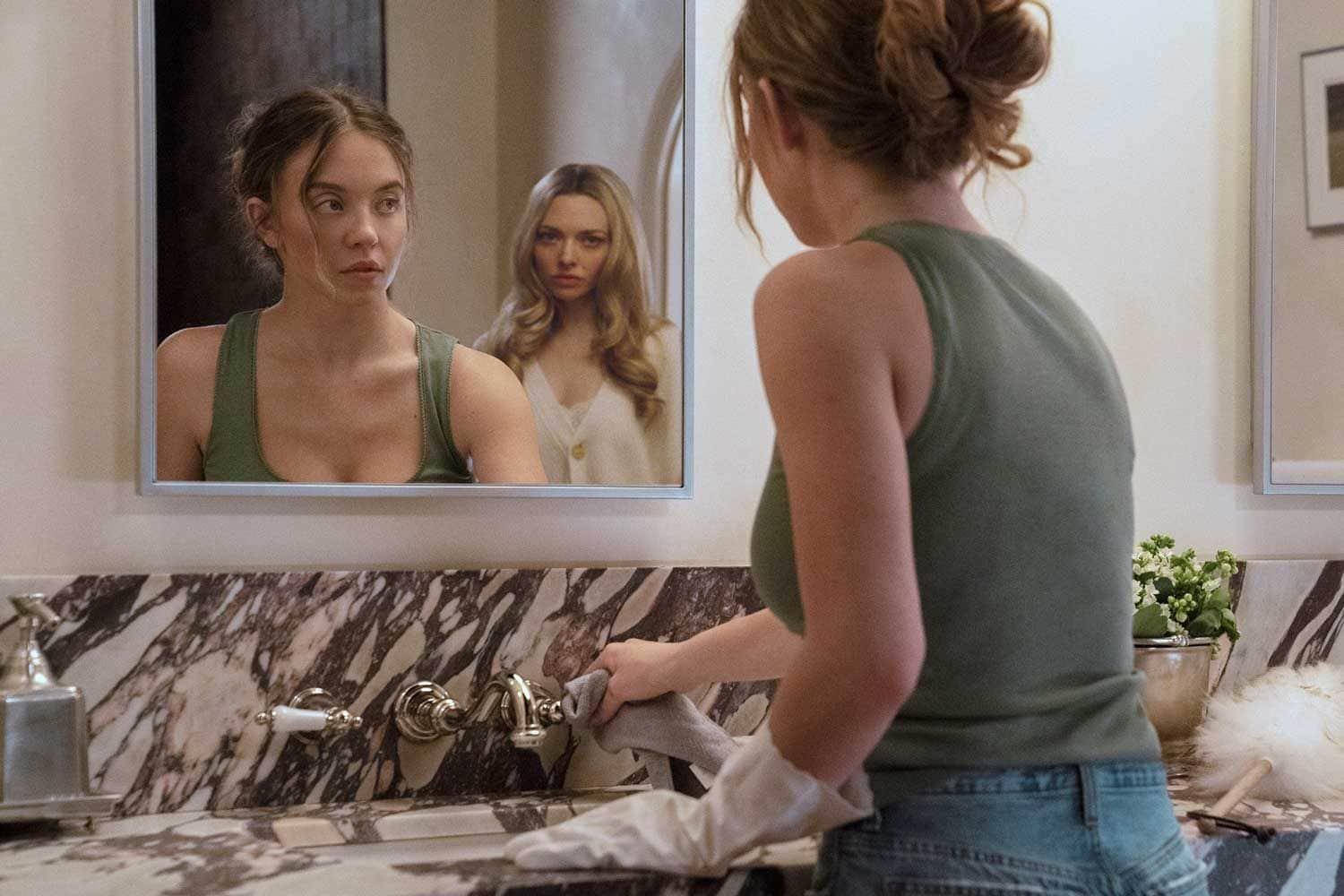
Based on the bestselling mystery novel of the same name, Paul Feig’s The Housemaid concerns a young woman trying to leave her troubled past behind her. Via voiceover, Millie (Sydney Sweeney) explains that she’s been living in a car, is on parole, and desperately needs income. Despite all odds, she pulls off a successful interview with the wealthy Nina Winchester (Amanda Seyfried) for the job of live-in maid and soon finds herself on a path to a livable future. But almost as soon as Millie meets Nina’s husband, Andrew (Brandon Sklenar), and their withdrawn daughter (Indiana Elle), Nina begins to act erratically.
Everything in The Housemaid is uncertain, right down to Sweeney’s unconvincing performance as a woman trying to avoid being sent back to prison. The film announces its concern with psychological ambiance at the start, which starts to feel more than a little incongruous alongside the contemporary pop songs on the soundtrack. The Housemaid is billed as a thriller, but during one bafflingly scored sex scene between Millie and Andrew, you may be excused for thinking that you’re watching something out of the hot-to-trot rom-com Anyone But You.
In contrast to films with similar setups, like Heretic, where the house feels like a breathing representation of the owner’s fractured interiority, the mansion in The Housemaid is as characterless as the Davenports. Still, whereas Millie and Andrew feel like regular-girl and Prince Charming BookTok archetypes, respectively, Nina’s presence opens up somewhat interesting ideas about motherhood and the darker side of domestic bliss. That said, Seyfried’s shadowy character still feels as if she’s been ported over from a completely different film, appearing and disappearing throughout her house as if she were a ghost.
The Housemaid’s twist is a doozy, but it falls just short of being a deconstruction of tradwife values. That’s because this tonally incongruous film, in tending to bog-standard beats of its revenge story, glosses over the themes that tie Nina and Millie’s experiences.
As for the revenge elements, the muddled staging of the climax doesn’t exactly make a meal of them, with the intended catharsis feeling generic and not in dialogue with Nina’s domestic struggles. One can only imagine what might have been had the filmmakers done more than just nod to the material’s inherent camp value, as evidenced by one running gag in which Andrew remarks that drinking orange juice is a privilege. If they had, then maybe it wouldn’t be so easy to let this one-note thriller slip down the memory hole.
Since 2001, we've brought you uncompromising, candid takes on the world of film, music, television, video games, theater, and more. Independently owned and operated publications like Slant have been hit hard in recent years, but we’re committed to keeping our content free and accessible—meaning no paywalls or fees.
If you like what we do, please consider subscribing to our Patreon or making a donation.