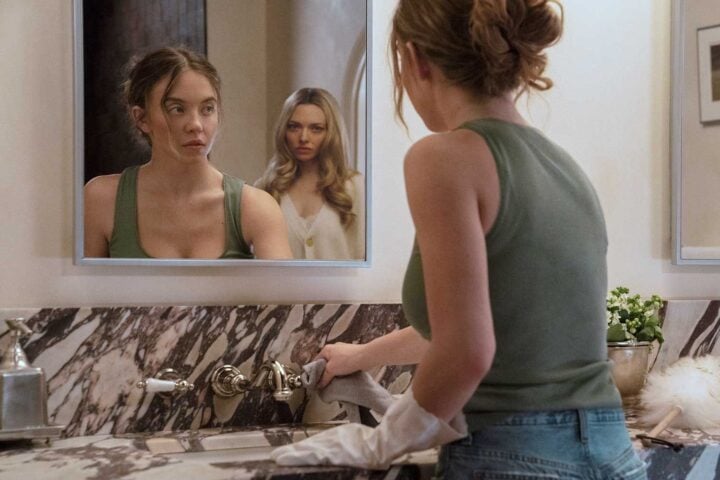
David Michôd’s Christy very much aligns with star and producer Sydney Sweeney’s overarching branding project. “Everything in my career I do not just for that story,” she said in a GQ profile last year, “but strategic business decisions.” In the end, this portrait of trailblazing female boxer Christy Martin proves more fruitful to consider in light of Sweeney’s recent controversy-courting commercials than it does other biopic fare.
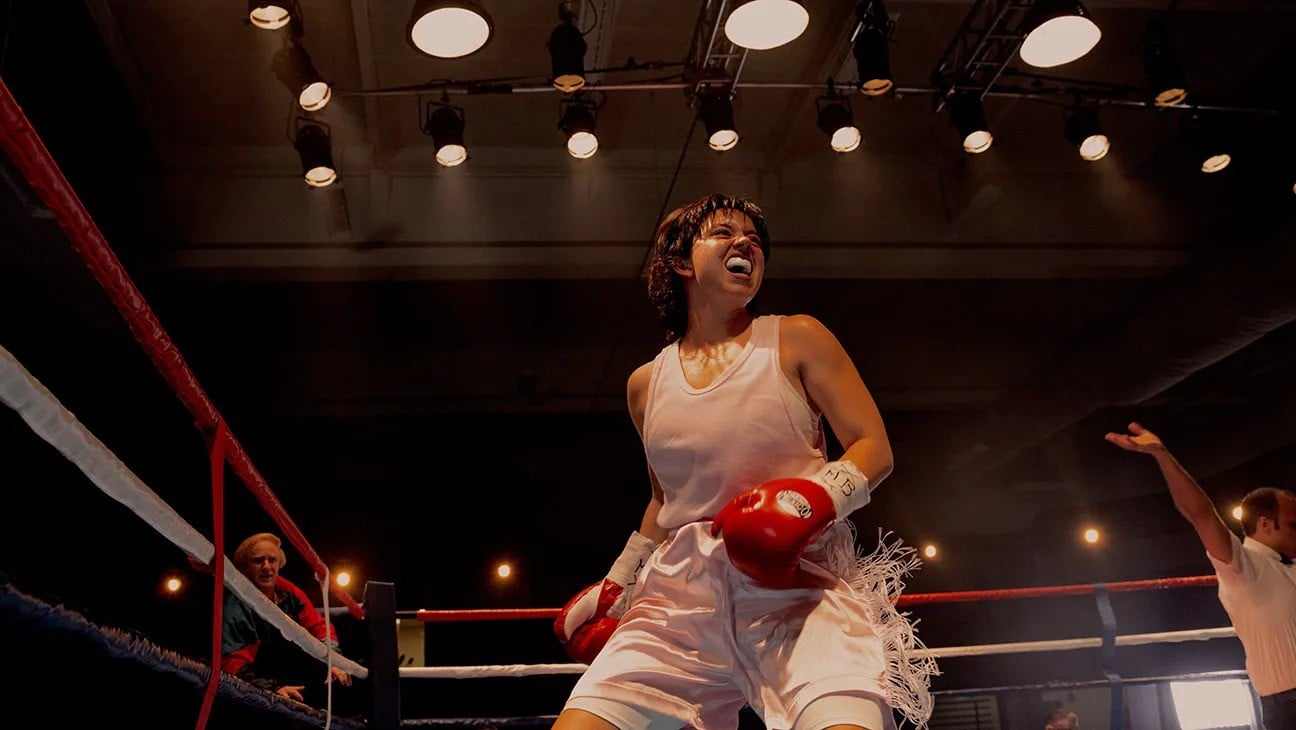
Beyond this metatext, the film is mostly boilerplate. Christy follows the rise of a pugnacious West Virginia girl to new heights inside the ring. Her rise puts women’s boxing on the map in the 1990s, but Christy assiduously refuses any special privilege she thinks her gender might afford. She’s in it for her own stature and security, not to help give other women a leg up.
The scrappy spirit that animates Sweeney as an actor finds natural expression through Christy, a gifted showwoman who comes alive even more when pitching herself to promoter Don King (Chad Coleman). Sweeney convincingly channels the grittiness of working-class Appalachia without it feeling like cosplay, and the conviction with which she approaches the role vastly outshines the film, which often scans as conflicted about its own ideology and identity.
Written by Michôd and Mirrah Foulkes, Christy lulls us into complacency by deviating little from the standard inspirational sports-movie playbook. But nestled in the early scenes of the eponymous phenom’s rise are the seeds of struggle that will bloom in the film’s more effective back as her fighting career begins to plateau. She faces consistent consternation from her disapproving mother, Joyce Salters (Merrit Wever), for taking a sexual interest in other girls. This familial clash provides the film’s most hackneyed moments, as Wever’s scenery-chewing caricature of Southern conservatism starkly contrasts with Sweeney’s effortless naturalism.

But in its tail end, Christy shifts its focus entirely to the relationship between Christy and her trainer turned husband, James Martin (Ben Foster), and it isn’t long before it becomes clear that the film works better as a horrifying tale of domestic violence than it does as a rousing boxing story. Michôd demonstrated a keen understanding of the human inclination toward cruelty in his early Australian dramas Animal Kingdom and The Rover, and he applies that outlook to chilling effect here. Once the film fully commits to its truest fight being the one between Christy and James for control of her life and legacy, its purpose and power begin to emerge.
Yet Christy struggles to shift gears from the ringside to the relationship drama, as it plays fast and loose with how much to root the narrative perspective in Christy’s subjectivity. It neither explicitly celebrates nor critiques her self-aggrandizing behavior when it comes to building a career, but that hands-off approach is trickier when the film first underplays James’s behavior as natural male aggression—like Christy would—until its threat becomes impossible to ignore.
The film’s confused internal logic is reflective of the contradictions at the core of Martin and Sweeney. Neither wants to participate in their respective era’s iteration of “girl power,” which is an entirely valid exercise of choice. But the pyrrhic victory Christy experiences over her persecutors, including Joyce’s continued homophobia and James’s attempt to murder her, feels like a cheap triumph. For one, Christy shies away from grappling with the aftermath of abuse. Instead, it relies on the presence of Lisa Holewyne (Katy O’Brian), a boxing rival turned love interest and Magical Queer savior, to force an incongruously happy ending.
It remains unclear the extent to which Christy’s resolution represents the true transformation of our protagonist’s worldview about gender and power. The life of Martin and the evolving celebrity of Sweeney stand as testaments to the value of grappling with a sense of selfhood that refuses to be wrangled into simple sloganeering. But too often, the film’s sense of ideological division registers as indecision. This leaves Christy on the ropes instead of trying to land a punch for its mealy mouthed vision of female empowerment.
Since 2001, we've brought you uncompromising, candid takes on the world of film, music, television, video games, theater, and more. Independently owned and operated publications like Slant have been hit hard in recent years, but we’re committed to keeping our content free and accessible—meaning no paywalls or fees.
If you like what we do, please consider subscribing to our Patreon or making a donation.