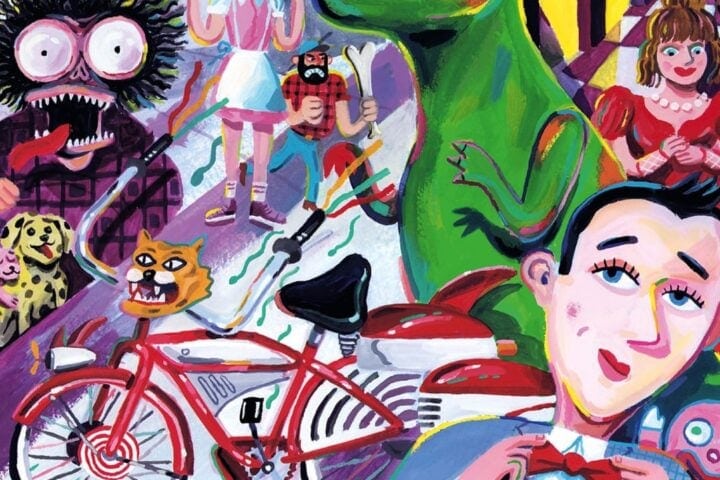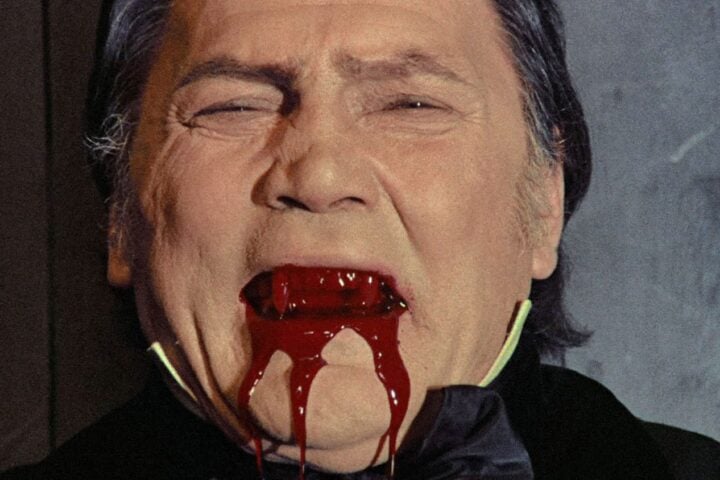
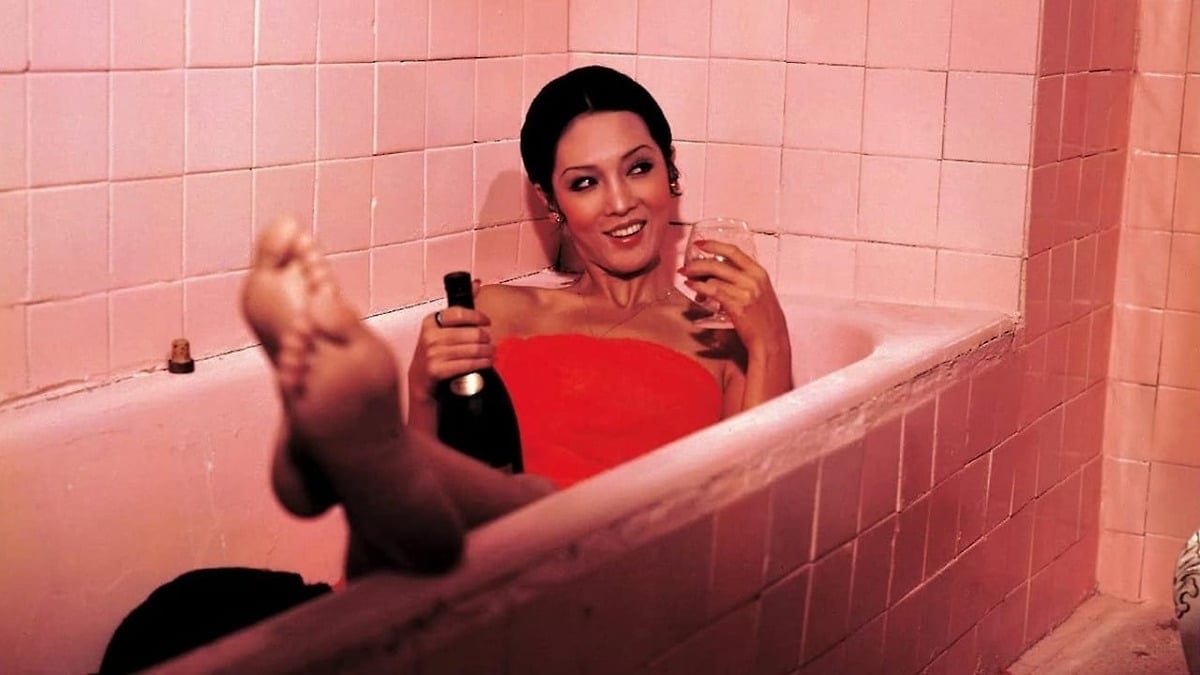
The first three volumes of Arrow’s Shawscope series feature many of the Shaw Brothers Studio’s more well-known and highly regarded films, primarily from masters such as Chang Cheh, Lau Kar-Leung, and Chor Yuen. Volume four takes a refreshingly different approach, focusing on the studio’s output from 1975 to 1985, when the continued rise of television and changing audience tastes led Run Run Shaw letting his writers and directors off the leash, allowing them to stretch far beyond the boundaries of the wuxia. Frequently leaning on elaborate special effects, gore, nudity, and elaborate narratives, the 16 films in this volume demonstrate the studio’s shift to incorporating everything from sexploitation and horror to sci-fi and fantasy, with some of the most imaginative, genre-bending works they ever released.
Films like Hua Shan’s SuperInframan, which capitalized on the popularity of Star Trek and the Japanese film series Ultraman, and Tang Tak-Cheung’s Demon of the Lute saw Shaw Brothers venturing into family-friendly fare. Yet where the tone of these films is lighter, and a bit goofier, than most of the studio’s releases, the fight choreography is as elaborate as ever as the characters take on superhuman—and in the case of SuperInframan, superhero—characteristics in their quests against evil. Also catering to younger audiences are Lau Kar-Wing’s wacky action comedy The Fake Ghost Catchers and Alex Cheung’s gleefully riotous Twinkle Twinkle Little Star, the latter of which crams in references to Star Wars and Close Encounters of the Third Kind as it creates a sci-fi genre mashup that’s as excessive as it is incomprehensible.
Based on Jin Yong’s famous 1963 novel Demi-Gods and Semi-Devils, Pao Hsueh-Li’s 1977 film Battle Wizard marked the start of the Shaw Brothers Studio blending more magical and mystical elements with wuxia action. The film delves deeper into the outrageously fantastical than anything before SuperInframan, featuring giant snakes, vicious monkeys, and a hero who shoots laser beams out of his finger. Hua Shan’s immensely entertaining Bloody Parrot and Portrait in Crystal expand on this trend. The former especially pushes into exploitation territory with its various sex scenes, and both films strike the perfect balance between wuxia and horror, with twisty narratives, rapid-fire pacing, and unsettling flashes of the occult.
And if it’s more than flashes that you’re looking for, Yang Chuan’s Seeding of a Ghost, from 1983, is happy to oblige. Sexploitation is offered up in the opening act, and soon after, you’re treated to everything from a reanimated corpse having revenge sex to exploding stomachs and a disturbing finale in what may be the closest the Shaw Brothers got to outright body horror.
While not as gloriously unhinged as the director’s 1983 classic The Boxer’s Omen, Kuei Chih-Hung’s earlier Hex and Bewitched play in a similar sandbox, with demonic possessions, excessive gore, and an array of strange Buddhist rituals blurring the line between the horrific and the grotesque. Based on the popularity of these films, Kuei directed two very loose spinoffs, Hex vs. Witchcraft and Hex After Hex, but the often cringey, kooky comedy that drives them is evidence that not all of the studio’s spinoffs were equally inspired.
The studio’s push toward straight horror began with Ho Meng Hua’s Black Magic, from 1975. Abundant in gross-out practical effects, the film, and its follow-up from a year later, Black Magic 2, saw Shaw Brothers move further toward an everything-but-the-kitchen-sink approach to filmmaking. This type of maximalist, often deranged filmmaking is also on display throughout Chor Yuen’s Bat Without Wings and Ho Meng-hua’s suitably goopy forebearer to Troma’s The Toxic Avenger, 1976’s The Oily Maniac, rounding out a box set that, if less consistent quality wise than the three before it, captures the Shaw Brothers at its most outrageous and experimental and shows that desperation can indeed be the key to innovation.
Image/Sound
In collaboration with L’Immagine Ritrovata, Hong Kong Film Archive, and Celestial Pictures, Arrow Video has given every film in the set a 2K restoration from the original 35mm camera negatives. Considering that some of these films were only available in the West on crummy VCDs not that long ago, it’s jaw-dropping to behold how perfect the A/V presentations are here. More than ever, it’s easier to appreciate the brightly colored costumes and elaborate visual effects of these films. Good luck finding even a single dose of color bleeding, and there’s also no signs of scratching or debris, with the 35mm film grain tight and well resolved throughout. The mono audio features crisp and an impressive depth to the sound effects and music.
Extras
Even by the high standards set by the first three volumes of the Shawscope series, this set is absolutely stacked, including 11 audio commentary tracks from martial arts cinema experts Frank Djeng and Erik Ko and film critics Ian Jane, Jonathan Clements, James Mudge, and Samm Deighan. The contributors contextualize the films within Hong Kong cinema and the Shaw Brothers catalog, as well as discuss the new trends that emerged in the studio’s films during this time period as a response to shrinking audiences. Some commentaries are from a more knowledgeable fan’s perspective, while others take a more rigorous historical or academic approach, so there’s really something for everyone in these tracks.
The set’s next beefiest extra is a 1972 French TV profile that includes some behind-the-scenes footage of Ho Meng-hua’s The Lady Hermit, which was included in Shawscope Volume 3, an interview with Run Run Shaw, and tons of footage of the 18-square-kilometer movie sets in Shaw Brothers Studio’s Movie Town backlot. And speaking of Ho, critic Grady Hendrix’s new video essay focuses specifically on the director, his stylistic traits, his films’ unique musical scores, and his attention to the dubbing of weapons in fight scenes. A second new video essay, by critic Steven Sloss, covers the Shaw Brothers Studio’s tokusatsu films, particularly Super Inframan, and the boom of the genre in the wake of Kamen Rider and Ultraman.
We also get an interview with actor Huang Kin-Lung, whose moniker was Bruce Le for obvious reasons. He talks at length about his work for Shaw Brothers, including getting recruited from Macau and the studio propping him up as their answer to Bruce Lee. The eight filmed appreciations, each between 10 and 20 minutes in length, offer people ranging from filmmakers Wayne Wong and Kim Newman to film scholars Victor Fan and Luke White to wax rhapsodic about their favorite films in the set. Rounding out the set is an interview with Twinkle Twinkle Little Star director and co-writer Alex Cheung, a slew of theatrical trailers, and a gorgeous 60-page bound booklet featuring new essays from Hendrix and fellow authors David West and Jonathan Clements, as well as short pieces on each of the 16 films by critic Ian Jane.
Overall
Arrow Video’s Shawscope Volume Four dives headfirst into the stranger, sleazier, and more ridiculously excessive corners of the Shaw Brothers Studio’s catalog.
Since 2001, we've brought you uncompromising, candid takes on the world of film, music, television, video games, theater, and more. Independently owned and operated publications like Slant have been hit hard in recent years, but we’re committed to keeping our content free and accessible—meaning no paywalls or fees.
If you like what we do, please consider subscribing to our Patreon or making a donation.