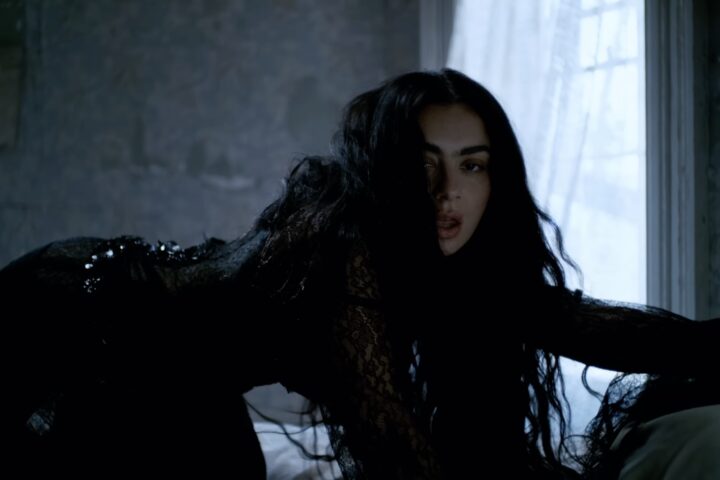
Based on the 2016 graphic novel The One Hundred Nights of Hero by Isabel Greenberg, writer-director Julia Jackman’s 100 Nights of Hero is a historical fantasy romance with feminist overtones. Starring Maika Monroe as a bride whose wifely devotion is put to the test by her inattentive husband and a virile houseguest, the film seeks to find liberation in the radical power of storytelling but is, unfortunately, as insubstantial as candy floss.
In a fantasy world created by a female god named Kiddo (Safia Oakley-Green), the weak-willed Cherry (Monroe) is married off to the rich Jerome (Amir El-Masry), who’s unwilling to give her an heir due to his preference for the company of his manservant. When his old friend, the roughish Manfred (Nicholas Galitzine), comes calling, Jerome promises Cherry and all that he owns to him should he seduce and impregnate her. But after Jerome goes away, Manfred’s attempts to romance Cherry are consistently foiled by her devoted maid, Hero (Emma Corrin), who’s a member of the League of Secret Story Tellers: a clandestine group of women who pass down stories intended to inspire other women in their fight against patriarchal control.
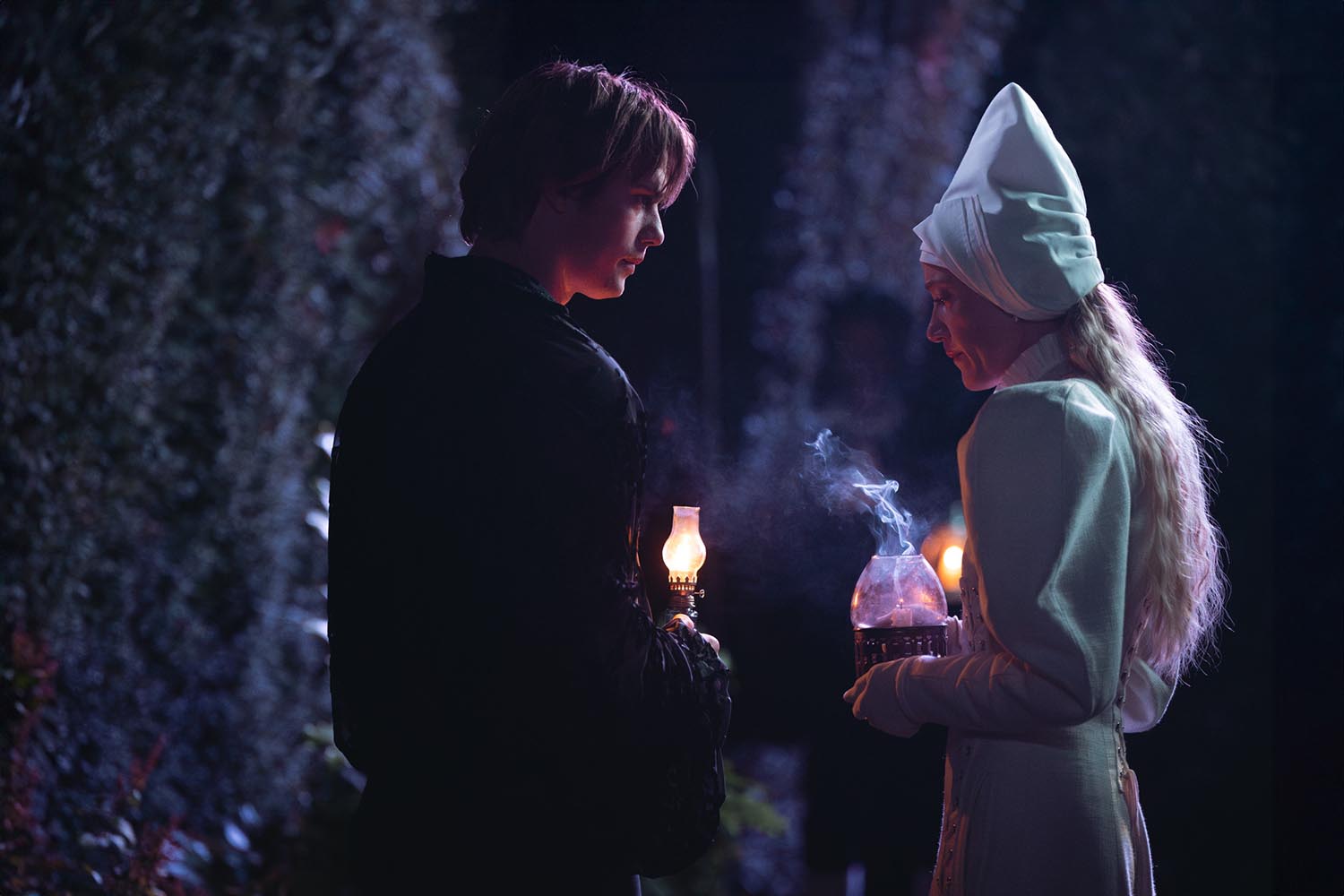
100 Nights of Hero’s quirky tone and whimsical fashions are a large part of its appeal. Susie Coulthard’s outfits are a handsomely elevated assortment of creams and jewel tones, accentuated by psychedelic splashes of purple and watery blue lights. Jackman and cinematographer Xenia Patricia push things further with soft focus and halation, all of which add a somnolent dreaminess to a film that’s unfortunately circumscribed—housebound to its central setting in a grand but un-fantastical English country manor.
100 Nights of Hero is very much indebted to One Thousand and One Nights, and as Greenberg’s source material is itself a collection of stories, one might assume that the film is setting itself up to deliver an intriguing anthology of feminist folktales. But the narrative is tied only to one singular story told over the runtime, about a group of sisters (lead by Charli XCX’s Rosa) who are accused of witchcraft for knowing how to read. As 100 Nights of Hero proceeds, this tale is linked to the film’s broader themes about the power of storytelling and literacy as female liberation, but these thematic strains are too loosely drawn.
Fantasies are at their best when there’s some investment in building out the world in which the story is set. Jackman, however, gives us no real embodied sense of the patriarchal power structures that Cherry, Hero, and the League of Secret Story Tellers are rebelling against, and even minor details that may help round out this fairy tale are contradictory or ignored.
Worse still, the film’s brand of feminism is as skin-deep as the narrative. We hear about a revolution occurring, but it happens entirely off screen, and despite the presence of a few women of color, the primary movers of the story are white women, which feels especially tiresome when one realizes what folkloric template this tale is drawn from. Fables need not be insubstantial, as proven by The Ugly Stepsister, Emilie Blichfeldt’s robust retelling of Cinderella. For a story about the power of stories and oral traditions that can be drawn upon as a well of strength, it’s unfortunate that 100 Nights of Hero is so limited, sketch-like, and, in a certain light, dispiriting in the ways it envisions an unbound future for its women.
Since 2001, we've brought you uncompromising, candid takes on the world of film, music, television, video games, theater, and more. Independently owned and operated publications like Slant have been hit hard in recent years, but we’re committed to keeping our content free and accessible—meaning no paywalls or fees.
If you like what we do, please consider subscribing to our Patreon or making a donation.