After the release of her 2008 feature-length directorial debut, the spiky, woman-centered mumblecore keystone Yeast, Mary Bronstein found herself dispirited with the American independent film industry. Taking time away to start a family and reacquaint herself with her artistic drive, the writer-director has come back swinging with If I Had Legs I’d Kick You, a blistering filmic panic attack anchored by a never-better Rose Byrne.
In telling the story of Linda (Byrne), a therapist whose life is coming apart in the face of her daughter’s mysterious illness, Bronstein brazenly reintroduces herself as a filmmaker with a ferocious voice to an industry and audience that were ambivalent, at best, toward the confrontational nature of her work. Yeast, which starred Bronstein alongside Greta Gerwig, was made on a $1,500 budget with an unpaid crew and actors as a response to the insular and male-centric mumblecore scene of the late 2000s, and proved to its own creator that audiences were largely divided over identifying with “unlikeable” female characters.
The film failed to provide a launching pad toward the bigger projects afforded to her cohorts (mostly men like Joe Swanberg, Mark Duplass, and Andrew Bujalski, but even Gerwig herself), yet much has changed in the intervening 17 years. With the backing of A24 and a critical establishment and audiences better attuned to the nuanced struggles facing women, likeable or no, If I Had Legs I’d Kick You announces an exciting new phase for a filmmaker whose polarizing debut effort was never going to be the end of her story.
I recently sat down with Bronstein to discuss her life since Yeast, her approach to telling stories drawn from her own pain and anxiety, and how little has changed for women in the industry.
What came first, the title or the screenplay?
The title came to me about 20 years before I wrote the movie, when I was in college. That phrase popped into my head, I wrote it down, and I was like, “I don’t know what this is, but it’s something.” I started a comedy sketch group, and at first I thought that was going to be the name of this group, but [it] only lasted as long as the first meeting that we had. Didn’t take off. [Laughs] So, I still had the title, and then when I [told myself], “I’m going to write this script,” I remembered that phrase. I was like, “Ah, that’s what that is, that’s the title of this movie.” I don’t understand it, but that’s what it is. It goes with the movie. It’s like I knew somehow that I was going to write this movie. And it’s just a great title! I’m a title nerd.
This is only your second feature after Yeast in 2008. Where has life has taken you in that interim and how does it feel to make this triumphant return?
Oh, thank you for saying triumphant. Life has taken me in so many different places. The world wasn’t ready for Yeast at the time, and I took it very dramatically, very personally. I didn’t understand and I didn’t think there was room for me. People got really upset about [that film] in a way that was weird to me, because I didn’t anticipate that. Then, I realized at the time, independent filmmaking was extremely male-dominated, and it still is. But not just male-dominated in content, but male-dominated in spirit as well.
I understand now that that was part of what was going on. I felt it, and I didn’t like it. I didn’t know where to go, because this is the type of work I was wanting to make and [still] want to make—about female characters and very in your face [and] bold. Women that we don’t get to see on screen, but that we’ve encountered in life. So, you know, it frustrated me. I did a lot of things. I went to graduate school and got a master’s degree in psychology. I worked doing play therapy with children in the public hospital system in New York City. I had a child. I haven’t said this one before: I ran an underground, sort of illegal preschool in Williamsburg…
Sounds like there’s a screenplay there!
Oh, there is! There is! It became so popular that pregnant women would sign up for it. But then, my daughter got ill, I had to go with her to San Diego to get the treatment that she needed, and that lead me to writing this movie. It was a way for me to save myself from the experience and express the feelings I was having that weren’t always socially appropriate or polite.
I had an existential moment where I was like, “You know what? I’m a filmmaker, man. I’m an artist. That’s what I am.” I was writing a movie about a character running away from herself through the whole movie, and I wasn’t going to do that. [I decided] that I was going to radically state to the world, “I’m a filmmaker whether you like it or not.” [It’s] interesting because people are ready for Yeast now. It’s constantly screening. I’m everywhere all the time. People are angry, so they’re ready and up for work that has some rage in it.
Yeast was shot on MiniDV and If I Had Legs is on 35mm, and you went from a more grounded, mumblecore style into something that’s so much more expansive. Can you speak a bit on the formal approach you decided to take here?
When you come up with a story, there’s a lot of different forms that you can use to tell that story. Even in writing, sometimes something is a poem, sometimes something is a novel, sometimes something is a play. I’m telling a story in only the way that you can tell a story through cinema, because I’m using the language of cinema, and I’m using the tools that you can only use in movie making that you can’t use in any of those other art forms.
I’m not a format snob at all. While I was writing the movie, I never dreamed I would be filming it on 35. I wanted to do that because I didn’t want this movie to look slick. The bad version of this movie is something that’s slick and shiny and modern-looking. Because everything else in the movie is new, as far as ideas, and I needed it to have a visceral grunginess to it.
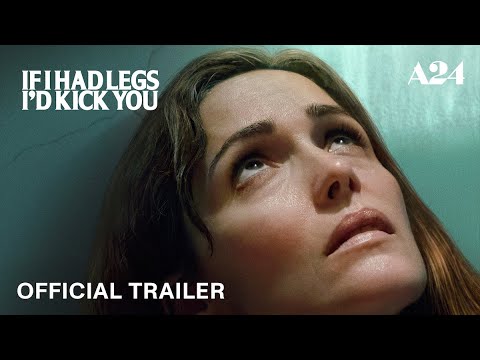
We used old Kodak backlog stock. That’s how I could afford to do it on film. The scary part of that is that you don’t know if the film has gone bad or not. I lucked out. When we were doing “vacuuming,” where you go in and take out all the scratches and the noise, I didn’t want that all taken out. You have to take out some of it, but I wanted that visual noise. Film is a physical object and I’m a practical filmmaker. If I’m using puppets, I’m not [going to trick] you [into thinking] it’s not a puppet. My instinct was that digital just wouldn’t work. When I did Yeast, mini DV was already over. I could get those cameras so easy because no one wanted them. My next movie, I don’t know. The format has to match the story that you’re telling.
Did you look to any other films or filmmakers for inspiration?
When I was thinking about it visually, I went back and watched horror movies from before digital VFX was invented. I’m talking about Poltergeist or A Nightmare on Elm Street, where there’s very lofty ideas that the filmmaker had and they had to figure out how to do it. So, like in A Nightmare on Elm Street, Johnny Depp gets sucked into the bed, right? The solution that they came up with is, well, the set’s upside down so that the blood flows down and then we flip the image. That’s the type of thinking that I was inspired by. Eraserhead is [also] a big one for me.
Another reluctant parenthood movie!
I think it’s…I was going to say sister, but it’s the brother movie to my movie. Because that movie is about a type of anxiety about parenthood that’s particular to men. What influenced me with that movie is the baby—the way the baby is this weird, ugly, little creature guy. Is it? Or is it just because that’s how [Jack Nance] is seeing it? Because he thinks he doesn’t want anything to do with this baby. We don’t know. Who cares? It’s not our business. That’s the reality of the character, and that type of boldness inspired me. Also, the fact that that baby, that creature, that’s a puppet. Those types of movies are really what I went back to. People that are making movies with their hands, with their fingerprints all over.
Speaking of horror and the Eraserhead baby, when did the conceit not being able to see the daughter for so long emerge?
That was one of the first conceptual ideas I had about the movie. The idea is twofold. One is that is that Linda literally can’t see the daughter in an existential sense. She can’t see the daughter as a human being, she can only see the daughter as an [existential other] that’s victimizing her, something that’s put upon her, an obligation, a thing she has to do, the thing that’s getting in the way of her life, a thing that she wants to avoid. Linda can’t see her in a figurative sense, so I’m going to make it literal, because we are in Linda’s reality. And then the other part of it is a more calculated move, which is that, once you introduce the face of a child, your sympathy is going to go to the child, because that’s how we are programmed as human beings.
That sympathy really does smack you right in the face when you finally see her.
That’s the payoff. We see her because that’s the moment that Linda can finally see her. For me, it’s not a happy ending, it’s a hopeful ending.
Do you feel any bitterness in regard to how this film being so embraced right now? You’ve spoken about what a difficult time you had with Yeast, and though there’s been some progress, things haven’t changed all that much for women in film.
It’s always going to be difficult. It’s even going to be difficult for me now. Hollywood still thinks that people won’t go and see a movie if it’s written and directed by a woman, and that’s bizarre and sad, but then when we look at the landscape of our society, it makes sense to me. I was bitter about Yeast when I was younger. I have no bitterness now. I’ve lived life and have a lot of things to make movies about. The trap is to become a filmmaker that makes movies because you just want to make movies and don’t have anything to say. I have a lot to say, because I experienced a lot. So, I can’t say that I regret it. I wouldn’t have been able to make this movie.
Since 2001, we've brought you uncompromising, candid takes on the world of film, music, television, video games, theater, and more. Independently owned and operated publications like Slant have been hit hard in recent years, but we’re committed to keeping our content free and accessible—meaning no paywalls or fees.
If you like what we do, please consider subscribing to our Patreon or making a donation.