Adapted by Charlie Huston from his own 2004 novel of the same name, Caught Stealing sees both Darren Aronofsky and Austin Butler operating in a different mode than we’re used to seeing from them. For Aronofsky, it’s bringing his penchant for mental and physical anguish to a crowd-pleasing yarn. And for Butler, as willing as any other actor who’s been put through Aronofsky’s cinematic meat grinder, it’s nakedly letting his star power shine through in a leading role that calls upon his natural charisma.
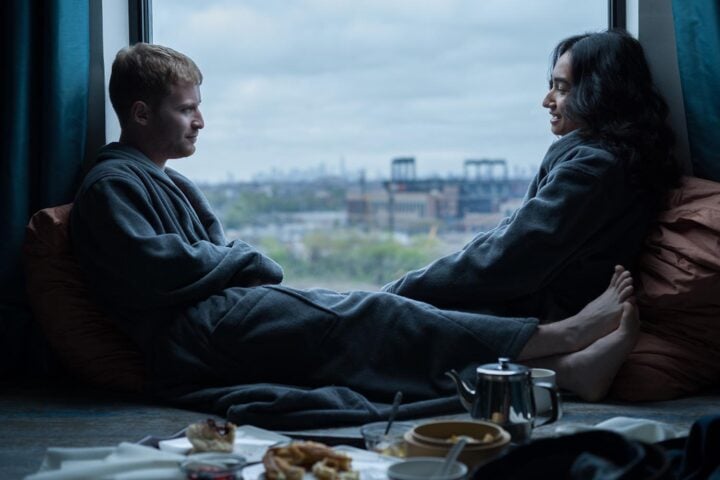
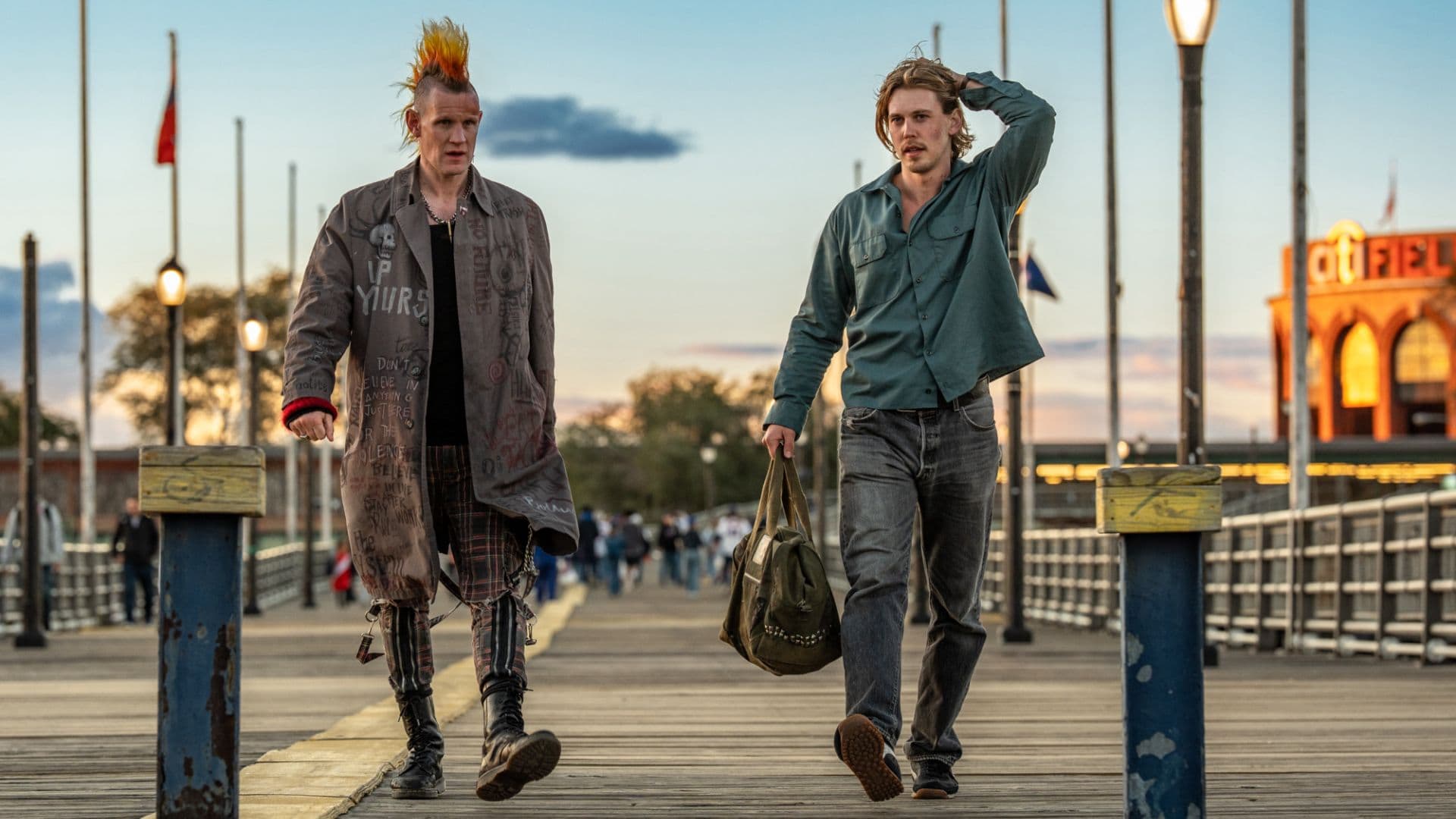
Hank Thompson (Butler) is a California high school baseball star turned New York City bartender still haunted by the accident that claimed his best friend’s life and stopped his dreams of going pro dead in their tracks. After closing down the bar one night and bringing his gal Yvonne (Zoë Kravitz) back to his pad for some inebriated fooling around, Hank reluctantly agrees to cat sit for Russ (Matt Smith), the wannabe Johnny Rotten next door, while he’s out of town. But the simple pet-sit quickly turns deadly when criminals come looking for Russ, and soon Hank is on the run with little to go on but a key to a storage unit.
The story’s boilerplate setup gets a noticeable lift thanks to Aronofsky’s style and focus. Caught Stealing is looser, more unpredictable, and funnier than one expects from Aronofsky, but violence is still serious business here. Kicks in the kidneys result in blood and piss, cars slam into immovable objects in nerve-shredding slow-mo sprays of glass and shrapnel, cracks to the cranium are more fatal than comical, and shotguns report with knee-buckling force.
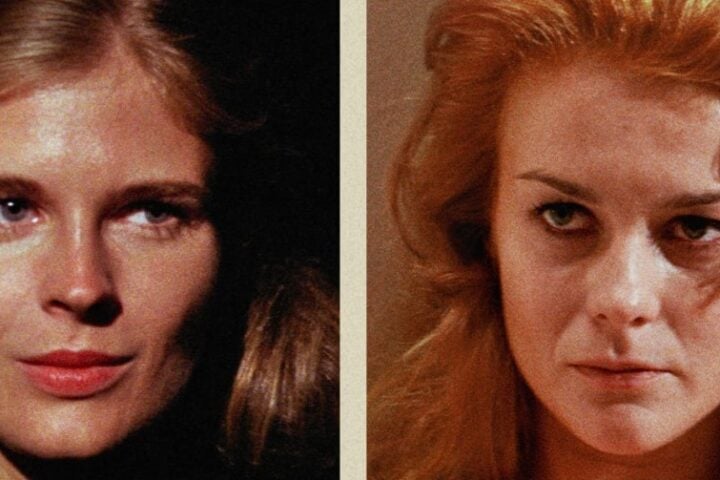
But in a decided change of pace for the director of Black Swan and The Whale, Caught Stealing finds nothing transcendent in its violence. It’s an interesting turn for Aronofsky who, across the breadth of his work, has been drawn to characters whose suffering often takes on the tenor of martyrdom in the pursuit of artistic greatness or personal recompense.
In fact, in every way but tonally, Caught Stealing feels like a return to the pre-millennium New York City milieu, at once cruel and mundane, of Requiem for a Dream. The film is set in the late ’90s, with Aronofsky’s longtime cinematographer Matthew Libatique and production designer Mark Friedberg ably capturing the chaotic pulse of life on the street at the time.
The visuals are bolstered by a hopping soundtrack of hit songs from the time period and new tracks by British band Idles written for Caught Stealing that bring a blistering, punky edge to the proceedings. With the love of the city as it was in a bygone era bursting through every frame, it’s not too much to say that Aronofsky has given us the type of old-fashioned “New York movie” that we don’t often see anymore, as vibrant and in step with the beat of the city as perennial favorites like The French Connection and modern classics like Uncut Gems.
As much as the film is Aronofsky’s least characteristic to date, with its Guy Ritchie-esque rogues gallery of crooks and killers and Coen-esque bursts of wry violence, it’s Butler’s performance that makes it feel of a piece with the director’s other work. There are few filmmakers more interested in putting their characters in a vice grip, so as to bring them someplace where their physical traumas become a way for them to know themselves beyond the limits of the body.
“Look at him, he can take punishment,” a character says of Hank late in the film, seeing him as nothing more than a punching bag. But what is he beyond that, or a baseball star that never was? Though Hank finds out what he’s really made of in the end, Caught Stealing doesn’t end with him operatically letting out his last breath, or with this conscience cleared, just the knowledge that even though life sucks, what matters is to keep swinging.
Since 2001, we've brought you uncompromising, candid takes on the world of film, music, television, video games, theater, and more. Independently owned and operated publications like Slant have been hit hard in recent years, but we’re committed to keeping our content free and accessible—meaning no paywalls or fees.
If you like what we do, please consider subscribing to our Patreon or making a donation.