
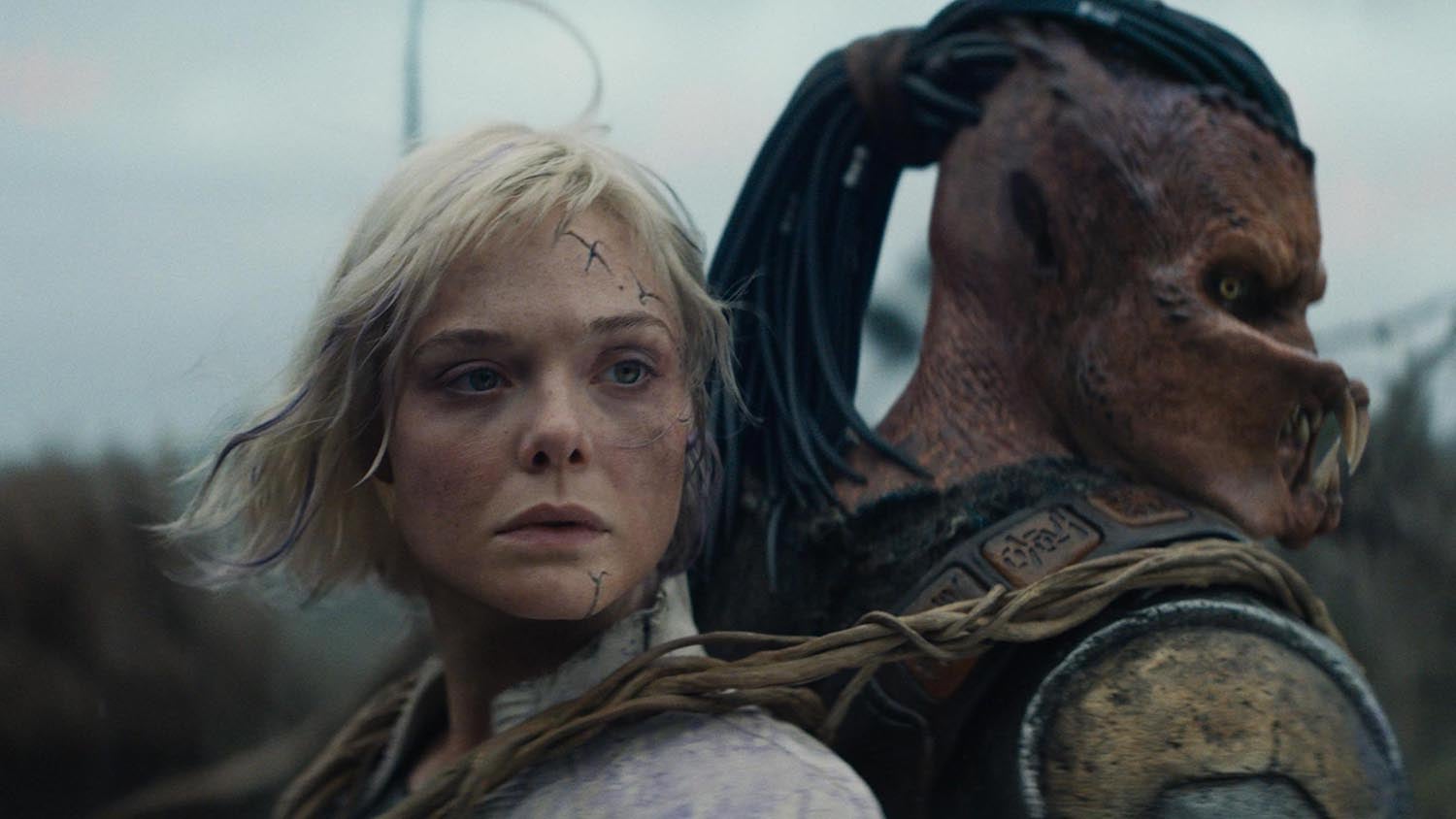
For almost 40 years, filmmakers have been pitting the spine-ripping Predators against the best warriors that Earth has to offer, and Dan Trachtenberg’s Predator: Badlands proves, among other things, that the creative well of the series has yet to run dry. If anything, it may be the most ambitious Predator film to date, offering up a story where a young Yautja—the most commonly accepted name for the titular extraterrestrial creatures—is the fragile prey.
Despite easily being the size of your average NFL linebacker, Dek, the film’s hero of sorts, is a runt by the standards of his Yautja species, sentenced to death by his own father for being a weakness to his clan. Dek, though, is in no mood to die, and instead takes off in a spacecraft to what the Yautja call “the death planet,” Genna, to earn the respect of his clan by hunting a creature called the Kalisk that even the mighty Predators have failed to bring down.
That’s more character shading than a Predator film has ever given us, and it’s to the filmmakers’ credit that they don’t allow that characterization to completely diminish the mystique of the Predators. That’s an impressive feat given how much of the script relies on finding emotion in that trademark hideous fanged face, with Dek’s dialogue spoken in an invented Yautja language.
The story’s thrust is Dek’s evolution in the wake of being rejected by his tribe. The subtext of young men getting their influences from outside a toxic sphere is blatant but incisive, especially as Elle Fanning’s dismembered android sidekick Thia introduces Dek to what an alpha wolf is, then reframes the concept as co-protector of a family rather than the one who kills the most.
Sliced in half and left for dead shortly after landing on Genna, Thia is also a reject. Closer to the vein of Aliens’s Bishop and Romulus’s Andy than, say, Prometheus’s David, she’s the film’s beating heart, and Fanning portrays her with a wide-eyed, infectious fascination for life, no matter how brutal. Dek is initially willing to carry her dismembered body around as a talking compass, but eventually they come to a mutual understanding that’s subtly rendered, with Dek trusting her passion for living creatures without sacrificing his tribe’s principles.
Lest all this talk of emotions and sympathy led you to believe otherwise, life on Genna is brutal—its never-ending parade of visceral, flesh-rending dangers scaling up to put the fear of an angry whatever-the-Yautja-call-God into Dek. The action is horrifying, inventive, and heart-pounding, but it’s also the least surprising part of Predator: Badlands. After all, the film is Trachtenberg’s third Predator project, following Prey and Predator: Killer of Killers.
If anything, it’s worth emphasizing that the film’s PG-13 rating hasn’t dulled the director’s sensibilities when it comes to the viciousness of that action, thanks to the victims being white-blooded androids and blue-, green-, and purple-blooded aliens. But we’ve seen Predators rip apart and be ripped apart before. It’s only been in Trachenberg’s tenure that the films have explored what being faced with an alien specter of death can do to an intelligent being.
Since 2001, we've brought you uncompromising, candid takes on the world of film, music, television, video games, theater, and more. Independently owned and operated publications like Slant have been hit hard in recent years, but we’re committed to keeping our content free and accessible—meaning no paywalls or fees.
If you like what we do, please consider subscribing to our Patreon or making a donation.