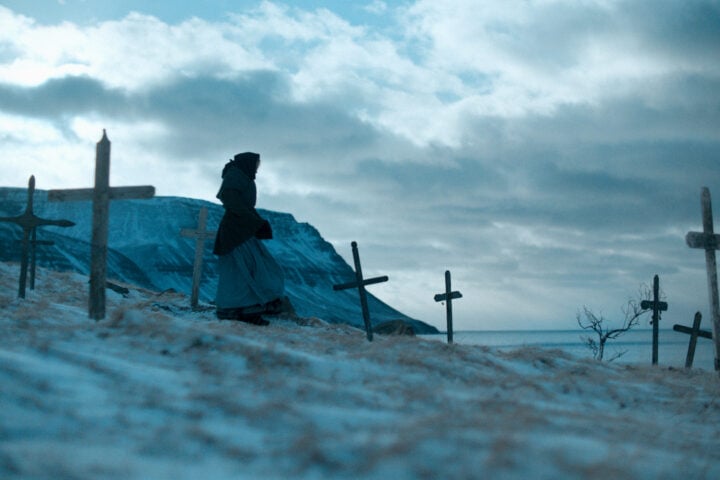
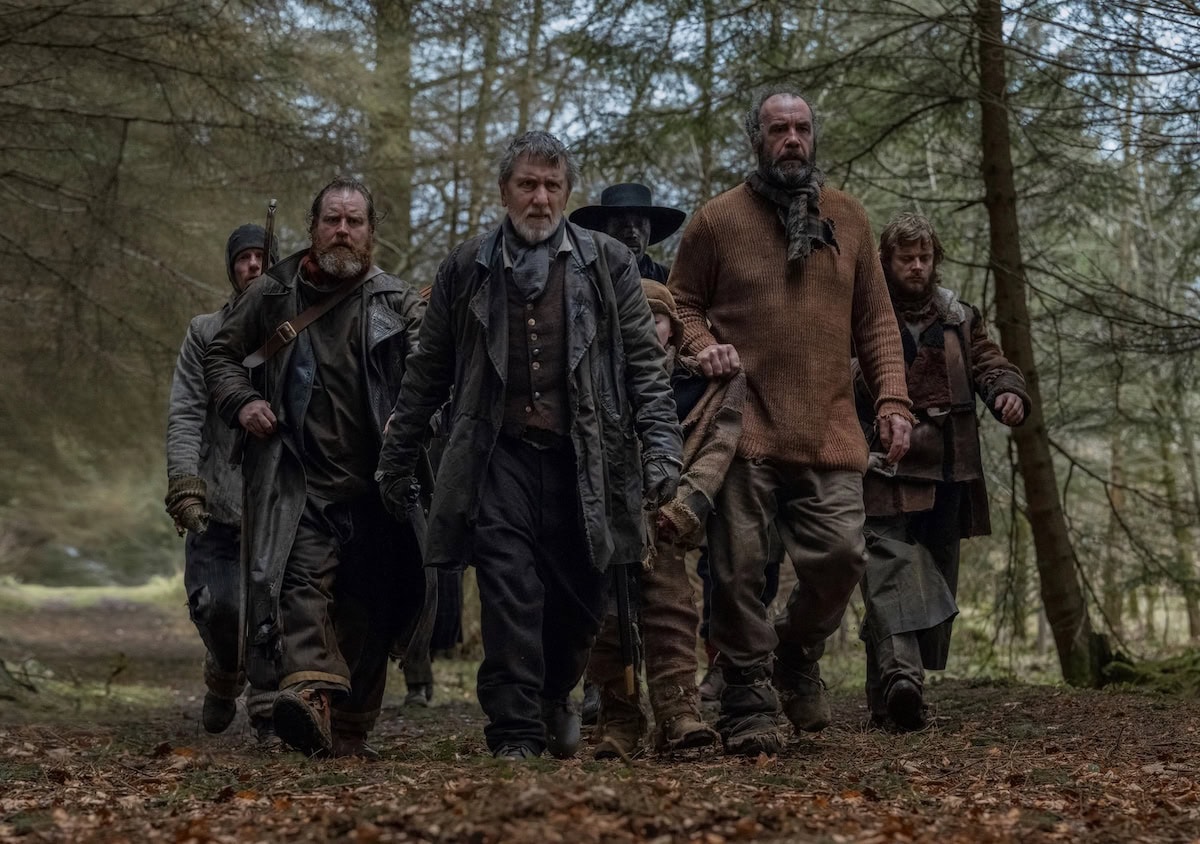
In John Maclean’s Tornado, a remote patch of British Isles highland circa 1790 becomes the convergent point for various genres, cultures, styles, and tropes. This methodical thriller is informed primarily by westerns and samurai films, finding common ground between them in an unlikely locale. Maclean’s previous feature, Slow West, was a similarly stripped-down genre exercise. Both are ground-level portraits of lives lived and lost on the fringes of history, but the earlier grisly fairy tale transpired in a curdled version of the oft-romanticized Old West while Tornado transposes such romantic frameworks to a drearily incongruous setting.
Maclean’s latest period parable begins with a young Japanese woman, the eponymous Tornado (Kôki), fleeing from a motley crew of Scottish marauders, led by the gruff Sugarman (Tim Roth) and his scheming son, Little Sugar (Jack Lowden). The extended in medias res opening—followed by a flashback sequence retracing the characters’ steps—effectively establishes the film’s terse tone and desolate, windswept aesthetic, but it also robs the narrative of momentum and heft, needlessly complicating this pointedly simple tale of revenge and actualization.
Before her life was abruptly overturned by two sacks of misplaced gold, Tornado ran a traveling puppet show with her father, Fujin (Hira Takehiro), a retired samurai whose principled parenting proved irksome to the restless young girl. The thieves happen upon their performance in a forest clearing, where the hapless schlemiel tasked with schlepping the group’s stolen riches sets the weighty bags down at his feet. While the crowd is entranced by Tornado and Fujin’s dueling puppets, an unnamed local boy (Nathan Malone) manages to slip away with the treasure under everyone’s noses. It’s an act of greed that provokes the enterprising impulses of nearly every character, leading to a string of brutal, senseless killings, born of material motives, that call to mind the films of Kurosawa Akira at their most moralistic.
Tornado’s winking theatricality, thematic fixations with myth and avarice, and pared-down plotting add up to a heady concoction, but it’s more conducive to reflection than engagement. The cipher-ish characters are lent illusory texture by a committed cast, and Maclean’s restrained style aims for no-frills tension but instead feels overly mannered. That said, the violent, score-settling final stretch is satisfyingly blunt, and the ending strikes a compellingly ambiguous chord of double-edged valor as Tornado takes her literal, haloed walk into the sunset.
Since 2001, we've brought you uncompromising, candid takes on the world of film, music, television, video games, theater, and more. Independently owned and operated publications like Slant have been hit hard in recent years, but we’re committed to keeping our content free and accessible—meaning no paywalls or fees.
If you like what we do, please consider subscribing to our Patreon or making a donation.