Adapted by Okudera Satoko from Yoshida Shūichi’s 2018 book of the same name, Lee Sang-il’s Kokuho takes a novelistic approach to scene and character. As it follows a small group of individuals over the course of several decades, the film diligently uses its nearly three-hour runtime to tell a story that feels at once grand and intimate.
Kikuo (played as a teen by Kurokawa Sōya and as an adult by Yoshizawa Ryo) is the son of a high-ranking yakuza (Nagase Masatoshi). When Kikuo’s father is killed right before his eyes, an acclaimed kabuki actor, Hanai Hanjiro (Wantanabe Ken), takes him under his wing, offering him a new life in the glamorous world of kabuki theater. Hanai trains Kikuo alongside his own son, Shunsuke (played as a teen by Koshiyama Keitatsu and as an adult by Yokohama Ryusei), and the young men begin a rivalrous friendship that will span the rest of their lives.
Kikuo is the more driven of the two, while Shunsuke has nepotism on his side in an industry that places stock on family ties. They initially become famous as a double act but soon strike off on separate paths, rising and falling in their careers over the years and trading places in the limelight as they’re alternatively embraced and ostracized by the close-knit world of kabuki.
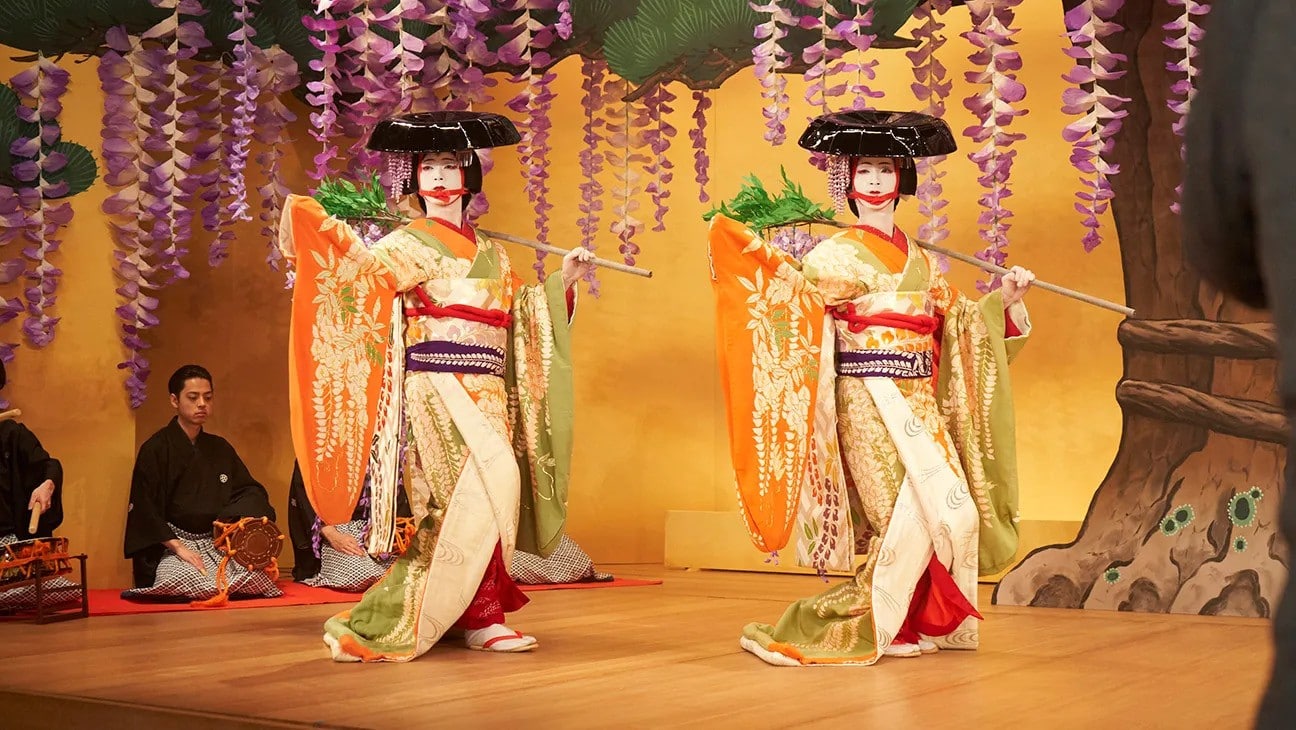
It makes for a dance as mesmerizing as any of those that Kikuo and Shunsuke perform on stage together, with the four actors who play the two characters all giving complex, finely drawn performances. Shunsuke is more laidback and unfailingly sincere, wearing his emotions on his sleeve, while Kikuo is elusive, his face a blank mask even when the white makeup is washed off. He’s driven by a personal ambition that runs so deep that we can never tell quite how far he’ll go to fulfil it. Whenever he speaks, we’re left wondering if he really believes the things he’s saying, or if this is simply the performance he thinks will get him closer to his goals.
“He’s a monster,” a young Shunsuke says, while he and Kikuo take in a performance by a legendary kabuki actor. “Yes,” Kikuo responds, “but a beautiful monster.” Kokuho never forces us to make up our minds on whether Kikuo himself is a romantic figure, admirably dedicated to his craft, or a psychopath who destroys everything around him for the sake of his ego. Instead, its subtle storytelling allows us to gently slide back and forth between these perspectives.
We watch that formative kabuki performance alongside the two of them, see Kikuo perform the same role decades later, and take in a number of their shows together in the years in between. Cinematographer Sofian El Fani captures each show in all the richness of its colors, luxuriating in the swish of silk and the gleam of the spotlights on the actors’ painted skin, and the action is matched every step of the way by a Hara Marihiko score, which is at once delicate and epic.
For all the vibrancy of the kabuki sets and costumes, some of the Kokuho’s most beautiful images arrive off stage. In one scene, the camera gazes over Kikuo’s tattooed back while he lies asleep, the whole picture draped in soft blue moonlight. It’s a quiet moment, tinged with melancholy and yet oddly soothing, much like the rest of Lee’s film.
Since 2001, we've brought you uncompromising, candid takes on the world of film, music, television, video games, theater, and more. Independently owned and operated publications like Slant have been hit hard in recent years, but we’re committed to keeping our content free and accessible—meaning no paywalls or fees.
If you like what we do, please consider subscribing to our Patreon or making a donation.