
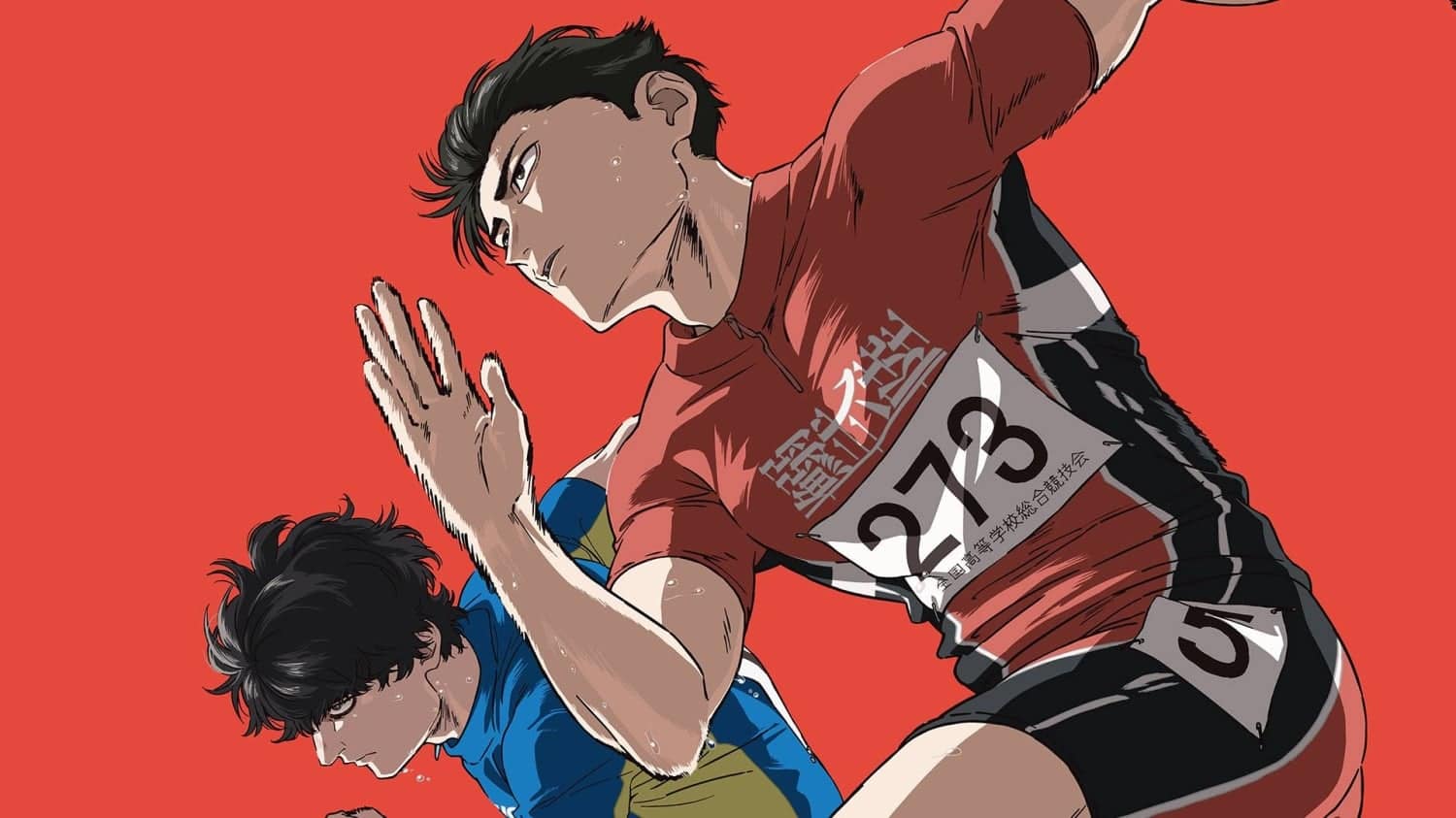
Across 100 Meters, anime director Iwaisawa Kenji captures the drama of sprinting as intensely as he did the emotions of music in his 2019 feature-length directorial debut, On-Gaku: Our Sound. That film established Iwaisawa as a maverick of experimental animation, namely for the way he so skillfully conveyed a character’s feelings through shifting art styles. He brings much of that same flair to 100 Meters, an admittedly more conventional work that’s nevertheless a breathtaking animation showpiece.
Adapted from Uoto’s five-volume manga about gifted runner Togashi (Matsuzaka Tôri), the film is split into three distinct eras: grade school, high school, and adulthood. Togashi’s friendships, rivalries, and very outlook on running change between each era, but the one constant is how he’s overshadowed by an unorthodox runner, Komiya (Sometani Shôta). Togashi may coast far on his impeccable form and natural talent, but Komiya moves like he’s running for his life.
To get to the primal thrill of racing, Iwaisawa uses just about every technique at his disposal. Against vivid and painterly backdrops, 100 Meters features frantic shifts into a first-person POV, heavily distorted linework, jittering camera angles, and color shifts.
One incredible sequence warps the image into a series of watery smears to simulate heavy rain as the camera tracks away from the runners and captures the workers and onlookers in the background. Percussion kicks in only at the moment Togashi starts running, and rotoscope captures the slightest variations in strides and posture as well as more minute details, like how Togashi clasps his hands together before an informal race.
Beyond what we can infer from details like Komiya’s raggedy running shoes, we get little about the runners’ personal lives. They can feel indistinct, but even this works to the film’s advantage. 100 Meters is prone to philosophical digressions about why the characters run—or why they no longer wish to. It pays special mind to burnout disillusionment and despair, and to the point where, more than once, the 100-meter dash sounds positively Sisyphean. If the talkier portions of the film lack for the flourishes of its more conventional “action” sequences, their low-key staging rather aptly conveys how running is how these characters come alive.
Since 2001, we've brought you uncompromising, candid takes on the world of film, music, television, video games, theater, and more. Independently owned and operated publications like Slant have been hit hard in recent years, but we’re committed to keeping our content free and accessible—meaning no paywalls or fees.
If you like what we do, please consider subscribing to our Patreon or making a donation.