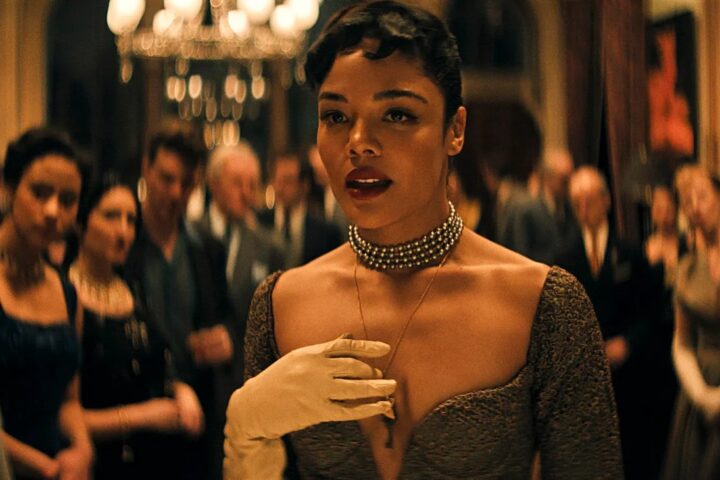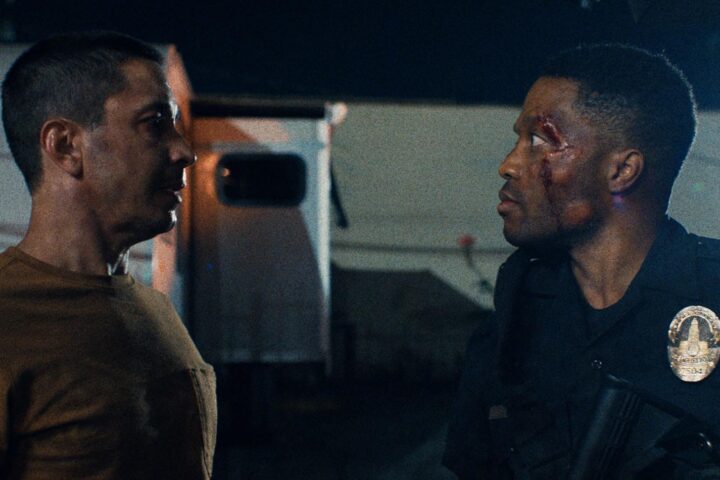
Last year’s 28 Years Later marked the triumphant, dizzyingly allegorical return of director Danny Boyle and writer Alex Garland to the Rage Virus-infected world they world they introduced us to with 2002’s 28 Days Later. Though very much the first chapter in a planned sequel trilogy, Boyle’s film still feels largely complete on its own terms. Its follow up, Nia DaCosta’s 28 Years Later: The Bone Temple, doesn’t display the same bracing inventiveness and strangeness, shrinking the scope of the earlier film down to a pinhole in what feels more like an incidental episode than a full-throated cinematic event in its own right.
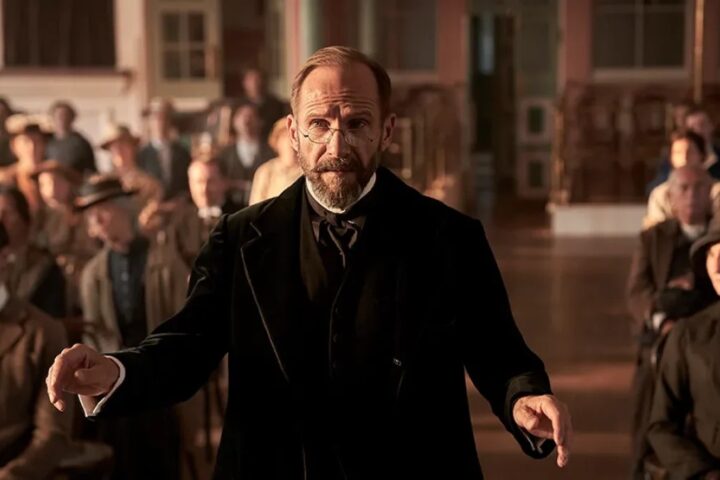
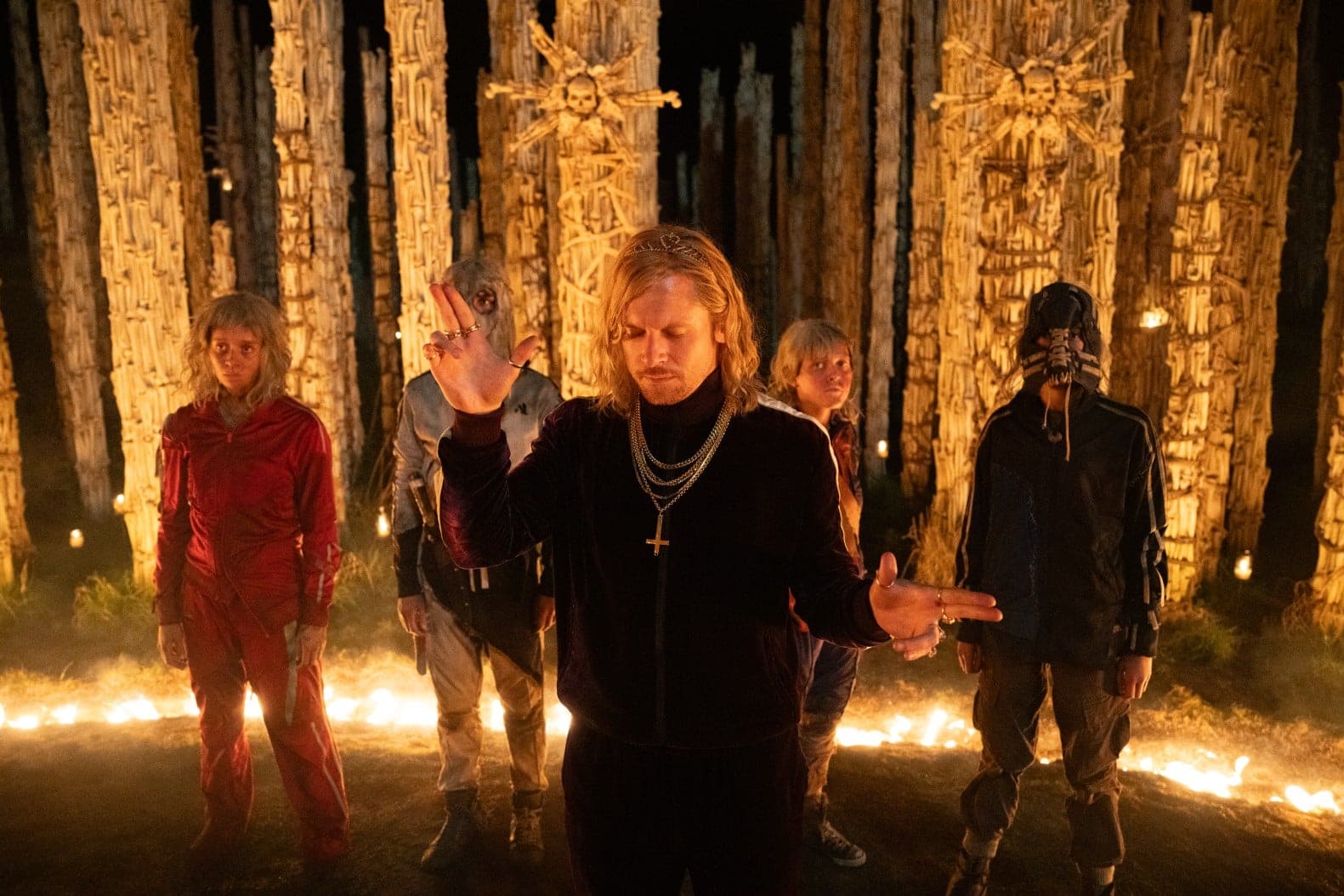
Picking up directly after the events of 28 Years Later, the film sees Spike (Alfie Williams) forced to ingratiate himself with a band of Jimmy Savile-cosplaying cultists or die at their hands. Led by the psychopathic Sir Lord Jimmy Crystal (Jack O’Connell), the Jimmys welcome Spike into their ranks after he duels one of their devotees. From there, he joins them in their quest to “collect souls” for Old Nick (a.k.a. Satan) by flaying the human survivors dotting the Scottish Highlands alive. Meanwhile, Dr. Ian Kelson (Ralph Fiennes) continues his experiments with Samson (Chi Lewis-Parry), attempting to build a connection with the hulking infected known as Alphas, who may just hold the key to humankind’s salvation.
It’s perhaps unfair to expect The Bone Temple to pack in the moment-to-moment kineticism that Boyle has always made his stock in trade. Throughout, we only get a smattering of the expressionistic flourishes and stylized bloodletting that defined the earlier film. The most generous reading of the The Bone Temple’s largely anonymous visual style is that it’s called for by what is a more traditionally structured and grounded chapter in the series, but it only highlights how wild and idiosyncratic 28 Years Later is by comparison.
Garland also seems unsure where to take this story. Between its thematic concerns and aesthetic registers, 28 Years Later’s canvas was huge, transmitting the cultural wreckage of post-Brexit England into a barbarous future. The Bone Temple also continues to erase the line between high and low culture (references to Androcles and the Lion rest snugly alongside ones to Duran Duran and conversations about Tinky Winky), but the film is less a snapshot of a nation run aground than it is an elementally familiar meditation on whether good and evil can even exist as polarities in a broken reality where human actions no longer carry extrinsic moral value.
This central question takes center stage when Dr. Kelson and Jimmy Crystal come face to face, setting off a battle between faith and reason that never quite sparks despite the sometimes literal sparks it produces. Still, it’s fun to watch these showmen lock horns, even if it means the reboot series’s ostensible protagonist, Spike, is largely sidelined. The film gifts us an ending that, despite its entertaining, fire-and-brimstone intensity, feels like something of a dramatic dead end, and as such the reintroduction of a legacy character feels like the only sensible way to carry on despite how obligatory that moment ultimately feels.
Since 2001, we've brought you uncompromising, candid takes on the world of film, music, television, video games, theater, and more. Independently owned and operated publications like Slant have been hit hard in recent years, but we’re committed to keeping our content free and accessible—meaning no paywalls or fees.
If you like what we do, please consider subscribing to our Patreon or making a donation.