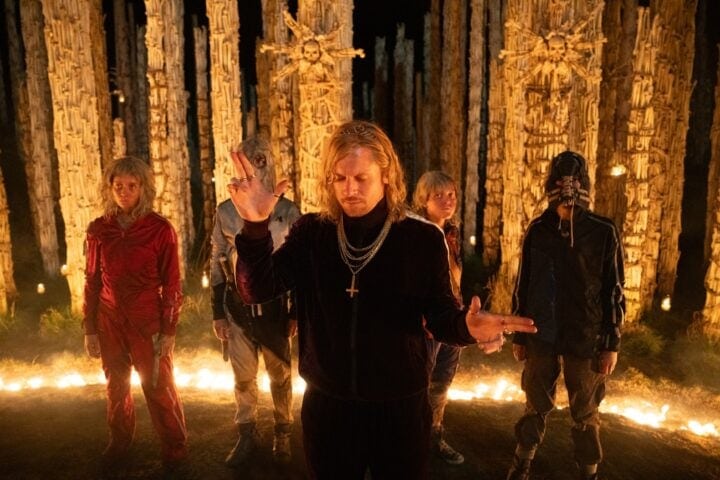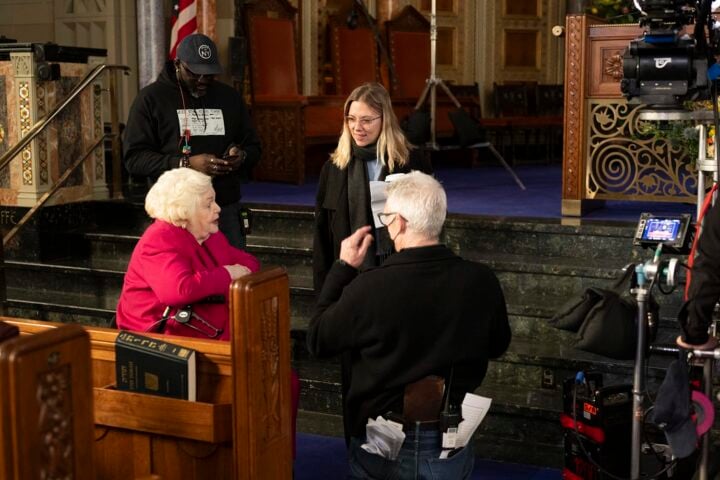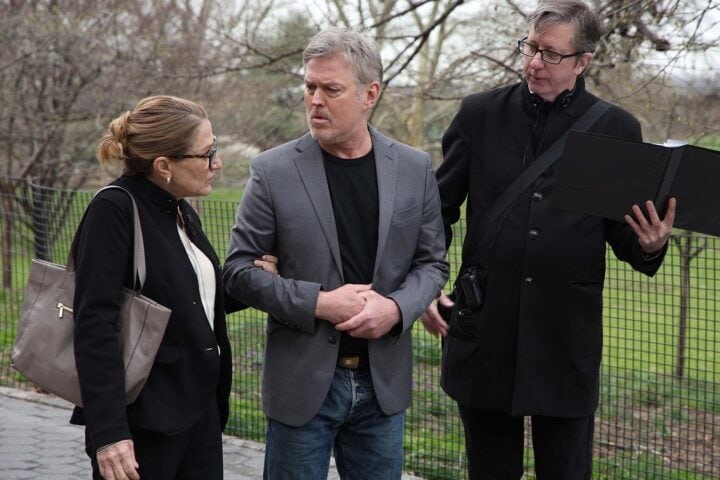
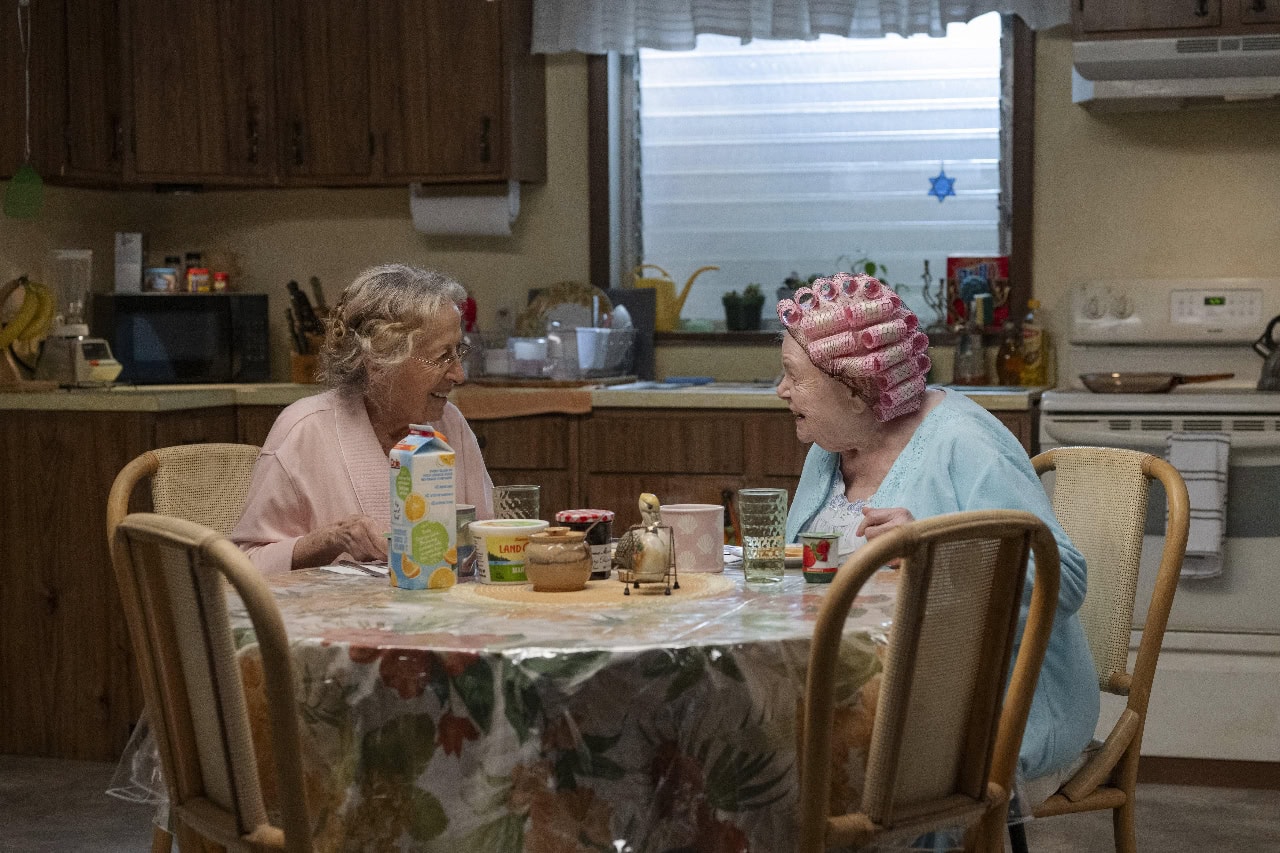
There’s a poignant love story at the heart of Scarlett Johansson’s feature-length directorial debut, Eleanor the Great, of two elderly women, Eleanor (June Squibb) and Bessie (Rita Zohar), living together in platonic bliss in a little apartment in Florida. They spend their days people-watching at the beach, using geriatric privilege to troll the young at the supermarket, and generally laughing their days away while eating a variety of snacks.
For the way Eleanor and Bessie have created a warm, insulating shell made of sarcasm against the dumbest parts of modern life, you may be reminded of Johansson and Thora Birch’s characters from Terry Zwigoff’s Ghost World. And the Robert Crumb poster that we catch a glimpse of later in the film suggests that Johansson wants us to make that connection.
As brief as our time with Bessie and Eleanor is at the start of the film, it’s time well spent. One day, Bessie dies of a heart attack, and like Enid from Ghost World, a broken-hearted Eleanor is forced to figure out who exactly she is. That journey of self-discovery begins with her moving back to New York City for the first time in decades to live with her daughter, Lisa (Jessica Hecht), and grandson, Max (Will Price). From there, Eleanor the Great proceeds as an old-school comedy centered around the Eleanor adjusting to the city as it is, and it gets considerable mileage out of the infectious indomitable-ness that Squibb brought to last year’s Thelma.
Even before the film has fully settled into that groove, though, it takes yet another shape. Desperate to find new friends her own age, Eleanor winds up at a Jewish community center and accidentally stumbles into a meetup group for Jewish Holocaust survivors. Then, in a split second, knowing that she’s among people she needs, Eleanor tells her Holocaust story.
Except it’s Bessie’s Holocaust story, told to Eleanor over tea at three in the morning after her friend woke up from a nightmare. That story leads Eleanor to reconnect to her Jewish faith, which leads to a friendship with a college student (Erin Kellyman) grieving her dead mother, which leads to Eleanor’s story getting her local TV attention from Nina’s distant father (Chiwetel Ejiofor), which leads to Lisa realizing the extent of her estrangement from Eleanor.
If that sounds like a lot for one film, let alone one that’s 98 minutes and presents itself early on as a pretty gentle comedy, it very much is. Johansson’s direction keeps things simple and intimate in a way that Tory Kamen’s overambitious screenplay doesn’t. This is a film that isn’t without moments of connection between women of various ages, of quick wit and barbed retorts, and of characters empowered by hard-won wisdom, but too often it seems like it’s rushing to tend to the predictable beats of how Eleanor’s lie spirals out of control.
Eleanor the Great does, though, arrive at another moment of sustained poignancy in the end, and with monologues from Ejiofor and Zohar’s characters that really zero in on the theme of generational approaches to loss and forgiveness after dancing around several over for much of its runtime. That thesis ultimately tries to reframe Eleanor’s ugly lie into an act of remembrance, which is an awful big ask for a lie involving the Holocaust, and it’s hard to tell how well any of this would land without a screen presence as deeply empathetic as Squibb anchoring the plot and its stakes, but it’d be another damnable lie to say that it’s ineffective at all.
Since 2001, we've brought you uncompromising, candid takes on the world of film, music, television, video games, theater, and more. Independently owned and operated publications like Slant have been hit hard in recent years, but we’re committed to keeping our content free and accessible—meaning no paywalls or fees.
If you like what we do, please consider subscribing to our Patreon or making a donation.