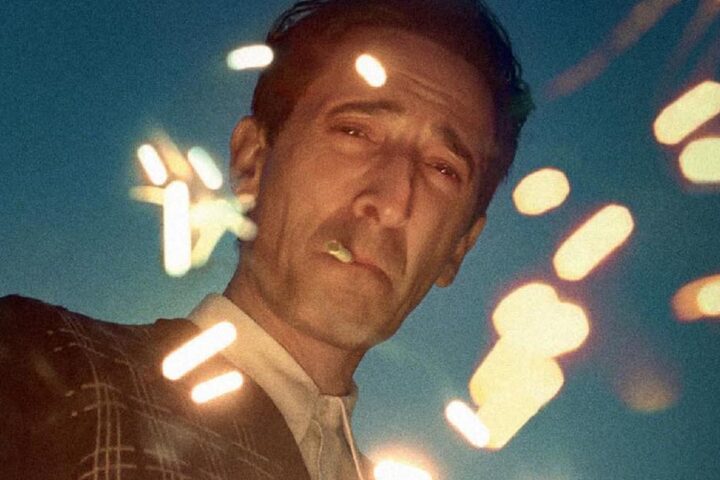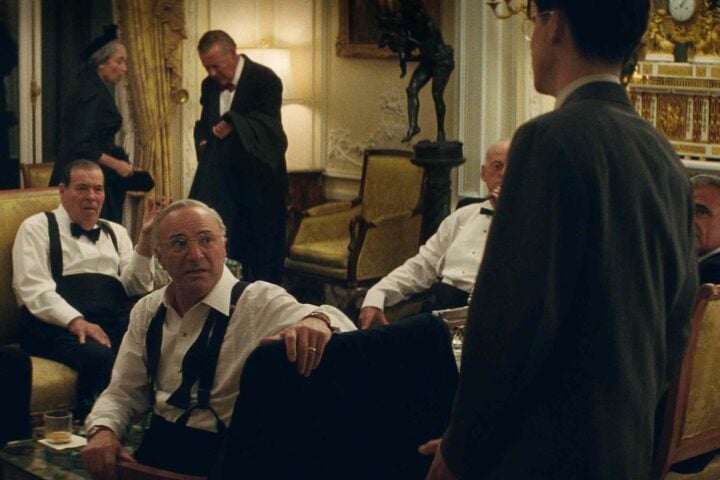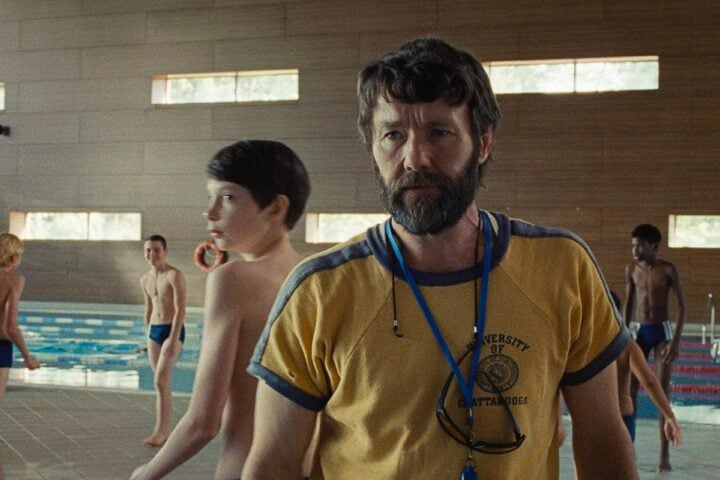
Over the past year, Mona Fastvold has had a hand in bringing two visions of the American promise to the big screen with her writing and life partner, Brady Corbet. The fictional László Toth of The Brutalist and the real-life Ann Lee in The Testament of Ann Lee are both European immigrants drawn stateside by the promise of opportunity. Each character enjoys a brief period of flourishing before they’re thwarted by entrenched hatreds.
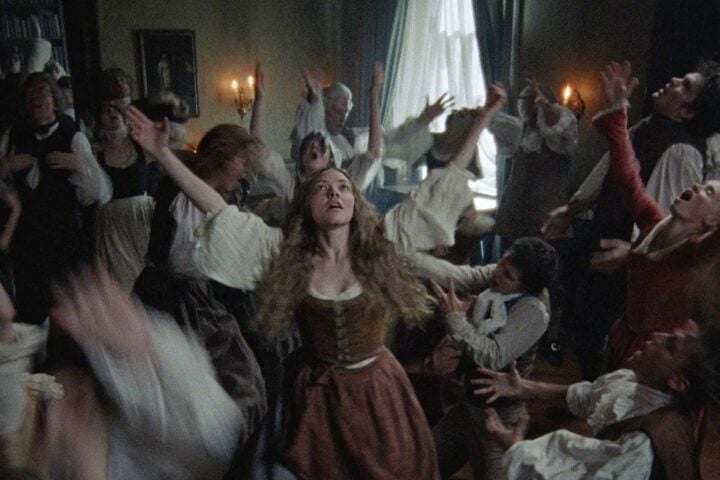
The Corbet-directed The Brutalist comes to ruminate more on the agony of the artist-patron dynamic. By contrast, the Fastvold-helmed The Testament of Ann Lee dwells in the ecstasy of the utopian community that artistic expression can create. Amanda Seyfried’s Ann Lee leads the Shakers in their glorification of God through honest labor as well as jubilant song and dance.
The sect, which came to worship “Mother Ann” as a female embodiment of Christ, briefly flourished in colonial America before facing persecution. Fastvold doesn’t shy away from the brutality faced by these true believers in their drive to realize their egalitarian worldview. Yet The Testament of Ann Lee never loses sight of the Shakers’ rapturous form of channeling a divine presence, both through their worship and in the society they hoped to remake.
I spoke with Fastvold ahead of The Testament of Ann Lee’s theatrical release. Our conversation covered what she connected to in the Shakers’ legacy, how Ann Lee’s worldview is reflected in her directing style, and how she sees the film in relation to the history of America at large.
I was so struck by how the Shakers’ communal movement and song acted as a means of accessing the sublime. Is that connection to the utopian ideal, be it something in nature or in the cosmos, something you also feel through your own chosen artistic expression of filmmaking?
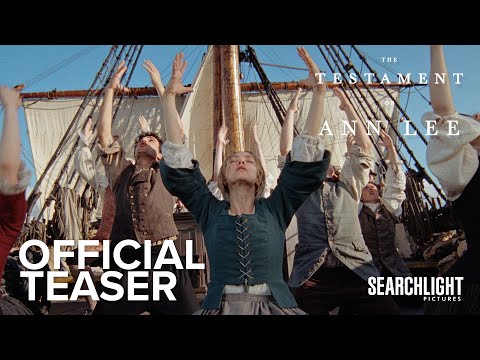
Yes, we move our bodies and dance when we’re joyful, right? It’s such an incredible expression of joy and freedom when we’re moving. Even if you look at little children, you see them dancing and moving. We shake when we are shaking off trauma. There’s an interesting thing: If an animal has been attacked by another animal, they will lie still for a second and then shake their whole body to shake off that trauma. We will do it ourselves. You have a bad thought, and you shake. You have that reaction to remove it from yourself through this movement. I think there’s something so ancient about that expression, and that’s one of the things that really excited me about discovering this story and form of worship. What was described in their testament and the texts that I found was this incredibly joyous, wild, ecstatic, almost sensual communal experience of movement. I thought, how cinematic and exciting is it to try and capture that?
Ann had the vision of “hands to work, heart to God” that positioned labor as a crucial component of her philosophy. You’ve mentioned this a few times, so what is it that attracted you to this element of her teaching?
Why in the world do I do what I do, right? It’s so hard! No one wanted to make this movie. It was incredibly difficult to get to pull it together, and the execution of it was relentless. I would shoot for 18 hours with hardly any sleep in the rain and the heat without eating much, and, at the same time, feel this incredible, exhilarating feeling when everything would come together. What is it that drives you to push you to your very limit, to reenact this strange dream that you’ve had, this series of images that you feel have meaning? There’s a spirituality to that for me that is in line with what Mother Anne was saying.
And I also deeply care about the craftsmanship of filmmaking. I care about shooting on celluloid. I care about the precision of the filmmaking and the artform, down to our hand-painted set extensions. We had a traditional matte painter who’s incredible, Leigh Took, and he hand-painted every single little set extension for us. We were handmaking wood joinery as part of our scenery. There’s something for me about that attention to detail that I just find to be so intoxicating and exciting. The result of it, hopefully, will give you a bit of a sense of stepping into a dream or time travel, something that feels truly immersive.
I was a sociology student, and one of the things that we learned about the U.S. was this Protestant work ethic that came over from Europe, whose principles then got co-opted by the language of capitalism. Was there some element of reclaiming that work ethic and resituating it in the original utopian idealism?
I think more and more people are just yearning for sustainability. We’re yearning for objects that will last forever, for old pieces that have had a long life, for having less things, and being part of a community instead of just being isolated with our phones off somewhere. There’s a true hunger for this right now, even in people going into a yoga class. Whatever that is for you, we’re seeking out that kind of community. But also, I think that there’s nothing that makes you feel more depressed than a bin full of takeout plastic boxes, that use and throw away [mentality]. It just doesn’t make you feel good! Something that’s made to last forever and be used again and again has a really beautiful purpose to it. There’s some real grace in that.
Were those elements reflected in the craftsmanship of the Shakers themselves?
Shaker chairs and benches are collectors’ items. They’re famous for the design. To me, as a foreigner, Shaker design is quintessentially American. That’s what I think of when I think about American design. It all stems back to those beautiful, simple wooden structures, the white cloth walls, and the details of the peg rail. That’s something really specific to that time.
I don’t think Ann Lee is a well-known figure to most people in this country.
It’s quite rare that I come across someone who knew her. People knew about the design. They knew something about the Shakers. A lot of people know a lot about the Quakers, but the distinction between the two isn’t so known.
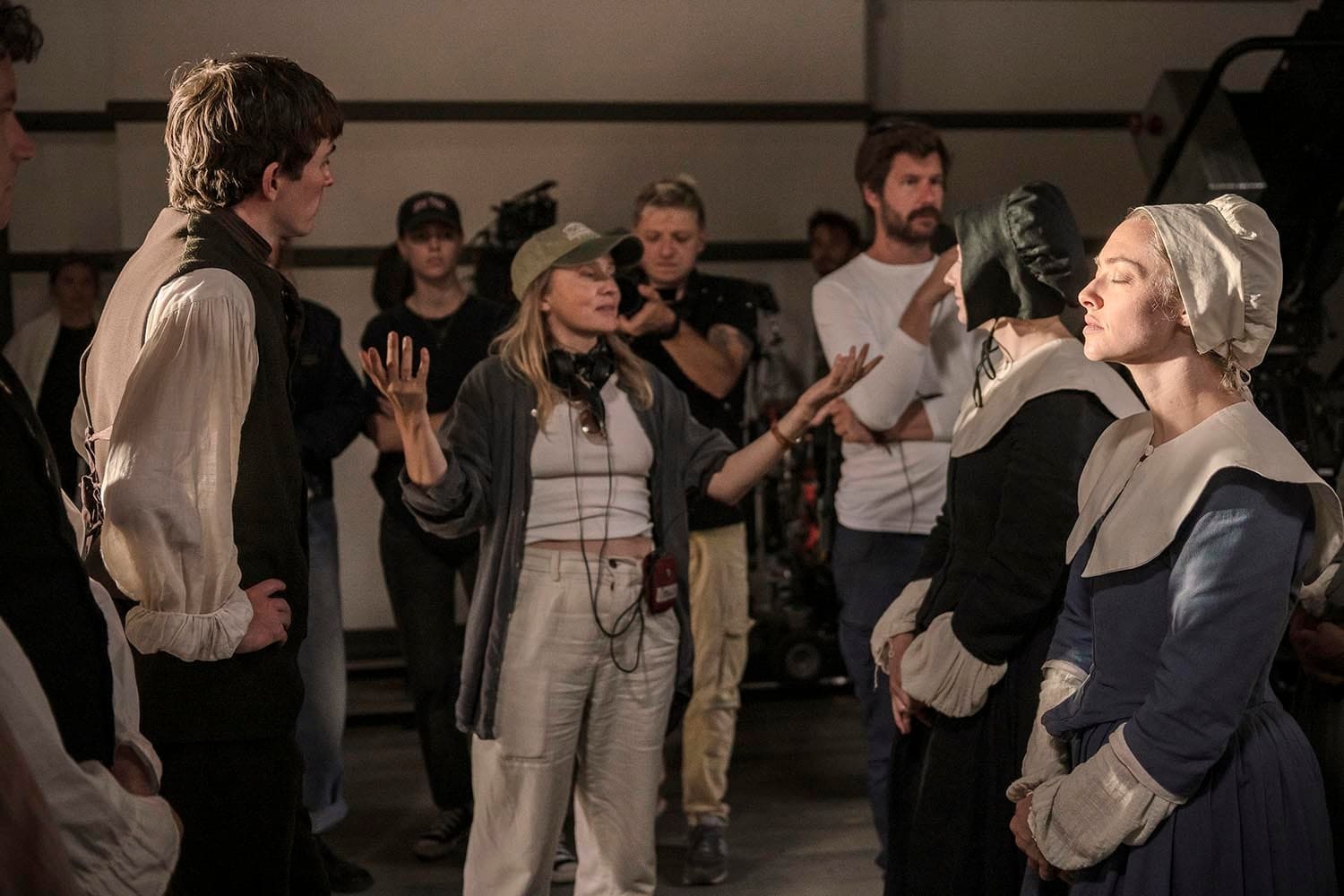
A number of your collaborators have noted that you were “Mother Mona” on set, reflecting Ann Lee’s style of leadership in your directing. Why was it so important to have a through line between process and product on The Testament of Ann Lee?
I’m very interested in process in general. It cannot just be about the result. It has to be about finding ways of being a better filmmaker through the process as well. It’s really important to me to create an environment that feels very safe and loving for my performers to do their best possible work, and for all of my other creative collaborators as well. I also just really love to work as a group. We aren’t departments on our films; we’re just one big department. We all gather around my kitchen table, and that’s really where we start working.
Way before we’re in official prep, we all start working together in that way. There’s so much cross-pollination across every single department on the film. For me, that separation has always felt wrong for how I like to work. I think that everyone does their best work when they have a precise framework for the work that they’re doing. But within that framework, there’s a lot of room to be very creative. To give people space for that is incredibly important to me.
I grew up on sets. I started working as a child actor on TV back in Norway, so I have a lot of experience on many different kinds of sets. I started developing a philosophy on how I wanted it to be early on, when I started directing. In Amanda, and in the rest of my performers and collaborators, we found a common idea around this, which, yes, does mirror our film a little bit. You cannot talk about equality and community every single day without being in dialogue with that when you’re creating a community and working together like this. The “Mother Mona” was definitely in jest, although I do like to be nurturing and mothering to my collaborators if I can!
How do you see Ann Lee’s story in relation to the U.S.? Is she the fulfillment of the country’s founding principles of religious tolerance, or is she a cautionary tale about the limits of equality?
Gosh, she’s both, isn’t she? You cannot pick one or the other. I wouldn’t say cautionary tale, though. I would say to remember right now that this country was founded on the ideas of religious freedom. All of these various people immigrated to America precisely for religious freedom, and that is the foundation of this country. It’s nice to remember that right now!
Since 2001, we've brought you uncompromising, candid takes on the world of film, music, television, video games, theater, and more. Independently owned and operated publications like Slant have been hit hard in recent years, but we’re committed to keeping our content free and accessible—meaning no paywalls or fees.
If you like what we do, please consider subscribing to our Patreon or making a donation.