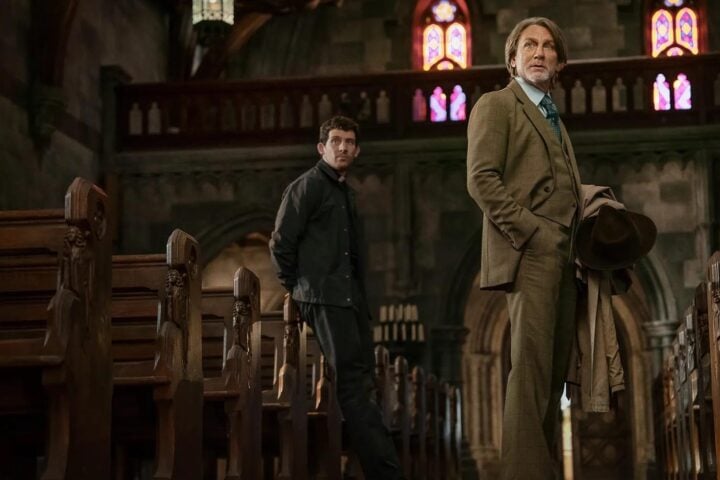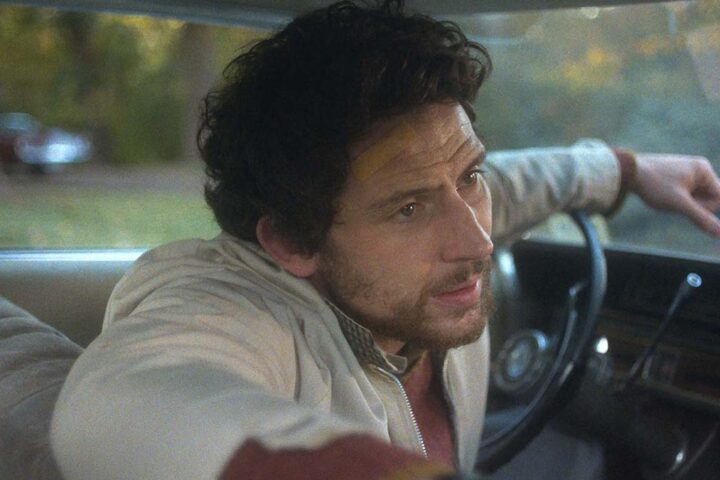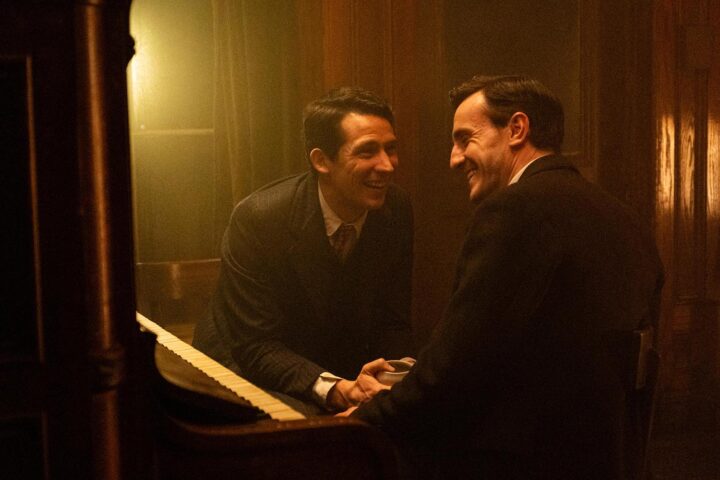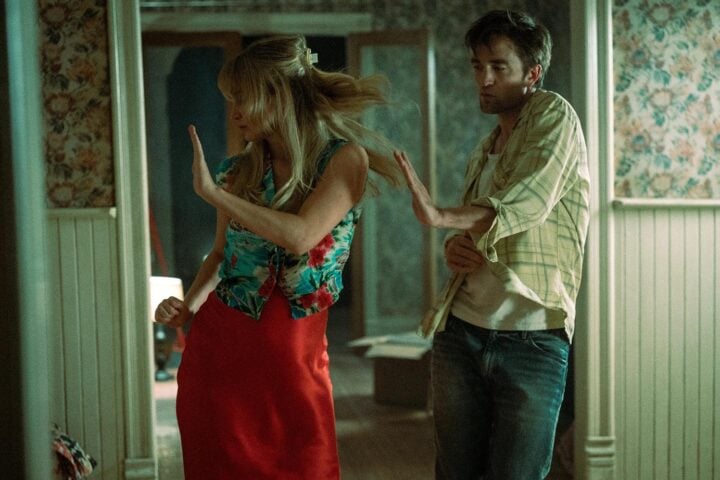
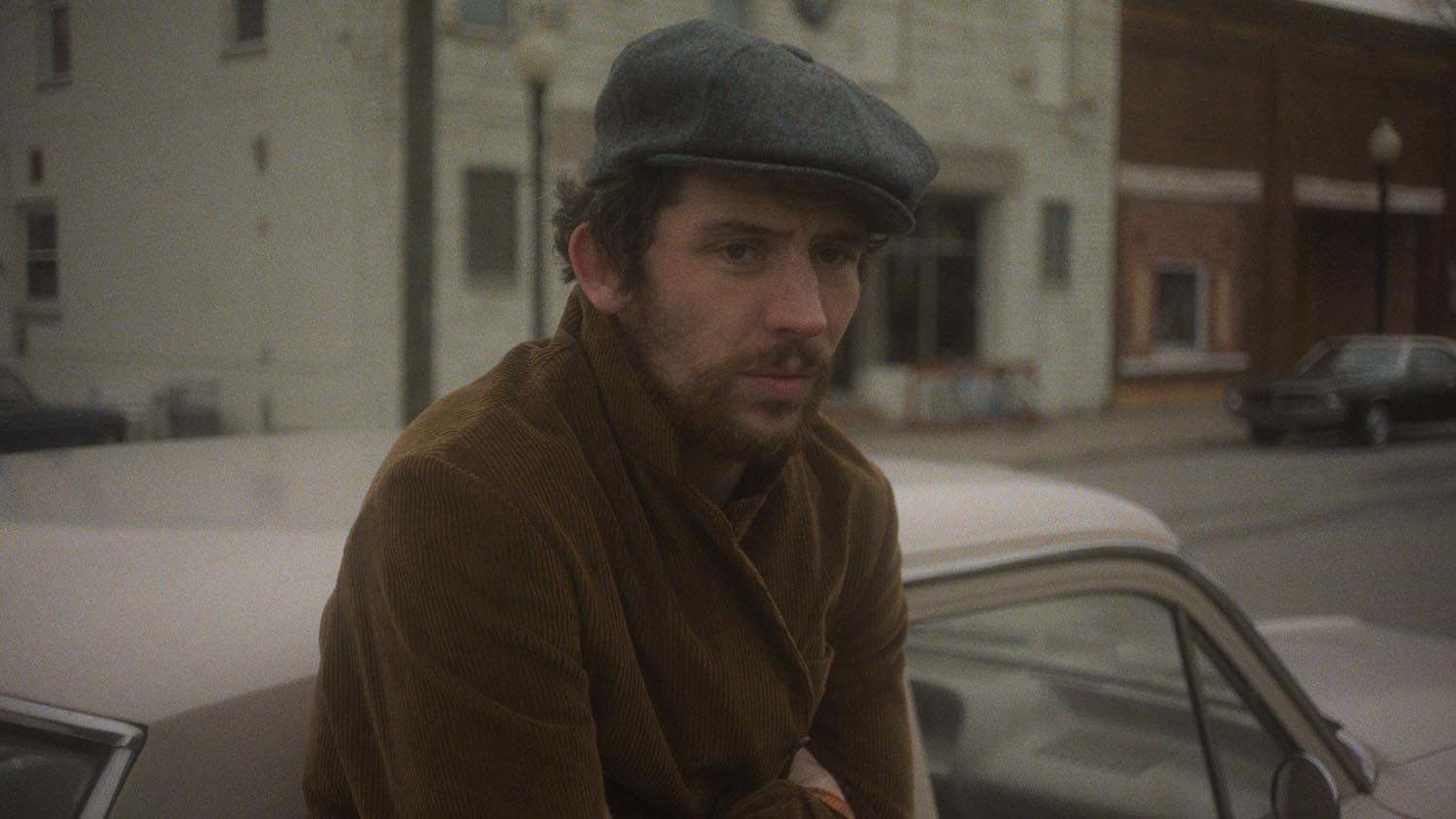
The momentum of an actor’s career can often collapse years of hard work into a moment of cultural omnipresence. Still, Josh O’Connor starring in four films out this fall marks a true achievement for one of his generation’s most gifted actors. This quartet of roles offers a dazzling display of O’Connor’s prodigious talents, ranging from a wistful WWI-era music student in The History of Sound to a taciturn contemporary cowboy in Rebuilding. His pivotal turn as a priest in Rian Johnson’s Wake Up Dead Man: A Knives Out Mystery portends an even bigger 2026 with a central part in new films from Steven Spielberg and Joel Coen.
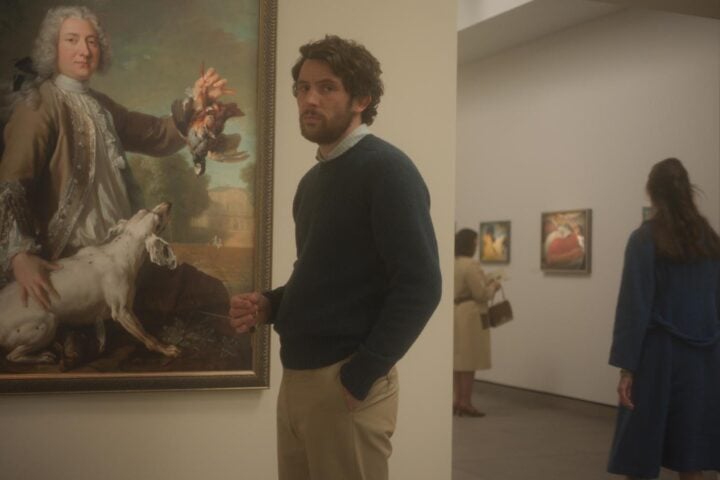
But I convened with O’Connor to chat about another work releasing in the middle of this incredible run: writer-director Kelly Reichardt’s early-1970s-set anti-thriller The Mastermind. The role of J.B. Mooney, a middle-class Massachusetts family man, allows the actor to execute a seamless and subtle gearshift on screen. Mooney is a tight coil of calculation as he plots the theft of four Arthur Dove paintings from a local art museum.
Yet once he pulls off the heist early in The Mastermind, Mooney must face the fallout he didn’t account for in his master plan and improvise his way through the aftermath. In all its hangdog glory and grime, O’Connor’s performance recalls the iconic rambling drifters of New Hollywood cinema. But he also maintains the melancholic solitude that defines the characters who populate Reichardt’s films, searching for connection and contentment.
My interview with O’Connor returned to several topics we discussed around his work in 2020’s Hope Gap and 2024’s La Chimera, such as his connecting physicality to psychology and building out a character’s backstory. But our conversation also covered topics specific to The Mastermind, such as his unexpected (and unauthorized by Reichardt) cinematic influences for Mooney and how he came to understand America by immersing himself in an era.
Come consider La Chimera to be of a piece with The Mastermind. Beyond some of the superficial similarities between the characters, I can see a clear through line between the process and the product for both Kelly Reichardt and Alice Rohrwacher. It’s also something I’d associate with your own work as an actor. What does having such a strong alignment of philosophy unlock for you?
I agree. The likeness between the characters is extremely superficial. They couldn’t be further from each other. But I agree that there’s something about the alignment between the filmmaker and actor, which, to be honest, I’ve always sought out right from the beginning with Francis Lee on God’s Own Country. Francis and I, though we haven’t made another film together, we’re very good friends. I don’t want to speak for Francis, but I know that we’d love to one day [make another]. Alice, obviously, is like a sister to me, and we will continue to make work together.
Every now and then, you find a filmmaker who just thinks in a way that you think—or in a way you want to think, in some cases—and Kelly is one of those. As an audience member, when I go and see a Kelly Reichardt movie, I’m ready to be contemplative and enjoy a meditative experience. You can sit back and not be rushed or worry about where you’re looking. It’s given to you, and it’s thoughtful. I think those similarities do exist. Kelly and Alicia are great friends and big admirers of each other’s work, so that’s nice too.
When we were discussing Arthur in La Chimera last year, you mentioned the character felt very connected to animals and birds, which unlocked a certain instinctiveness because they weren’t driven by thought or planning. That’s an element that made me think of Mooney improvising his way through the aftermath of the heist. Was that something you were able to draw on in this role?
I suppose so. I think what I can relate to with Mooney is the chaotic mind. There have been times in my life when I felt all over the place. Thankfully, I don’t think I have too much of that anymore, and I certainly try and resist having too much of that in my life anymore. It used to be that I would start off with any character and go, “What can I take from my own life and put into this?” I have to say, I do that less now. Every now and then, there are characters for whom that’s obvious. I would say that [with regard to] Arthur and La Chimera, there was an alchemy at a very particular moment in my life where that character was everything that I was experiencing and existing as already. Weirdly, we kind of became one person for a period.
But with Mooney, rather than what of Josh is in Mooney, or what of Mooney do I have, it was more like, “Okay, who is Mooney, and how can I understand him?” And the big understanding was just accepting that he really thinks this is a brilliant idea. I’m sure you have, Marshall, woken up in the morning and gone, “That dream, that idea I had in the middle of the night, it’s genius.” I’ve had it so many times. Very often. I’ve thought of a film idea, woken up, and gone, “Wow, I am the next Martin Scorsese. This is brilliant.” Then, I look at it, and it still might be great 24 hours later, but not so good. And then, in a week’s time, I look back and go, “Josh, that is not a film! That’s not even a good short story. It’s a terrible idea. You were just having a dream, and it wasn’t a particularly good one.”
Oh yes, I know this experience!
What’s funny about Mooney is that he just absolutely thinks that this is a good idea. It doesn’t matter [that] his friends say, “Is this such a good idea?” It is a great idea [to him]. Even when it goes wrong, it’s still a great idea; he just hasn’t figured it out yet. Kelly sent me some films, which I watched, some brilliant material, and all of them were incredibly helpful to me. But there were two films that I was referencing a lot when making this movie…which Kelly would kill me if she found out that I looked at these. I don’t know why, but I just sense that she would.
One is Dog Day Afternoon, and seeing Al Pacino and John Cazale going into this bank robbery, realizing there’s nothing for them there, but they’re in too deep. And then it’s like, “Well, what do we do?” Seeing them fall apart is humorous and gorgeous, and you love them. The other one—and this she really would kill me for—would be Uncut Gems, seeing Adam Sandler and the chaos of that man’s mind. [He’s] falling apart throughout, and every decision makes it worse and worse. It’s like an addiction to making mistakes. Those references were good. Although Mooney is doing that in a much more mundane, calm fashion, it’s still a similar chaos. I think the score of the movie that Kelly chose actually helps remind us.
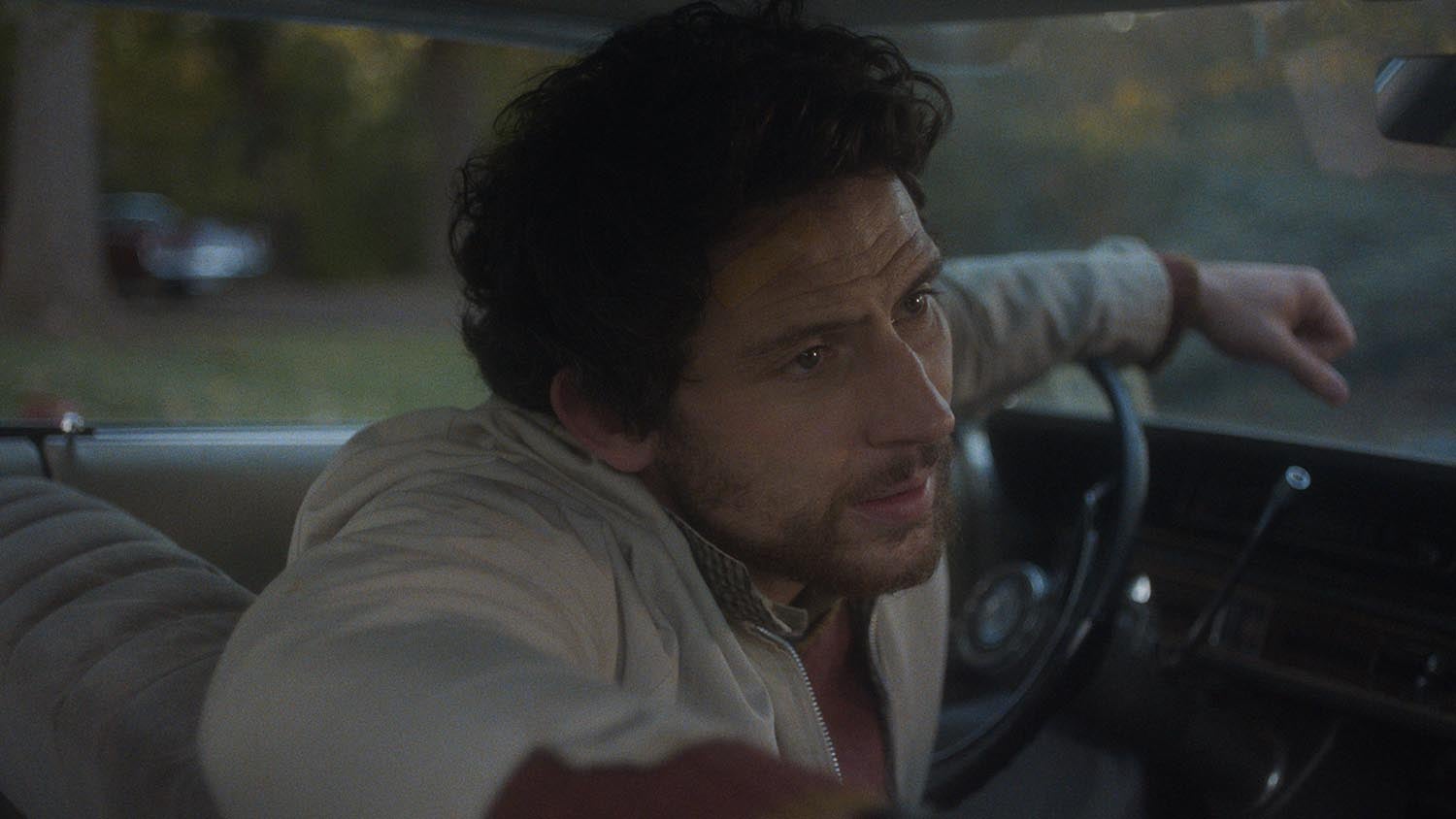
We get small details about Mooney’s past, like the headline saying he was a former art student. What was helpful in understanding the character beyond these immediate circumstances?
For every role I’ve ever done, I’ll write a backstory of what the character’s background is. Depending on the film, it can be extremely detailed or a little light on the details because it’s pure creation and fiction. If it’s less detailed, it’s usually because you don’t know the answers yet, and that informs how you go through. With Mooney, I had an idea of how his life might have been. But it’s nuanced with Mooney because, in some ways, he’s got it all. It’s all there—he just doesn’t see it. He’s got a great wife. She’s got a career. He has two kids. He has a mom who’s willing to help him. Yes, he has a father breathing down his neck who thinks he should have done more than he’s done, and that maybe influences why he feels like he needs to make something of himself. But, generally speaking, I’ll create something fairly full-bodied for those moments where you don’t know quite what you’re supposed to be thinking, or if you’re struggling with a scene or a relationship to a character. It happens all the time: leaning on that backstory and the past of a character often unlocks those questions.
When we first spoke five years ago, you talked about building the physicality of a character and trying to make sure that it doesn’t come from a purely aesthetic place. In the case of The Mastermind, how were you connecting Mooney’s psychology to the way you carry yourself on screen?
I was really interested in his physicality. I wanted it to be quite a physical performance, even though it’s generally speaking, it’s mostly him walking around. First of all, I wanted to lean into this idea of him being slightly lazy. There are a few occasions in the film where he’s sat down for too long, whether it’s him foolishly observing the artwork at the beginning of the film, that montage period of him looking at the different Arthur Doves, or [sitting] in the car waiting for his friend to come with his son eating a burger. There’s a defeatist element to him. He’s kind of the worst man to perform a heist. The other example is when he’s waiting in the car park during the heist and the police car rocks up. His not knowing how to deal with this unfortunate situation, he’s always two beats behind. That affects your physicality. That makes you a little less forward, a little less instinctive with your movements.
You’re in something of an American phase right now, spanning over a century of history from The History of Sound up to the present day in Challengers. What have you gleaned about the country from roles like Mooney in The Mastermind?
I can’t speak necessarily for the state of America from just those roles. America’s got some unbelievably rich and beautiful history. This is right at the beginning of the 1970s and the end of the 1960s, and it’s a fascinating time. You could argue that it’s the beginning of the post-truth era. That was an interesting time, with the Vietnam War going on in the backdrop. Ultimately, the political and social state of a country where your film is set is actually really important to help build the character. Where you’re at now…I mean, where are we all at? We often all look at our own countries and go, “Could it be any worse?” We’re all sort of screwed up right now, but I’m also forever an optimist. I hope things will get better.
When I spoke with Kelly about the film, she mentioned putting elements like Vietnam at the periphery of the frame. Did you think about those things on set, or were they truly in the background for you as they are for the character?
I really tried. You’ve got the set piece at the end of the movie, but in scenes on the television in the background, you hear the murmurings of what’s going on. It’s very present at that time, but I attempted to try and block that out. Mooney is unconcerned with anything but his goal. That very much exists in my subconscious in that performance, and I think that’s right.
What did you make of Mooney’s desire to take Arthur Dove paintings since those meant something to him?
I like that they’re Arthur Doves, partly because if he had them now, he’d be making a fair bit of money. And I like that it plays into this big ego that Mooney has. Could he not have stolen a Rembrandt or something that would have actually made him some money? The Arthur Doves would have fetched some money, but not crazy [amount of it]. There were books in that Framingham Museum that would have fetched more. But what he’s doing is stealing artwork that he knows about, but not everyone else would know about. There’s a point about him being like, “I’m in the know. I’m an artist, too.” Again, I think that plays out because of his blind ego.
I love the moment when Mooney says that three-quarters of what he’s done in the film has been for his wife and kids, while the rest was for himself. Where do you estimate that percentage landing?
Oh, fuck! I’d say five percent of what he did was for the good of his family, and that’s pushing it.
For someone like you who seems unflappably earnest, is it more difficult or fun to bullshit like that as a character?
Oh, it’s great fun! Listen, we’re all bullshitting some of the time. None of us really wants people to know how little we know about the world. Playing that is the dream. Ultimately, the great thing about playing any character is getting the opportunity to say something and be thinking something else. That’s when things are really alive.
Since 2001, we've brought you uncompromising, candid takes on the world of film, music, television, video games, theater, and more. Independently owned and operated publications like Slant have been hit hard in recent years, but we’re committed to keeping our content free and accessible—meaning no paywalls or fees.
If you like what we do, please consider subscribing to our Patreon or making a donation.